Most people have noticed the way music can change their emotional state almost instantaneously — a familiar song that shifts the mood of a room, a rhythm that settles something inside. For many neurodivergent individuals music and movement offer something more significant: alternative routes to expression, regulation, and connection that conventional verbal and social interaction doesn't always provide.
A growing body of research supports the therapeutic use of music and movement with autistic children, children with ADHD, and neurodivergent individuals more broadly (1, 3). These are not peripheral or supplementary approaches. For many people, they appear to be primary ones.
This article explores what some research suggests about why these modalities work, what they offer that other approaches may not, and what currently shapes whether families and individuals can access them.
For many neurodivergent individuals, music and movement are not alternative approaches to communication — they are the primary ones
Imagine trying to describe a feeling you've never had language for. Or being in a room full of people and knowing, clearly, that you are not reading the same social signals everyone else is reading. Or finding that the sensory demands of an ordinary environment are persistently overwhelming in a way that is genuinely hard to communicate to anyone who doesn't share that experience.
For many neurodivergent individuals, this is the texture of daily life. Verbal communication and conventional social interaction, which most therapeutic and educational approaches rely on heavily, are often exactly the modes that present the greatest challenge.
Music and movement offer something different: ways of being in the world, expressing what's happening internally, and connecting with others that do not depend on verbal fluency, precise social reading, or the ability to explain what one is experiencing. For many neurodivergent individuals, they are the primary approaches.
Research on music therapy with autistic children consistently finds improvements in social communication, reduced anxiety, and greater engagement
Some evidence suggests that music activates multiple brain regions simultaneously — engaging motor, emotional, cognitive, and social processing in ways that many other activities do not (3). This breadth of neural engagement may be particularly significant for neurodivergent individuals whose processing tends to be differently wired, and for whom a single-channel approach may be less effective.
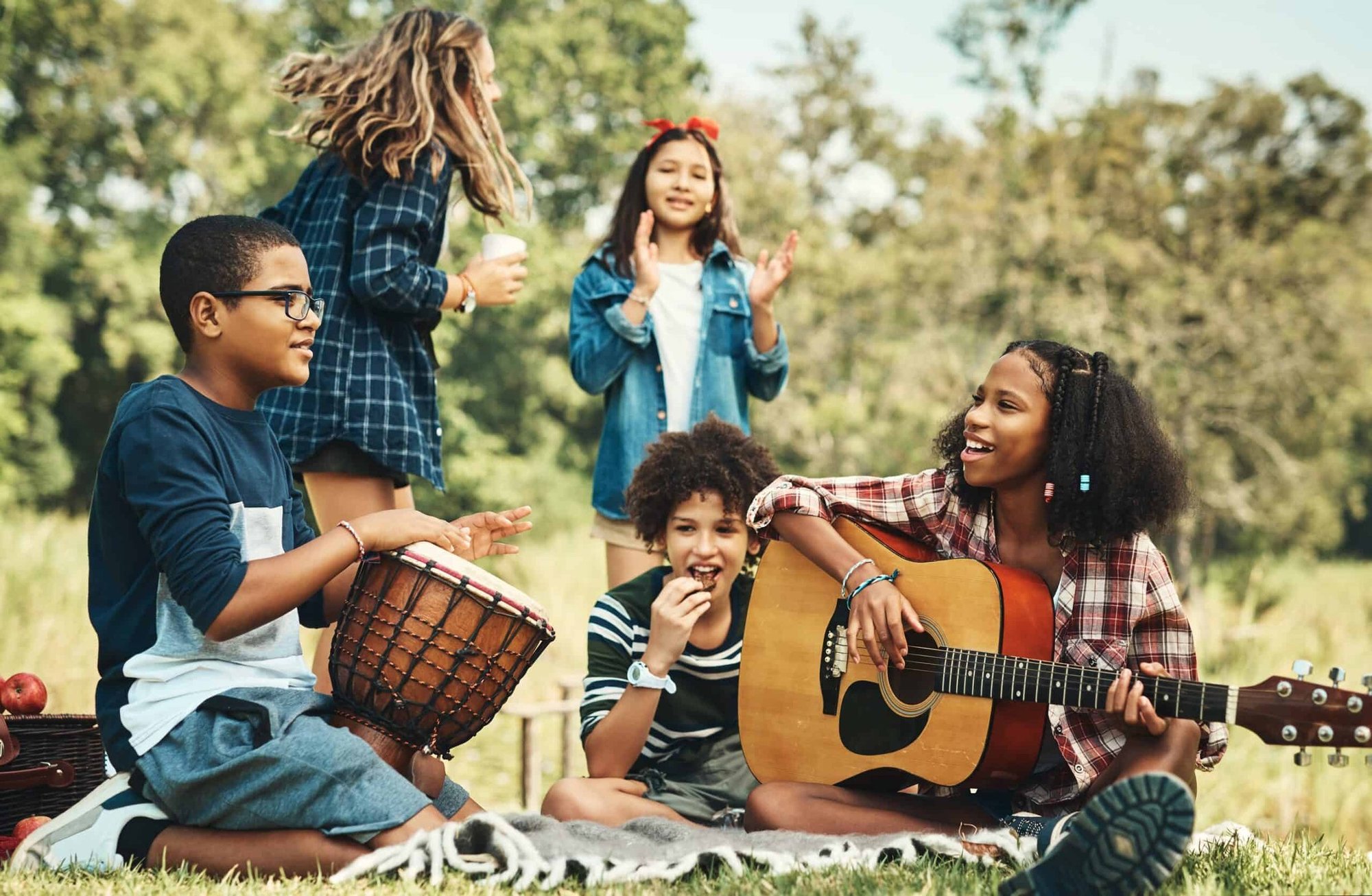
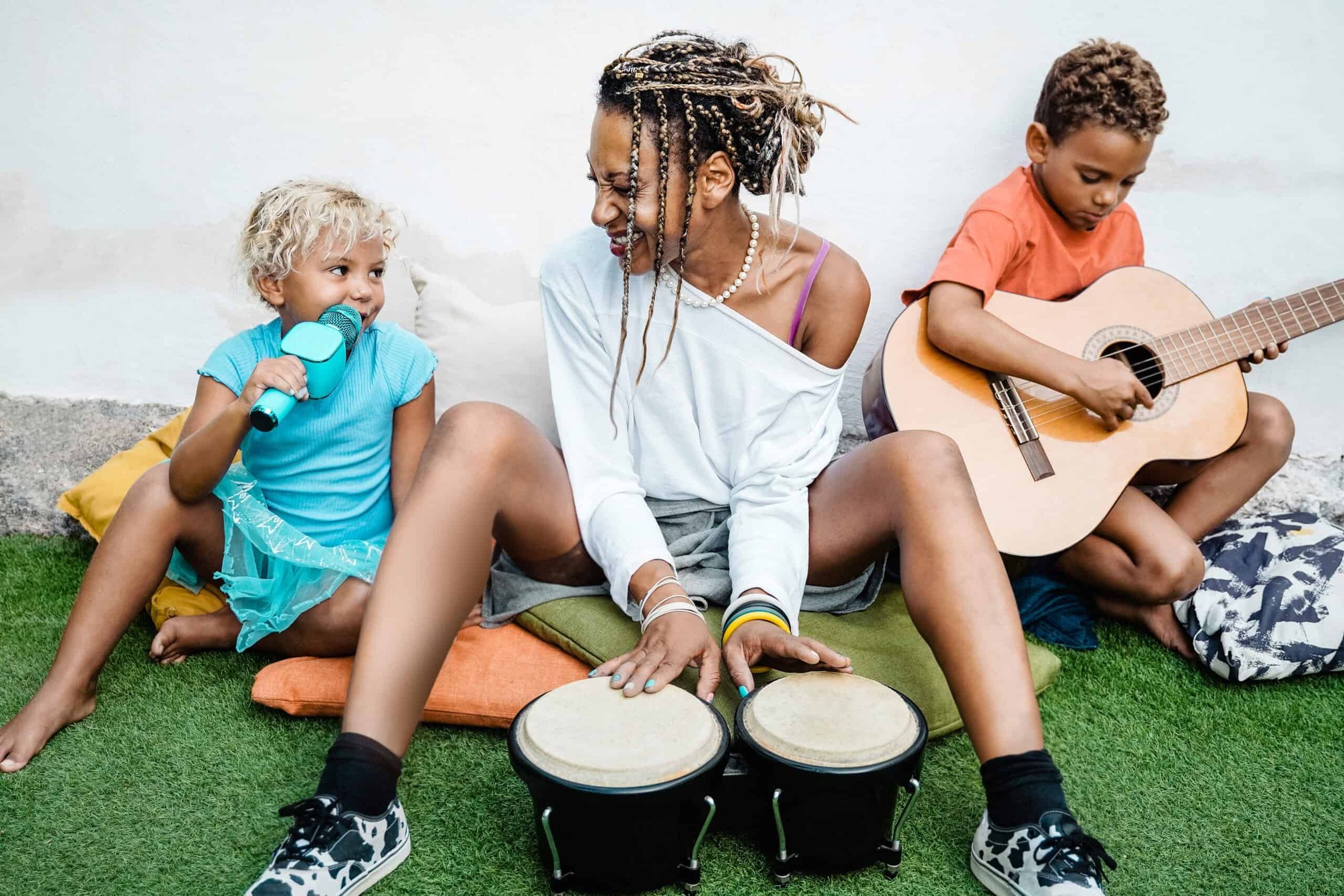
Research on music therapy with autistic children points to associations with improved social communication, reduced anxiety, and increased ability to engage with others (1, 3). Experts have also found that group musical activities — shared drumming, singing, simple instrument play — increase children's capacity to interpret social cues and initiate interaction (3). The shared rhythm provides a structure for connection that doesn't require the same verbal negotiation as conventional social situations.
Rhythmic entrainment — the way the body's internal rhythms tend to synchronise with external beats — appears to be one mechanism through which music supports emotional regulation. When an external rhythm is steady and predictable, it can provide a kind of external scaffolding for a nervous system that is struggling to self-regulate internally.
For children with ADHD, some research points to music's potential to support attentional regulation — providing both the stimulation that keeps attention engaged and the structure that channels it (1, 5). Movement therapies show consistent associations with improved motor coordination, sensory integration, and emotional expression in neurodivergent children — with benefits appearing across a range of movement modalities including dance, yoga, and playful rhythm-based exercises (2, 4).
What itactually givespeople — a native language for those for whom words are not the most natural route
Many neurodivergent individuals describe music and movement as native languages — modes of expression that feel more natural and less effortful than the verbal and social frameworks that structure most of their educational and professional lives. When a child who struggles to say what they're feeling can convey it through movement, or when a teenager who finds group interaction exhausting can connect with peers through shared rhythm, something has been unlocked that more conventional approaches couldn't reach.
The personalisation dimension is significant here. Neurodivergent individuals often respond with particular intensity to specific musical preferences — certain genres, tempos, instruments, or familiar melodies that carry a sense of safety and positive association (1). Therapeutic approaches that start from these preferences, rather than imposing a standard format, tend to find deeper engagement and more lasting effects (5). The intervention that respects what the individual already loves work better than the one that arrives with its own agenda.
For children especially, activities that combine music and movement create conditions that are simultaneously stimulating and regulating — providing the sensory richness that many neurodivergent children actively seek while also scaffolding the emotional regulation that helps them remain in a state where learning and connection are possible.
What different traditions have understood — and why contemporary research is catching up with what cultures have long known
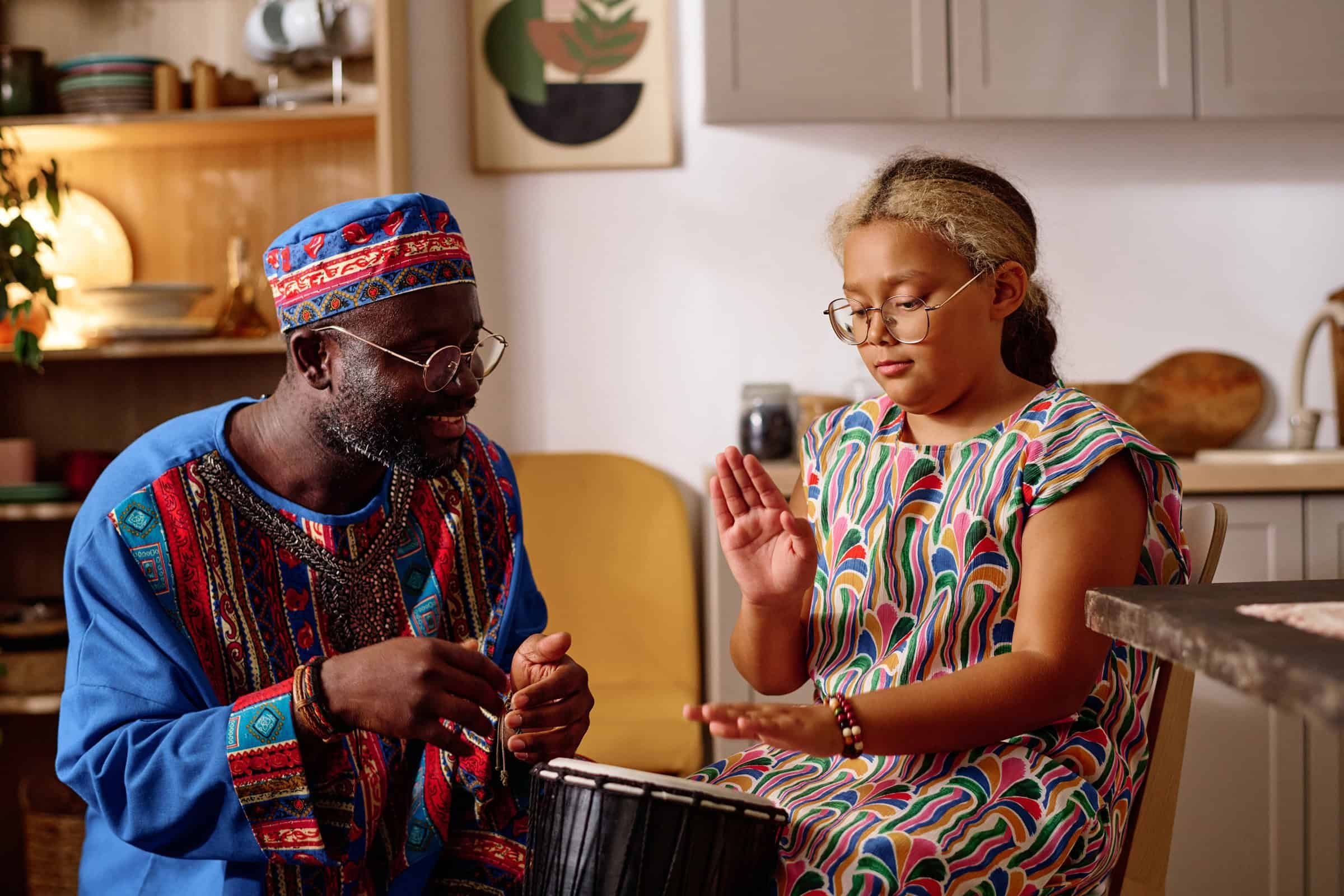
In many African traditions, drumming circles are a collective practice of health and connection. The shared rhythm creates a communal experience in which individual variation is held within a larger pattern, and participation is structured by the music itself rather than by verbal coordination (6). Everyone is in it together, without requiring the same level of social negotiation that other kinds of group participation demand.
This is a useful frame for understanding what music and movement can offer neurodivergent individuals in contemporary contexts. The communal rhythm is both inclusive and self-organising. Different participants can engage at different levels and in different ways, while still being genuinely part of the shared experience. The music provides the structure; people bring what they can.
Across many cultural traditions, music and movement have been understood as routes to states that other practices cannot reach as reliably: emotional regulation, communal belonging, the expression of things that have no adequate verbal form. Contemporary therapeutic research is, in this sense, catching up to what many cultures have known for a very long time.
What shapes access — and what needs to change for music and movement to reach the people who need them most
The evidence base for music and movement therapies with neurodivergent individuals is growing, but it remains uneven. Much of the strongest research focuses on autistic children in structured clinical settings; the evidence for broader neurodivergent populations, for older individuals, and for informal home or community contexts is less developed. The variability in how these therapies are delivered also makes it genuinely difficult to assess which specific elements are producing which effects, and for whom (1).
Access is a significant barrier. Formal music therapy and dance movement therapy, delivered by trained practitioners, are not available to most families — either because of cost, geography, or the simple absence of qualified practitioners in their area. The gap between what clinical research demonstrates and what families can realistically access is substantial, and it is not evenly distributed. Families with more resources, more time, and more professional connections usually have considerably more access to these approaches than those without.
There is also a broader cultural barrier: despite growing awareness of neurodiversity, these modalities are still sometimes dismissed as 'just music' or 'just movement' — creative enrichment rather than substantive therapeutic intervention. This mischaracterisation shapes funding decisions, school timetables, and the priorities of health services in ways that limit access for the people who would benefit most.
What families and educators can draw on — five patterns thatdon'trequire formal therapeutic delivery
The principles that make music and movement effective for neurodivergent individuals don't require formal therapeutic delivery to be applied. Many of them are available to families and educators in everyday contexts, with appropriate understanding and a willingness to follow the individual's lead.
Some patterns that many families and educators have found useful to support neurodivergent individuals through music and movement:
Start from what the individual already responds to. Musical preferences in neurodivergent individuals are often strong and consistent. Families and educators who build on existing enthusiasm — rather than introducing new genres or formats — usually find deeper engagement and stronger regulatory benefit. A child who always wants the same song is telling you something useful about what makes them feel safe (1, 5).
Use rhythm as a regulatory tool. Predictable, repetitive rhythm appears to support nervous system regulation in ways that irregular or variable sound does not. Simple rhythmic activities — clapping, drumming on household objects, rocking, movement to a steady beat — can provide external scaffolding for emotional regulation that many neurodivergent children find more accessible than verbal self-calming strategies.
Buildin routine and ritual. Consistent music and movement rituals — a specific song to start the day, a movement break at the same time each afternoon, a familiar goodbye activity — could reduce transition anxiety and increase engagement with the activity itself. The predictability communicates safety, which creates the conditions for genuine participation (1, 3).
Create group experiences thatdon'trequire verbal leadership. Group music and movement activities — where the shared rhythm or choreography provides the structure, rather than one person directing others verbally — tend to be more accessible for neurodivergent individuals than group activities organised around verbal instruction. Drumming together, dancing to a shared beat, or following a rhythmic pattern collectively reduces the social processing demands while still creating genuine communal experience (6).
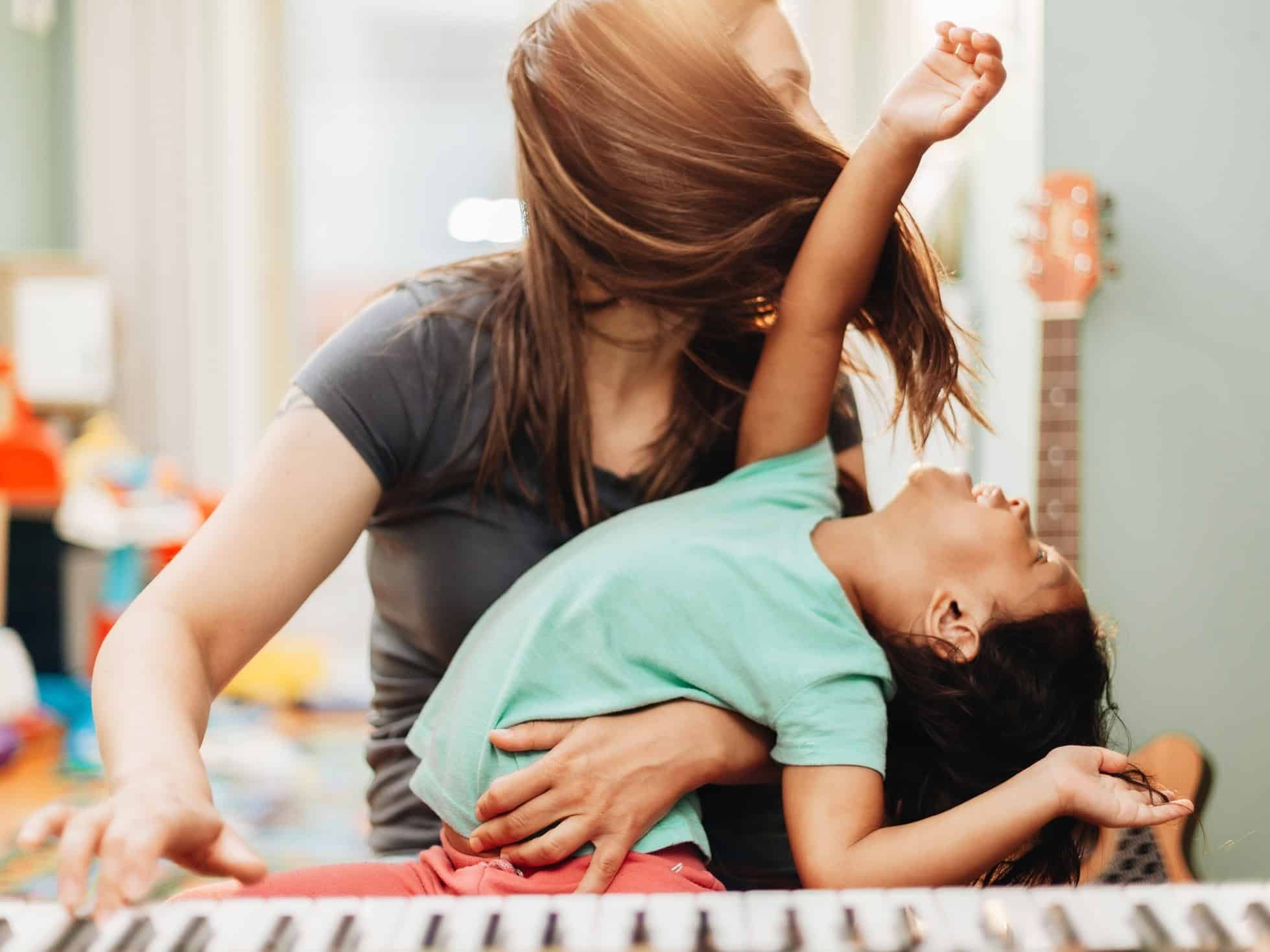
Let movement beexpression. Many neurodivergent individuals use movement naturally to express emotional states — rocking, spinning, pacing, flapping — that they cannot easily put into words. Environments that receive these movements with curiosity rather than correction, and that offer expanded movement opportunities rather than restricting them, tend to find that expressive movement becomes a genuine communicative channel rather than a behaviour to be managed.
What a different language makes possible — and the question worth asking before anything else
The idea that music and movement are 'alternative' therapeutic approaches implies that language-based, cognitively mediated intervention is the default — and that these creative modalities are supplements for those who can't quite manage the real thing. The evidence suggests a different picture. For many neurodivergent individuals, music and movement are primary ones.
They offer what language sometimes cannot: a way to be in the world that doesn't require translating inner experience into a form designed for other people's comprehension. A way to be in a room with other people that doesn't demand continuous social reading. A way to express something real without having to know the right words.
Recognising this — taking music and movement seriously as primary rather than supplementary — has implications for how we design schools, therapeutic services, and the daily lives of neurodivergent individuals. It begins with a question that is simple but not often enough asked: what language does this person already speak?
References:
[1] Cherewick M, Matergia M. Neurodiversity in practice: a conceptual model of autistic strengths and potential mechanisms of change to support positive mental health and wellbeing in autistic children and adolescents. Adv Neurodevel Disord. 2024;8(3):408–422. https://doi.org/10.1007/s41252-023-00348-z
[3] Lisboa T, Shaughnessy C, Voyajolu A, Ockelford A. Promoting the musical engagement of autistic children in the early years through a program of parental support: an ecological research study. Music Sci. 2021;4. https://doi.org/10.1177/20592043211017362
[4] Rhiannon M. Creative differences: a handbook for embracing neurodiversity in the creative industries. 2nd ed. Universal Music; 2020.