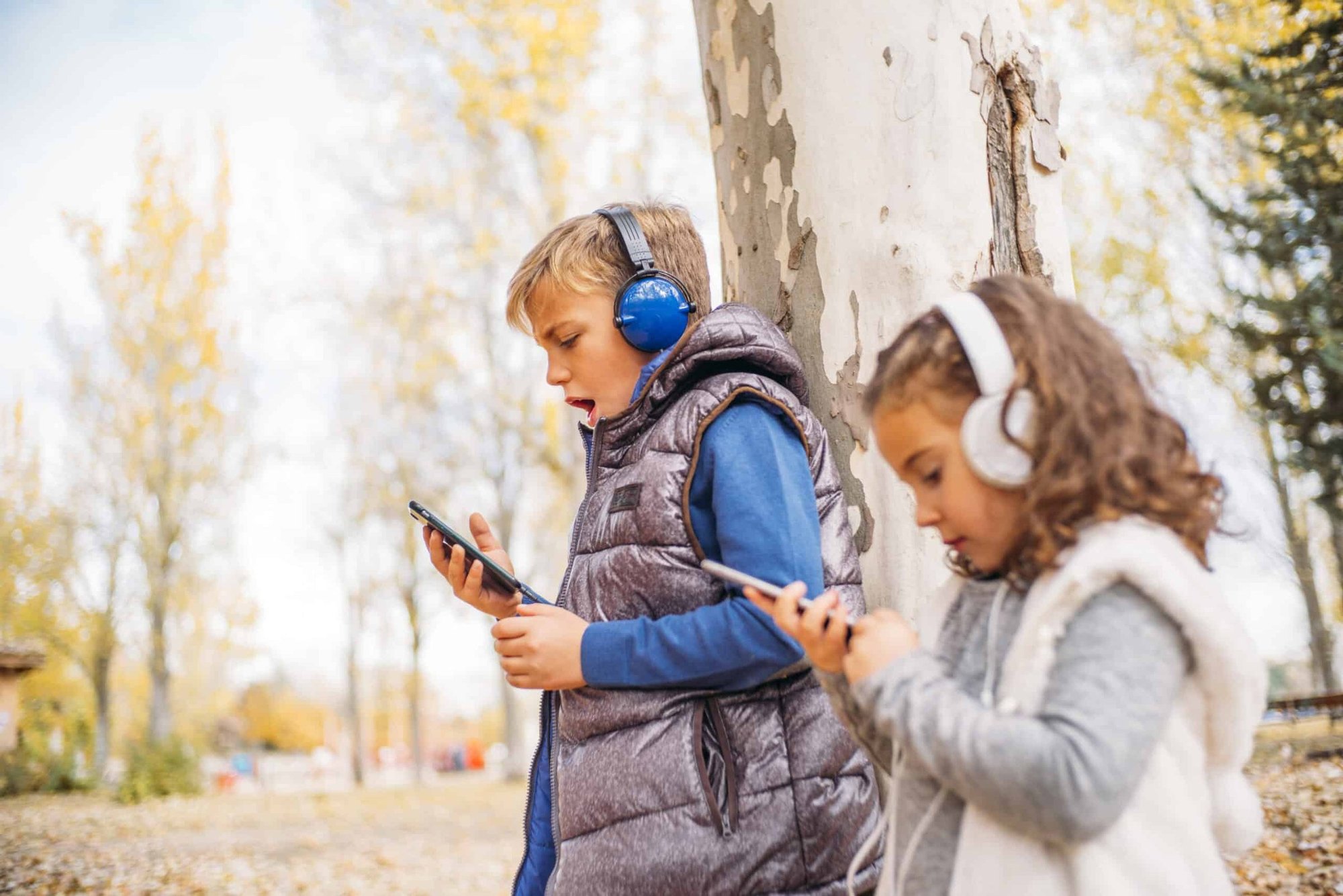
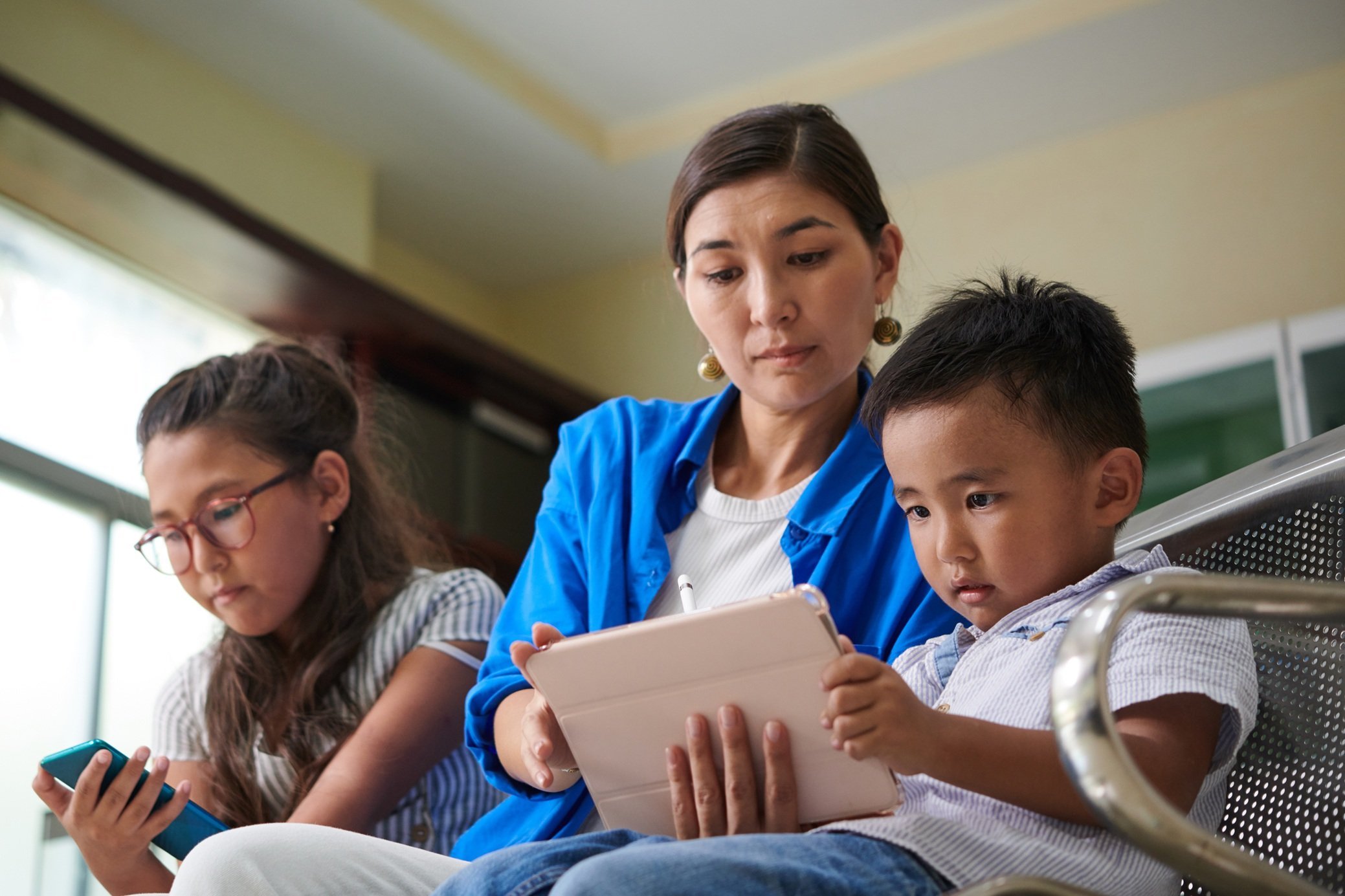
For most families today, screens are simply part of the furniture. They're used for learning, for connection, for entertainment, and — honestly — for the breathing room they sometimes offer an exhausted parent. The question of how much is too much, or what kind of use is harmful, doesn't have a clean answer.
What some research does suggest is that certain patterns of screen use — particularly unstructured, passive, or late-night use — appear to be associated with effects on sleep, attention, and emotional regulation in children (2, 3). Understanding those patterns is more useful than counting hours.
This article explores what we know about how screens interact with developing brains, why the conditions around screen use matter more than simple limits, and some approaches that many families and educators have found helpful.
Most families know the feeling — the house is quiet, the children are occupied, and something still feels slightly off
There's a particular moment that many parents describe, and most will recognise. The house is quiet. The children are occupied and apparently content. And yet something feels slightly off — a flatness in the atmosphere, a sense that time is passing but nothing is quite happening. The screen has taken over, and no one quite knows how.
It's not a dramatic problem. No one is in danger. There's a low hum of unease that's hard to name, and a vague feeling that the evening could have gone differently — that there was something else available, and it got crowded out.
That feeling is worth paying attention to. It often knows something before we can quite articulate what.
Research points to real effects on sleep, attention, and emotional regulation — particularly for unstructured, passive, late-night use
The science on screen time and children is more nuanced than many headlines suggest — and more genuinely uncertain. Researchers point to associations between certain patterns of screen use and changes in sleep, attention, and emotional regulation (2, 4).
The sleep connection is among the more consistently supported findings. Screens emit light in wavelengths that appear to interfere with the body's natural production of melatonin — the hormone that signals the transition toward sleep. Evening screen use, particularly in the hour or so before bed, is associated with delayed sleep onset and reduced sleep quality in children (1). Given how much sleep matters for learning, emotional regulation, and physical development, this is a meaningful relationship to understand.
The question that is more useful than 'how many hours?' is: what kind of screen use, at what time of day, in what context — and what is it replacing or crowding out?
Research also points to associations between heavy passive screen use and reduced attentional control — the capacity to stay with a task, resist distraction, and think through complexity (3). This doesn't mean screens cause attention problems. Children who already find attention harder may be drawn toward screen-based stimulation. The interaction between the two is worth understanding, particularly in the context of how children's attention systems are still developing.
What this feels like in family life — screens have a gravitational pull that other activities lack, and most families feel it
The difficulty for most families is that screens are how children stay connected with friends, how they learn, how they unwind, and — more often — how they participate in a world that is organised around digital access. Framing screen use purely as a risk misses most of what's actually happening.
What many parents describe is less a concern about screens themselves and more a concern about balance — a sense that screens have a gravitational pull that other activities lack, and that this pull can quietly reorganise a family's time in ways that nobody quite chose. The app or the game was designed to be engaging. It often succeeds. The question is whether that engagement is serving the child, or substituting for something the child actually needs.
This is a meaningful distinction. Not all screen time is equivalent. A child video-calling a grandparent, building something in a creative programme, or working through an educational challenge is having a fundamentally different experience from one passively consuming an algorithmically curated feed. The difference is usually felt, even if it's not always easy to articulate.
How different contexts approach this — from Scandinavian outdoor culture to digital literacy curricula, the question is always about conditions
In Scandinavian countries, the concept of friluftsliv — a cultural orientation toward outdoor life and nature immersion as a form of daily restoration — represents a structural counterweight to digital encroachment. The outdoor time is woven into the rhythm of schools, workplaces, and communities as a shared expectation rather than a personal discipline.
In many East Asian educational traditions, mindfulness practices that cultivate deliberate attention and conscious engagement with the present moment are integrated into learning from early childhood. These are understood as foundational capacities that shape how a person relates to any kind of stimulation.
Schools that have begun integrating digital literacy into their curricula — teaching children how to use technology, how it works, how platforms are designed to capture attention, and how to make conscious choices about engagement — are finding that this knowledge shifts children's relationship with screens in lasting ways. Understanding the design makes the pull less invisible and therefore more navigable.
What these approaches share is a recognition that the question isn't simply how much screen time is acceptable, but what other conditions need to be in place for digital life to sit within a flourishing whole.
An unequal contest — families trying to moderate screen use are often working against teams of designers whose job is to prevent exactly that
There is a structural dimension to the screen time conversation that rarely gets named directly. When parents try to moderate their children's screen use, they are often working against the sustained effort of entire design and engineering teams whose explicit objective is to maximise engagement. The platforms and apps that dominate children's screen time have been built — with considerable sophistication — to be difficult to put down. Variable rewards, infinite scrolling, social validation signals are the product itself.
Asking individual families to hold the line against these systems through willpower and good intentions places an enormous burden on the domestic level of scale. It frames as a parenting challenge what is also a design challenge — and a policy one. The difficulty many parents experience is a reasonable response to an environment that has been optimised to work against the very outcome they're trying to create.
This doesn't mean individual families are powerless. The conversation about screen time would be more honest — and more useful — when it acknowledges where the weight of the problem actually lies.
Some approaches worth considering, built around intentionality rather than restriction
The families and educators who tend to navigate screen time most sustainably describe a similar attitude: intentionality. A sense of when and how screens serve the people using them — and when they're simply filling space that could hold something more nourishing.
Some patterns that many families and educators have found useful to support healthier screen relationships:
Distinguishbetweenkinds of use. Many families find it more useful to think about the quality and context of screen time than to track hours. Active, connected, or creative screen use tends to feel — and appear to function — quite differently from passive, solitary, or late-night scrolling. Children who are helped to notice this difference themselves tend to develop a more discerning relationship with screens over time.
Protect sleep-adjacenttime. The association between screens before sleep and disrupted sleep quality is among the more consistently supported findings in this area (1). Many families find that treating the hour or so before bed as screen-free (as a protected wind-down) has a noticeable effect on how easily children settle and how rested they seem the next day.
Offer movement and outdoor time as genuine alternatives. Screens tend to fill gaps most powerfully when nothing else is available or appealing. Environments where physical play, outdoor time, and creative materials are genuinely accessible tend to find that children reach for screens less automatically because something else is present (1). The alternative matters as much as the limit.
Model the relationship you hope to see. Children are acutely observant of how adults relate to their own devices. Families where parents are visibly and habitually absorbed in screens find that children follow suit — simply because it's the pattern they've absorbed. The modelling of deliberate, boundaried screen use appears to do more than any amount of rule-setting.
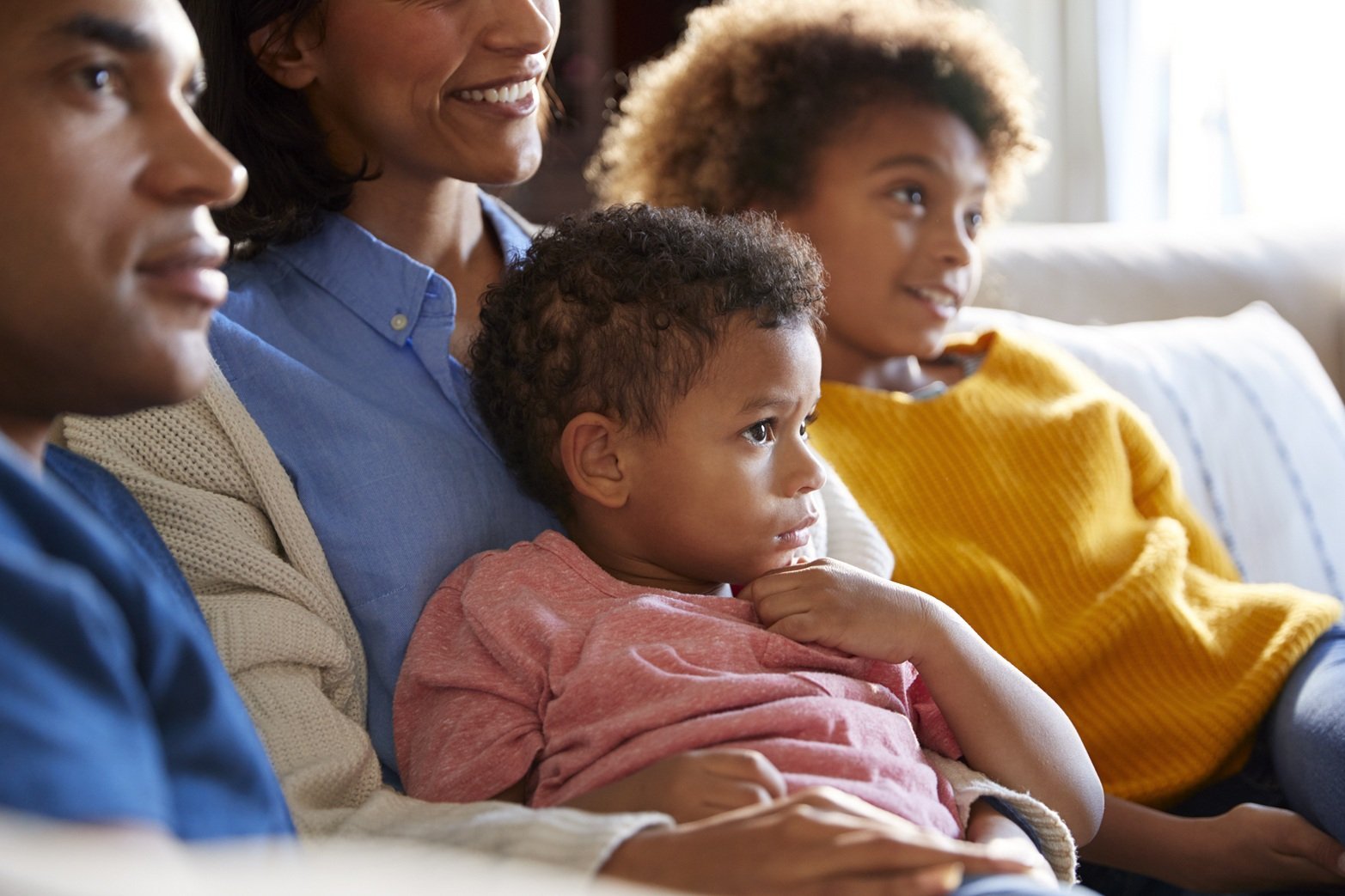
Use shared screen time as a relational opportunity. Co-viewing and co-playing — where a caregiver and child engage with digital content together, discuss characters and choices, and respond to what they're seeing — often produce a different experience from solitary use. Researchers have found it supports critical thinking about media and maintains the connection that passive parallel screen use can quietly erode (2).
Not restriction — relationship: what settled families haveisa shared sense of what screens are for
The families who describe the most settled relationship with screens are rarely those who have the strictest rules. They're more often those who have developed a shared sense of what screens are for in their household — what they add, and what they crowd out — and who have the conversational habits to keep revisiting that as their children grow.
That kind of ongoing conversation begins with noticing — the low hum of unease on a flat evening, the difference in a child's mood after an hour of passive scrolling versus an hour of building something. Those observations, taken seriously and spoken out loud, could be the beginning of something more durable than any imposed limit.
The goal is a childhood in which screens take up the space they genuinely deserve — and leave room for everything else.
[2] Twenge JM, Campbell WK. Associations between screen time and lower psychological well-being among children and adolescents: evidence from a population-based study. Prev Med Rep. 2018;12:271–283. https://doi.org/10.1016/j.pmedr.2018.10.003