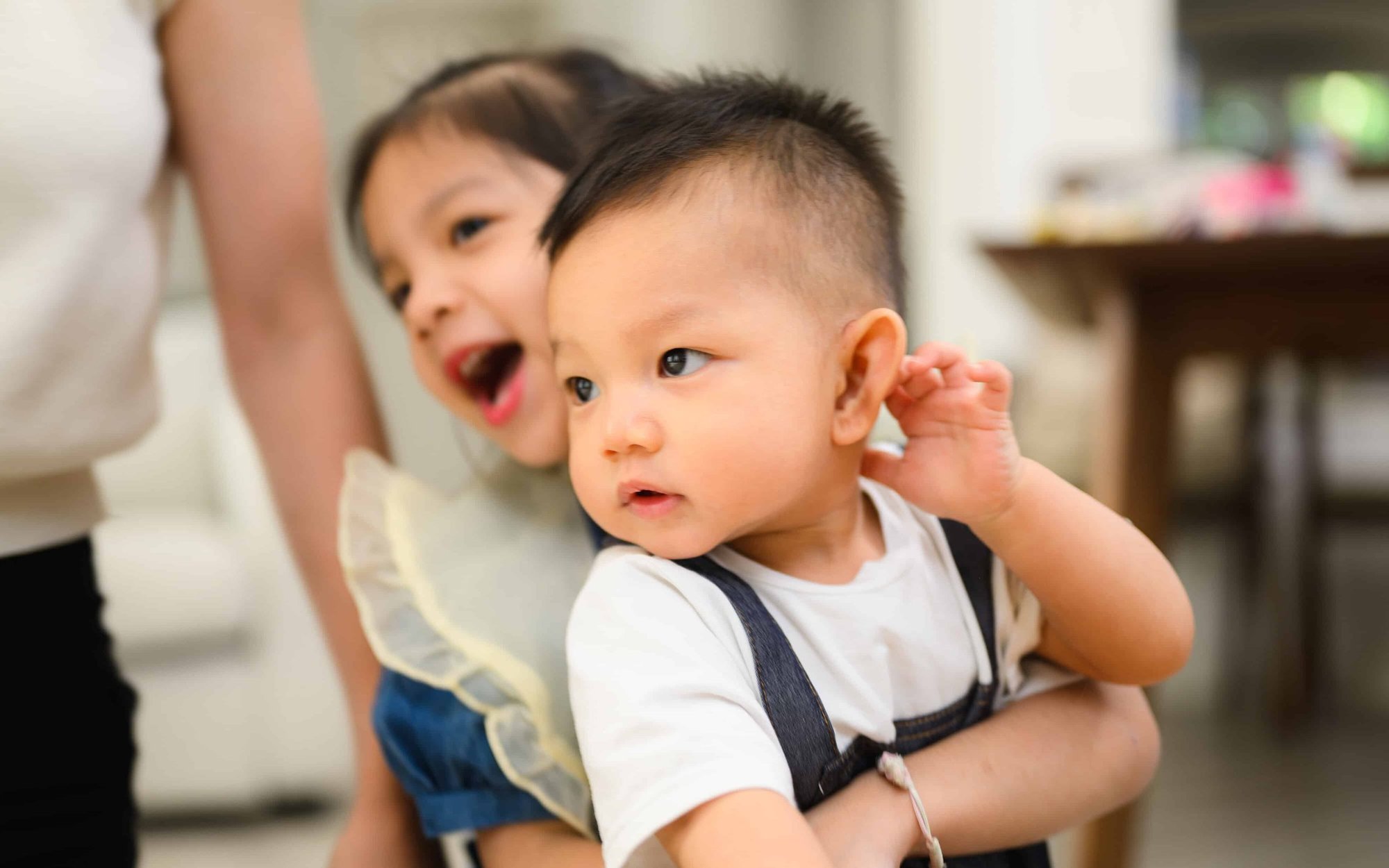
Language learning begins much earlier than most people expect — not with a baby's first word, but with the sounds they are immersed in long before birth. From the rhythms of a heartbeat to the melody of a familiar voice, babies arrive in the world already shaped by sound.
Some researchers have found that the brain systems used to process music and those used to process language overlap significantly (6) — and that this connection has real implications for how children develop as communicators, readers, and relational beings.
This article explores what we know about how babies use pitch and rhythm to make sense of language, why the sounds caregivers make matter more than the words they choose, and some patterns that tend to support this remarkable early development.
Babies are immersed in the music of language long before they understand any of it
Think about the last time you heard someone speak a language you didn't know. You couldn't catch the meaning, but you could hear something — a particular lilt, a cadence, a quality that made it feel distinct from other languages. Something in you was already responding, even without comprehension.
Babies live in this state all the time. For the first months of life, and in many important ways before birth, a baby is immersed in the music of language — its rhythms, its pitch patterns, its pauses and pulses — without access to the meaning of any of it. And yet, something is happening. The sound is leaving a trace.
Research in early language development has helped us understand what that trace looks like, and why it matters so much for everything that comes after.
From 18 weeks in the womb, babies are already learning the rhythm and melody of their language
From around eighteen weeks of pregnancy, a developing baby can hear — initially the rhythms of the mother's heartbeat and breathing, and later, from around the twenty-fifth week, sounds from the outside world: voices, music, ambient sound (3). Some evidence suggests that by the time a baby is born, they already show a measurable preference for the rhythm and melody of their native language over others, shaped by months of prenatal exposure (5).
What makes this possible is a significant overlap between the brain systems used to process musical rhythm and pitch and those used to process language (6). These are not two separate capacities running in parallel — they appear to share neural circuitry. A baby learning to parse speech is drawing on the same systems that will later help them feel the pulse of a song or recognise when a melody has ended.
Babies don't learn language by acquiring words first and sounds later. The sequence runs the other way. They master the sound patterns — the rhythm, the melody, the pitch contours — and that mastery is what eventually makes words learnable.
Research also points to what happens when a particular language becomes dominant in a baby's environment (3). Around six months of age, babies can distinguish the sound differences of all human languages. By twelve months, they have largely lost that ability — not through loss, but through what researchers call synaptic pruning. The connections that support the sounds of the ambient language are strengthened; those that aren't used are reduced. The brain is becoming more efficient, and more specific (3).
The instinct to sing and slow speech when talking to babies is doing real developmental work
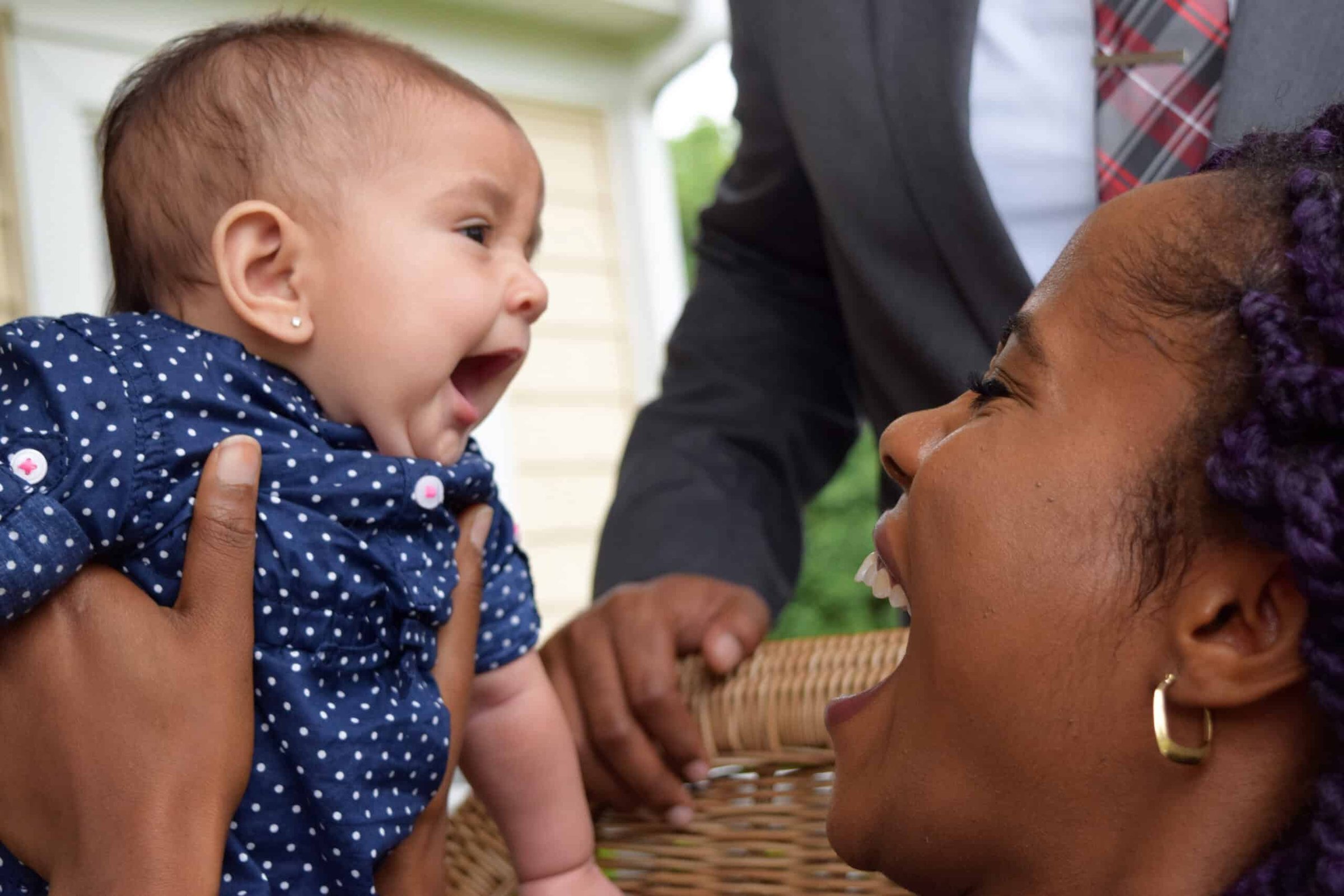
There's a reason that people across all cultures instinctively change the way they talk to babies. Without being taught to, caregivers raise their pitch dramatically, slow their speech, stretch their vowels, use shorter sentences, and repeat the same phrases with gentle variation. This pattern — sometimes called infant-directed speech, or motherese — appears to be universal (7).
It's not merely habit. This exaggerated musical quality of speech appears to serve a specific developmental function: it makes the structure of language unusually clear. The peaks and valleys of pitch highlight important words. The slowed rhythm gives the brain time to segment what it's hearing into units. The repetition creates the predictable patterns that learning depends on (1).
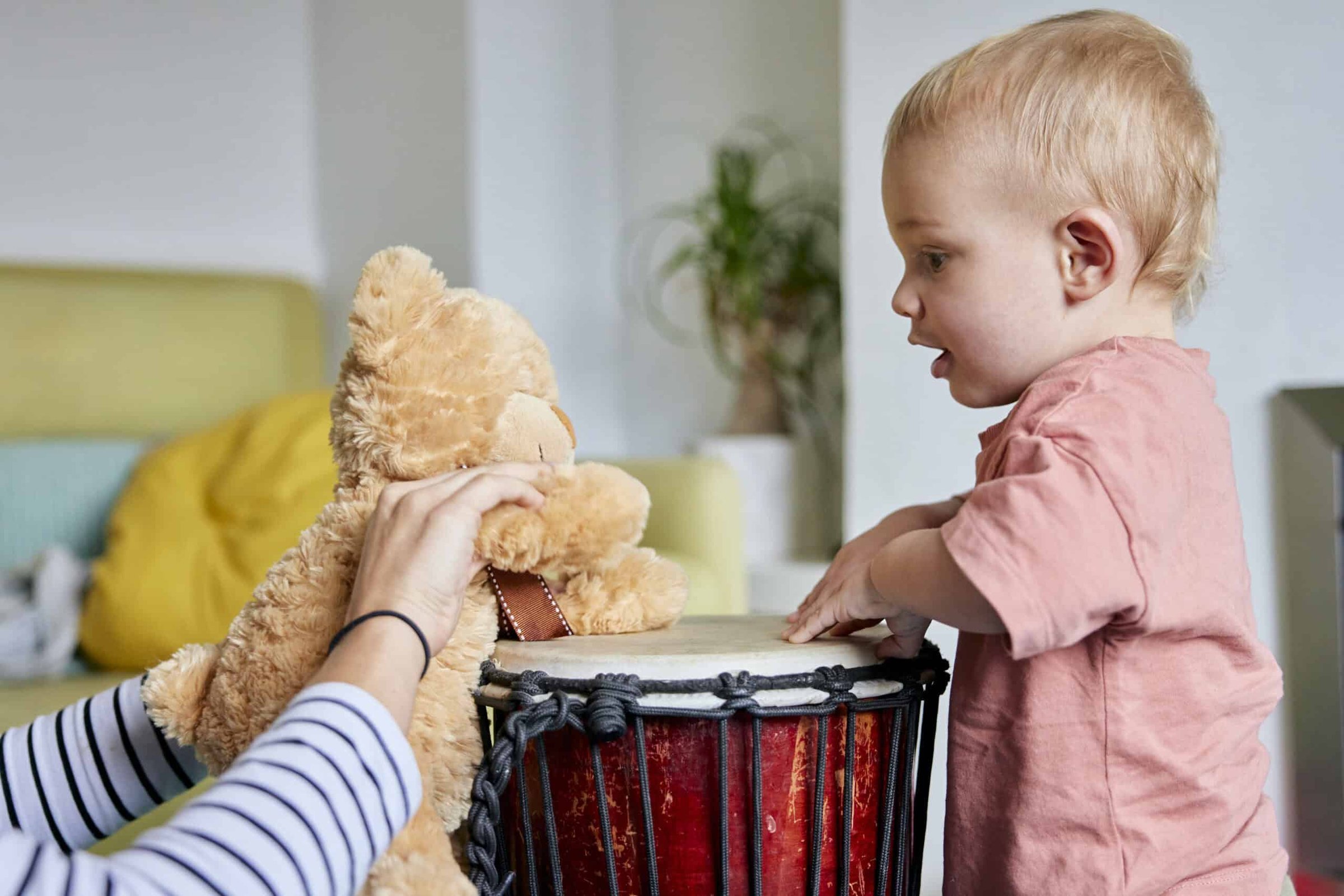
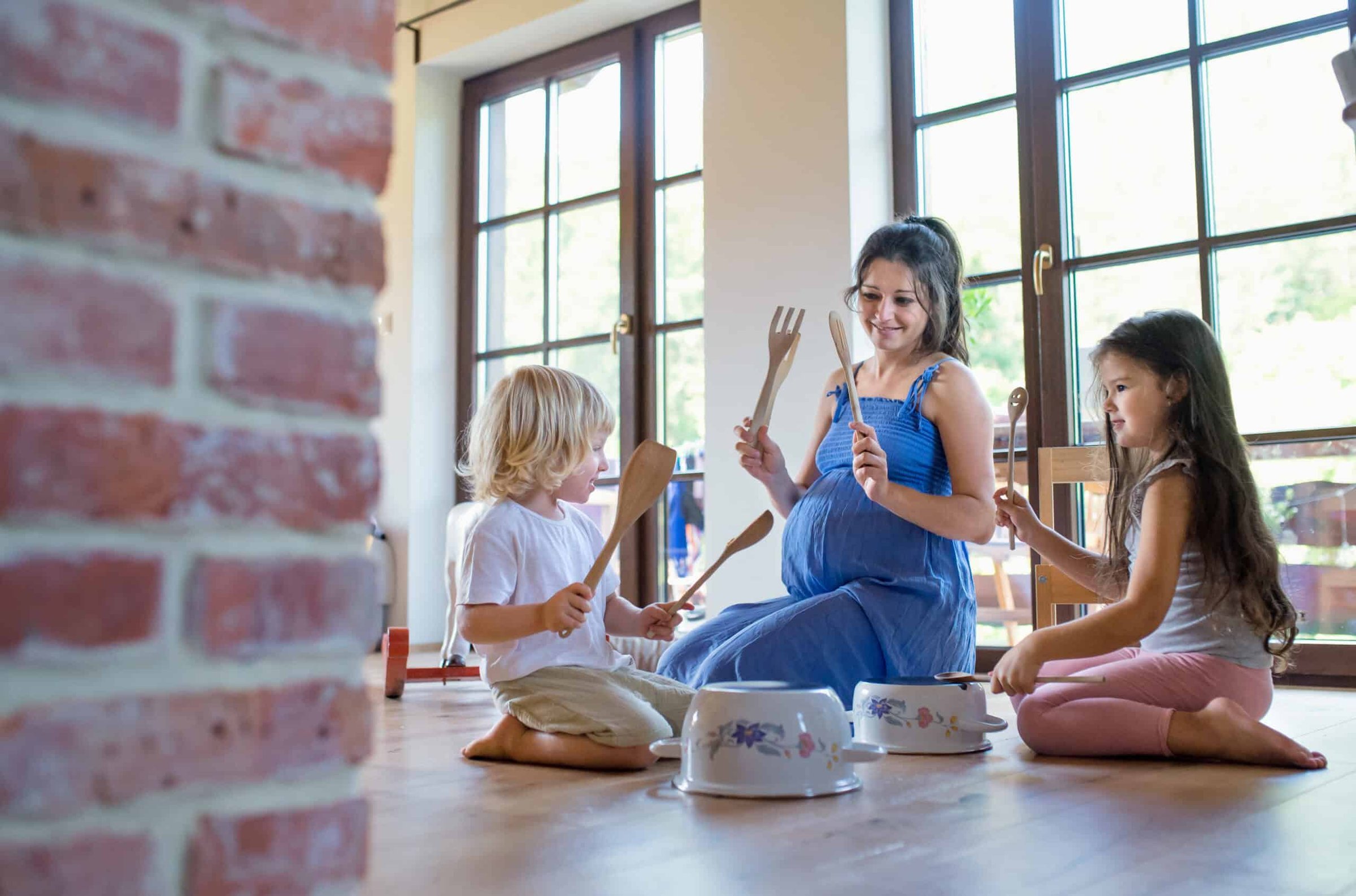
Nursery rhymes, clapping games, and knee-bouncing songs work through the same principle. The rhythm of a nursery rhyme helps children tune in and direct their attention to language patterns. The physical coordination of clapping or stomping to a beat builds what researchers call phonological awareness — an understanding of the sound structure of language that researchers have identified as one of the most reliable predictors of later reading ability (4).
In this sense, the sung lullaby and the clapping game are not preparatory activities for language learning. They are language learning — at the level of sound, rhythm, and relational attunement.
Human cultures have always understood this — and now neuroscience is catching up with what they knew
Long before neuroscience had the tools to measure what was happening in an infant's brain, human cultures were already doing the right thing. In Indigenous traditions across many parts of the world, lullabies were oral transmissions of cultural knowledge, seasonal rhythms, ancestral stories, and community belonging. The song taught the child their place in the world at the same time as it regulated their nervous system (8).
What experts now confirm is that this attunement between caregiver voice and infant brain is not metaphorical. The tonal and rhythmic contours of a caregiver's voice appear to help infants regulate stress, synchronise attention, and anticipate interaction — a finding that lends biological grounding to what ancestral practice already understood (8).
This has implications that extend well beyond individual families. Factors including socioeconomic circumstance, parental stress, and access to language-rich environments all shape the quality and variety of sound exposure babies receive. The relationship between rhythm, pitch, and language development is shaped by the conditions caregivers are living within. Some children arrive at language learning with significantly richer sonic environments than others, and that gap is structural rather than personal.
Music and rhythm are treated as optional in early education — butthey'recore to how language develops
Given how clearly research connects musical and rhythmic experience to language development, it's notable how consistently these activities are marginalised in formal early childhood settings. Singing, clapping games, nursery rhymes, and rhythm-based play tend to occupy the informal, the optional, the edges of a curriculum rather than its centre. They carry the faint cultural stigma of being 'not serious' — entertainment rather than education.
The developmental picture suggests the opposite. For babies and young children, rhythm-based interaction with a caregiver is one of the primary engines of language development. Classrooms and homes that prioritise it are following the developmental sequence the brain actually uses (2).
There is also a tension around access. The rich, responsive, musically varied environments that appear to support early language development are not equally available. Families navigating high stress, long working hours, or economic insecurity often have less time and capacity for the kind of unhurried, playful, rhythmic interaction that serves babies best. This is worth naming to locate the responsibility accurately, instead of adding pressure to already pressured caregivers.
What tends to support early language — and why most caregivers are already doing it
The evidence on early language development carries a reassuring implication: the things that appear to help most are not complicated, expensive, or specialised. They are largely the things that caregivers across cultures have always done — singing, talking in melodic voices, clapping, bouncing, repeating, responding.
Some patterns that many families and educators have found useful to support early language development:
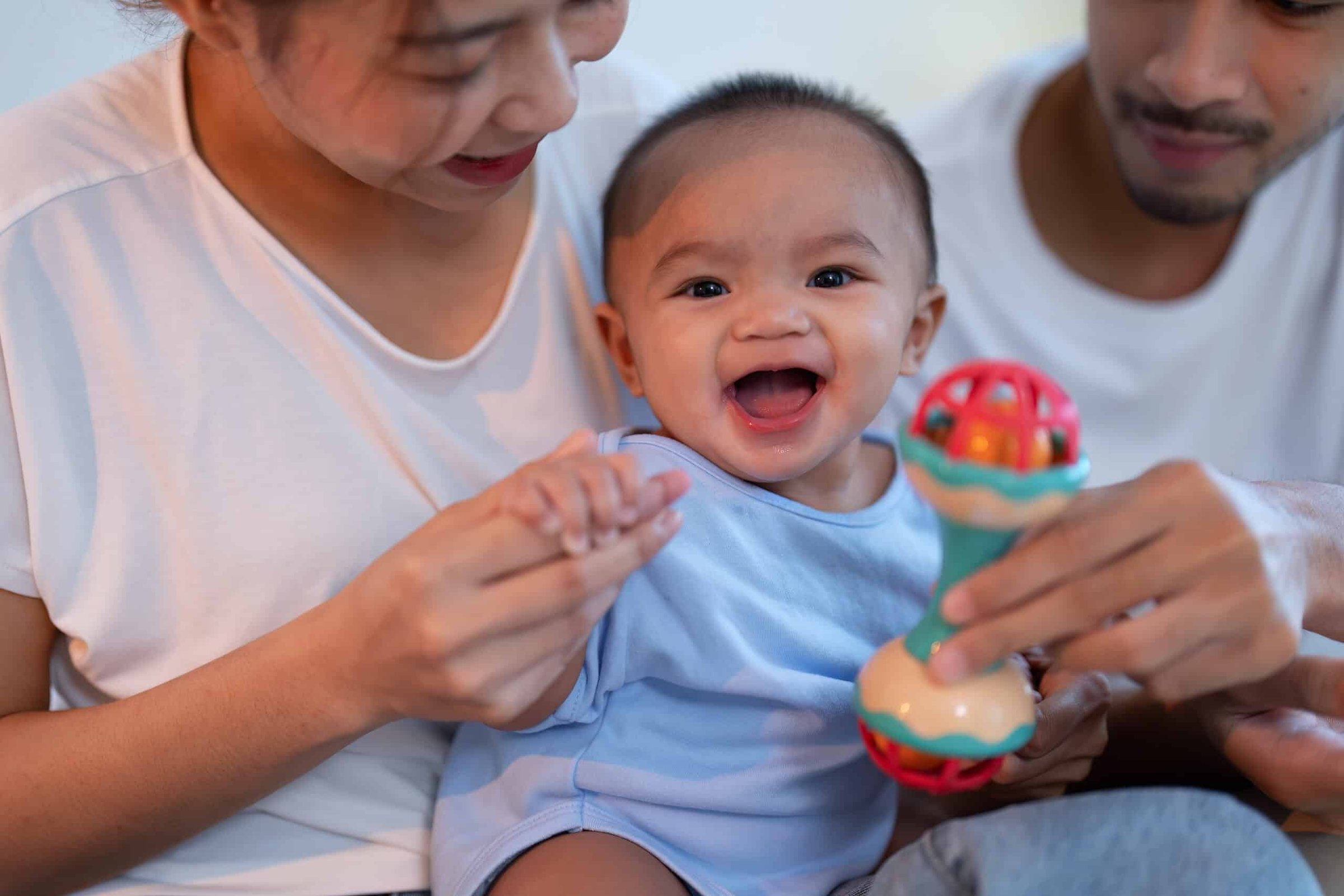
Sing the same songs repeatedly. Familiar songs create predictable patterns that help babies anticipate sounds and understand sequencing — a skill that later supports reading and memory. Many families find that a small repertoire of consistently repeated songs carries more developmental value than variety for its own sake (5). The repetition is the point.
Let the voice do what it naturally wants to do with babies. The instinct to slow speech, raise pitch, stretch vowels, and use shorter sentences when talking to an infant appears to be universal and developmentally purposeful (7). Infant-directed speech makes the structure of language unusually clear and holds attention in ways that normal adult speech tends not to. Trusting that instinct — rather than suppressing it out of self-consciousness — tends to be the most useful thing.
Bring the body into rhythm. Clapping, knee-bouncing, rocking, and stomping to the beat of songs or rhymes builds auditory-motor connections that researchers have linked to phonological awareness (4). The physical coordination of movement with sound appears to do something that passive listening alone doesn't. Many families find that these physical, rhythmic interactions are among the most naturally engaging experiences for babies and young children.
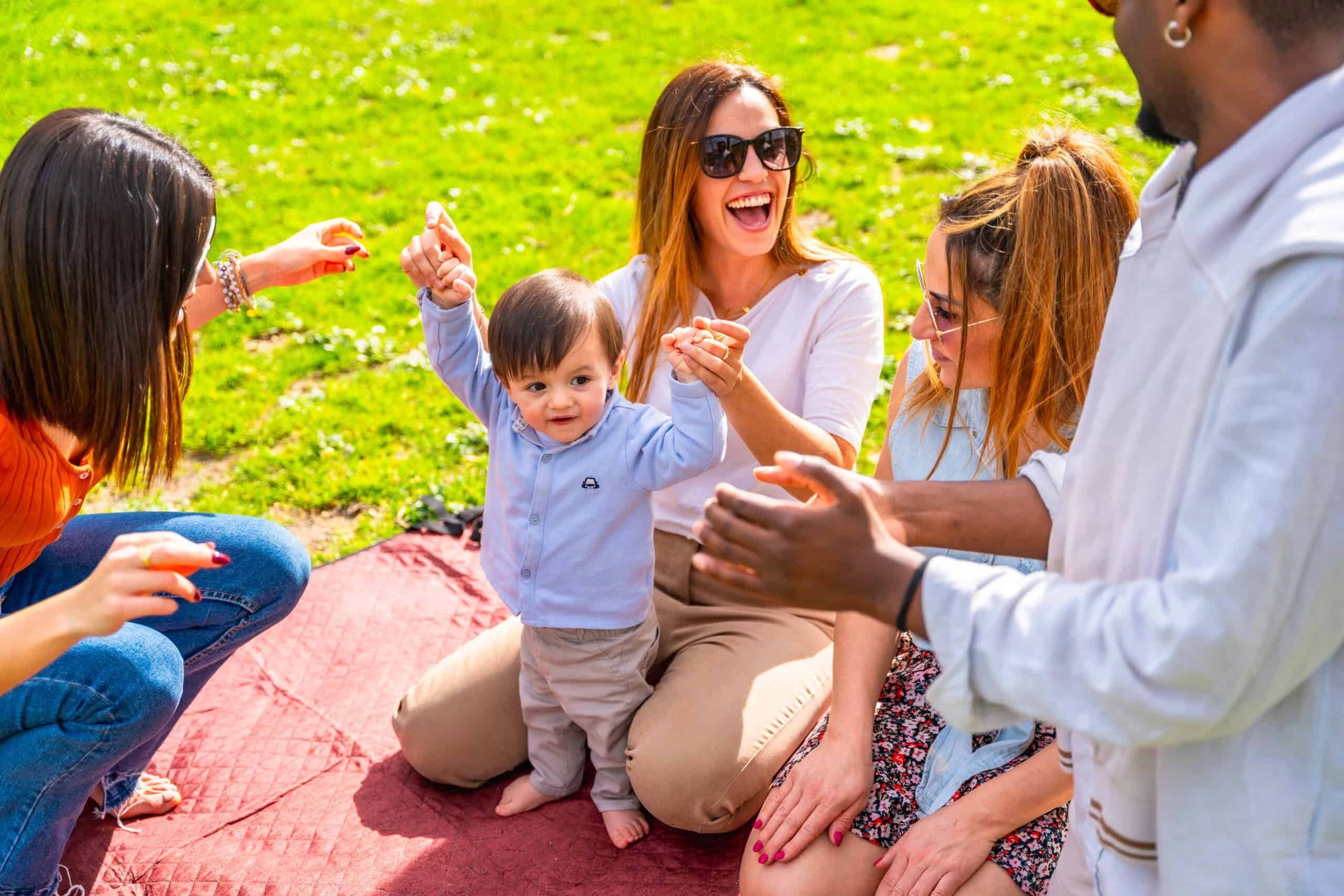
Pause and wait. Babies learn the rhythm of conversation — the back-and-forth of exchange — through experiences of turn-taking long before they have words. When a caregiver speaks and then waits, with eye contact and openness, they are teaching the structure of dialogue. The babble, gesture, or smile that comes back is the baby's version of a response, and treating it as one tends to build both language and connection.
Use multiple languages ifthey'represent in family life. The first year of life appears to be a particularly receptive period for exposure to different sound systems. A growing body of work suggests that babies in multilingual environments don't experience confusion — they experience enrichment, mapping distinct sound patterns to different contexts and speakers (3). Families who speak more than one language tend to find that using them freely and naturally in early childhood serves children well.
Everything caregivers are already doing — singing, talking, repeating — matters more than they know
There's something worth sitting with in all of this: that the most deep language learning a person will ever do happens before they have any awareness of learning at all. That a lullaby sung in the dark, a gentle rhythm tapped against a small back, a voice rising instinctively into warmth and melody — these are, in some of the most important ways, what development is.
The songs and spoken rhythms that caregivers offer to babies tend to echo across a lifetime — in the cadence of a familiar language, in the emotional texture of certain sounds, in the particular sense of comfort that comes from a voice that was known before there were words for knowing. What we give children in sound shapes how they hear the world and how safe they feel within it.
Understanding this doesn't add a burden to caregiving. If anything, it reframes what caregivers are already doing. Every bath-time song, every exaggerated 'hello', every repeated nursery rhyme is part of something genuinely important. Most caregivers are already doing enough — and perhaps just needed to know it.
References:
[1] Goswami U. Language acquisition and speech rhythm patterns: an auditory neuroscience perspective. R Soc Open Sci. 2022;9:211855. https://doi.org/10.1098/rsos.211855
[2] Martinez-Alvarez A, et al. Prosodic cues enhance infants' sensitivity to nonadjacent regularities. Sci Adv. 2023;9:eade4083. https://doi.org/10.1126/sciadv.ade4083
[3] Gopnik A, Meltzoff A, Kuhl P. How babies think: the science of childhood. London: Weidenfeld & Nicolson; 1999.
[4] Jeffrey T. Developing early verbal skills through music: using rhythm, movement and song with children and young people with additional or complex needs. London: Jessica Kingsley Publishers; 2023.
[5] Partanen E, Kujala T, Naatanen R, Liitola A, Sambeth A, Huotilainen M. Learning-induced neural plasticity of speech processing before birth. Proc Natl Acad Sci USA. 2013;110(37):15145–15150. https://doi.org/10.1073/pnas.1302159110
[6] Patel AD. Music, language, and the brain. Oxford: Oxford University Press; 2008.
[7] Broesch TL, Bryant GA. Prosody in infant-directed speech is similar across western and traditional cultures. J Cogn Dev. 2015;16(1):31–43. https://doi.org/10.1080/15248372.2013.833923
[8] Trainor LJ, Cirelli L. Rhythm and interpersonal synchrony in early social development. Ann N Y Acad Sci. 2015;1337(1):45–52. https://doi.org/10.1111/nyas.12649