For many neurodivergent children, particularly those on the autism spectrum, the ordinary social environment is genuinely demanding — full of ambiguous cues, unpredictable interactions, and unspoken rules that aren’t always legible. What seems to help is a context that reduces that ambiguity: clear roles, defined tasks, a shared focus, and a low-stakes way to practise being with other people.
LEGO® Therapy is a structured, play-based approach that was developed specifically to provide exactly these conditions. A growing body of research supports its use as a way to support social communication, collaboration, and emotional regulation in autistic children (3, 4, 5) — and some of its core principles appear to be useful more broadly.
This article explores what the research suggests about why LEGO® Therapy works, and what families and educators can draw from its principles even outside a formal therapeutic context.
For many neurodivergent children, building together is a more accessible social encounter than open-ended interaction
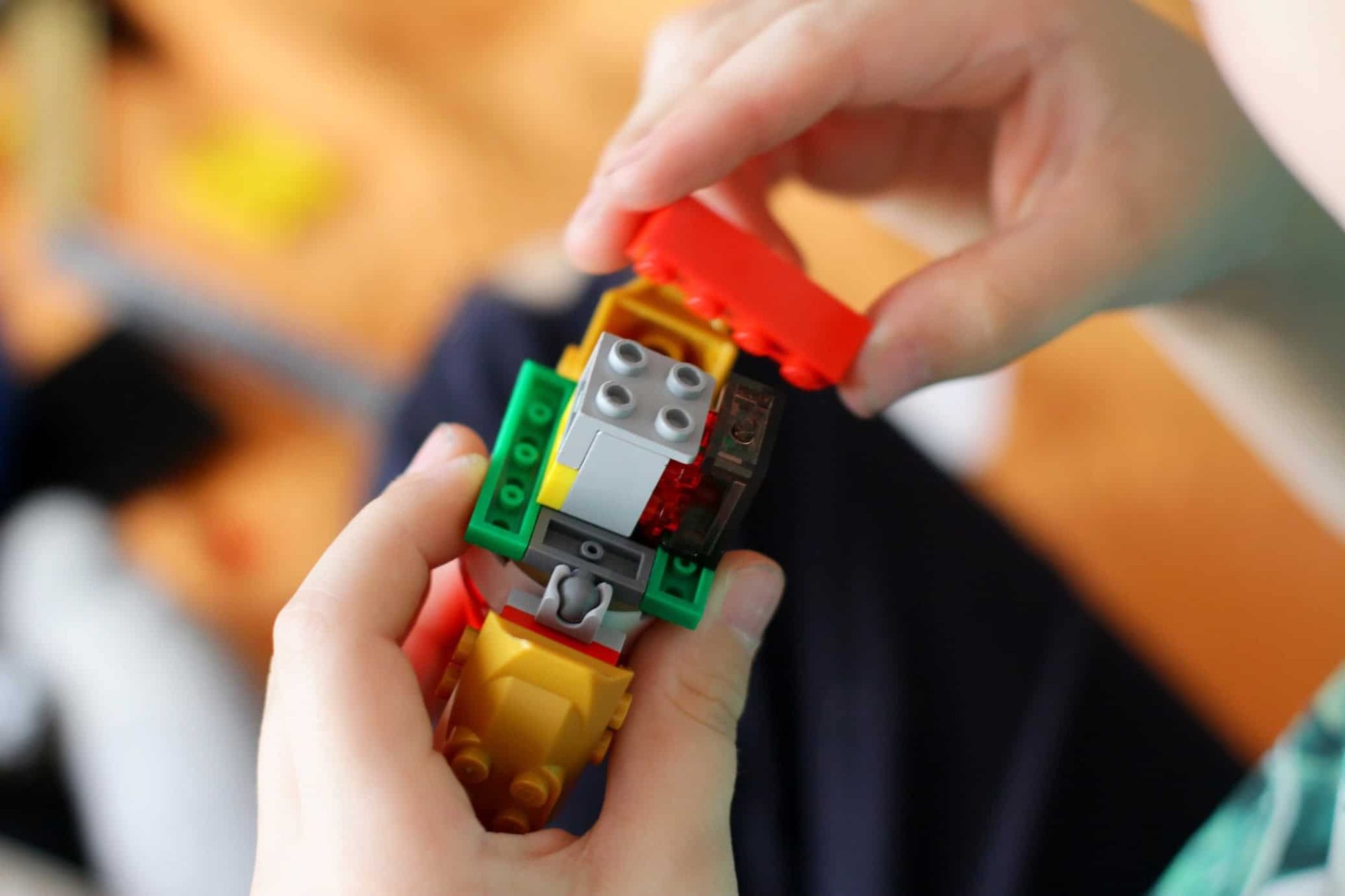
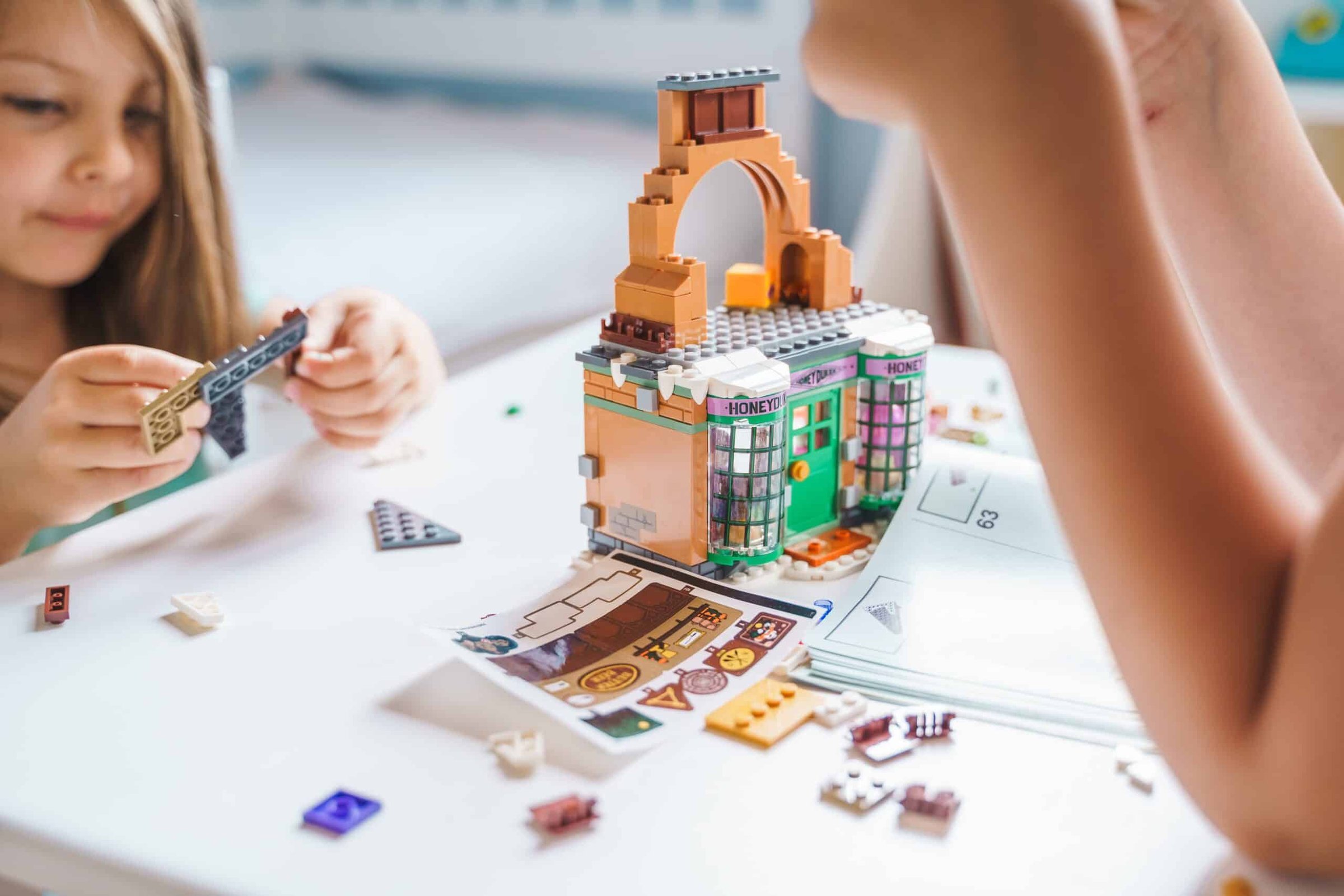
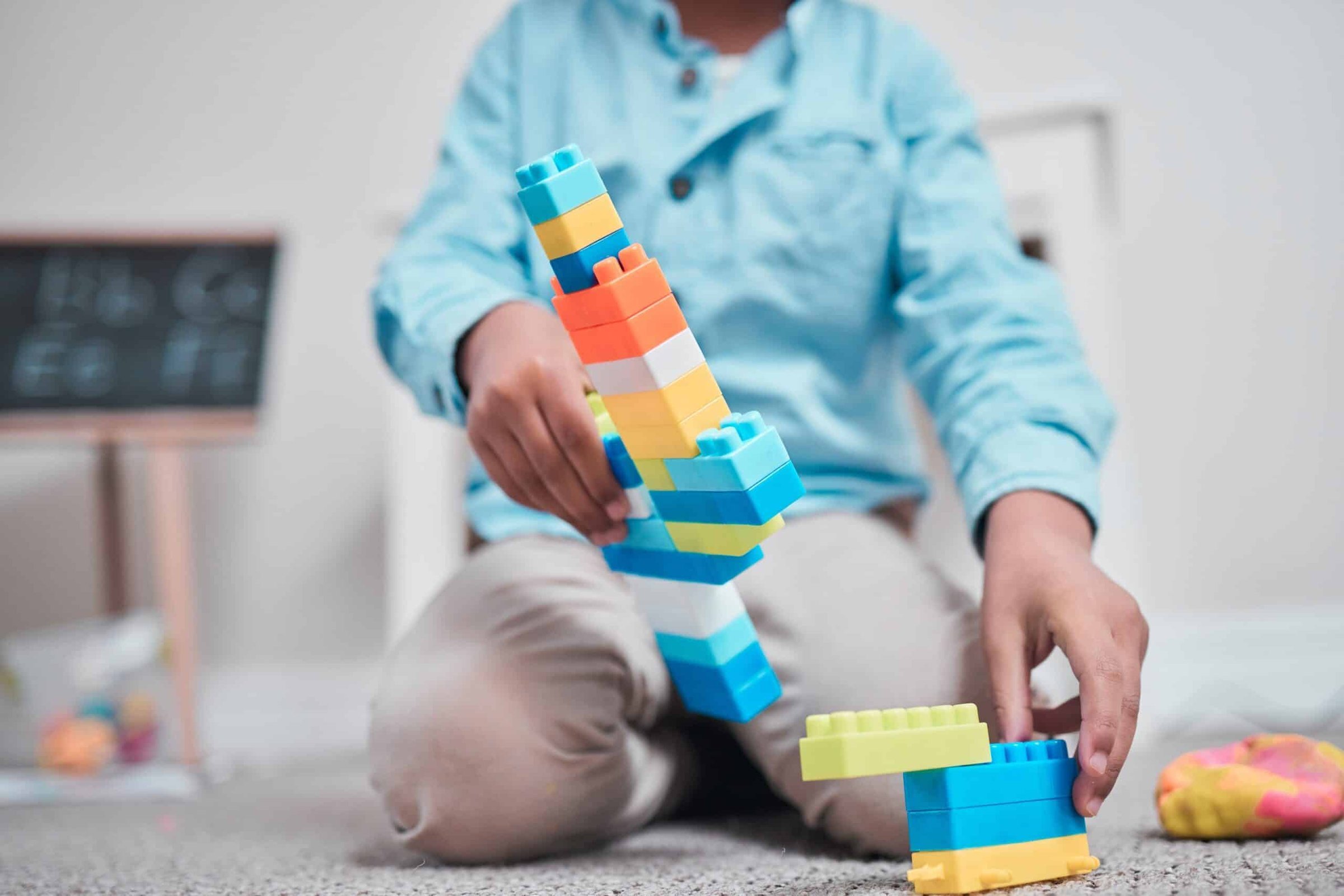
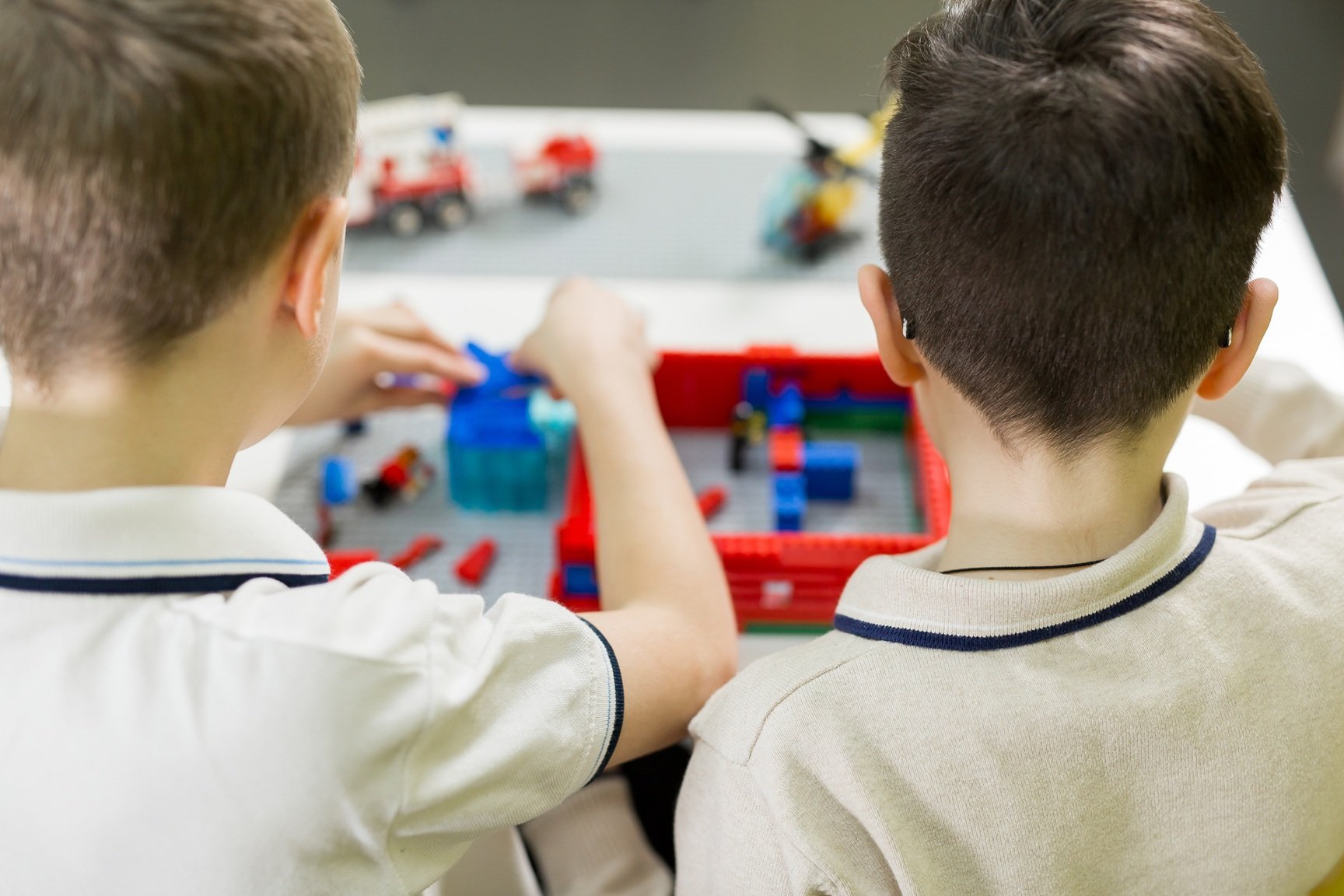
Watch a group of children building with LEGO® and something interesting tends to happen. The conversation is mostly about the thing being built — ‘pass the blue one’, ‘I think it goes here’, ‘that’s not going to hold’. The interaction is mediated, purposeful, and focused on a shared object. The social demands are real and structured. There is something to do together.
For many neurodivergent children, this turns out to be a genuinely different experience from unstructured social interaction — and a more accessible one. The focus on the build provides a kind of scaffolding for the social encounter. The ambiguity is reduced. There is a clear reason to be in the same space as someone else, and a clear way to engage with them.
That observation — that structured, object-centred play creates social conditions that some children can navigate when more open-ended interaction feels overwhelming — is the insight at the heart of LEGO® Therapy.
Research consistently finds that LEGO® Therapy improves social communication and peer interaction in autistic children
LEGO® Therapy was originally developed in the late 1990s by a clinical neuropsychologist as a structured social skills group for autistic children (7). Since then, a growing body of research has examined its effects. Some evidence suggests that participation in LEGO® Therapy is associated with improvements in social communication, cooperative play, and the ability to initiate and sustain peer interactions in autistic children (3, 4).
A systematic review examining the evidence base for LEGO® Therapy found consistent positive associations across multiple studies, noting particular effects on collaborative engagement, communication, and confidence in peer settings (5). Experts have also pointed to potential benefits for cognitive skills including attention and executive function — capacities involved in planning, sequencing, and managing competing demands (6).
What LEGO® Therapy appears to do is create a context in which the social demands are clear, the rules are explicit, and the activity itself is mostly motivating for many children who find conventional social interaction effortful or unpredictable. The building is the mechanism.
Most of the research on LEGO® Therapy has focused on autistic children, and the evidence base, while growing, is still developing. Effect sizes vary across studies, and much of the research relies on small samples. The principles that appear to drive the approach’s effectiveness, however, seem likely to be relevant more broadly — for any child who benefits from the structure and shared focus that building together provides (3, 4).
What building together actually offers — clear roles, recoverable mistakes, and the experience of shared success
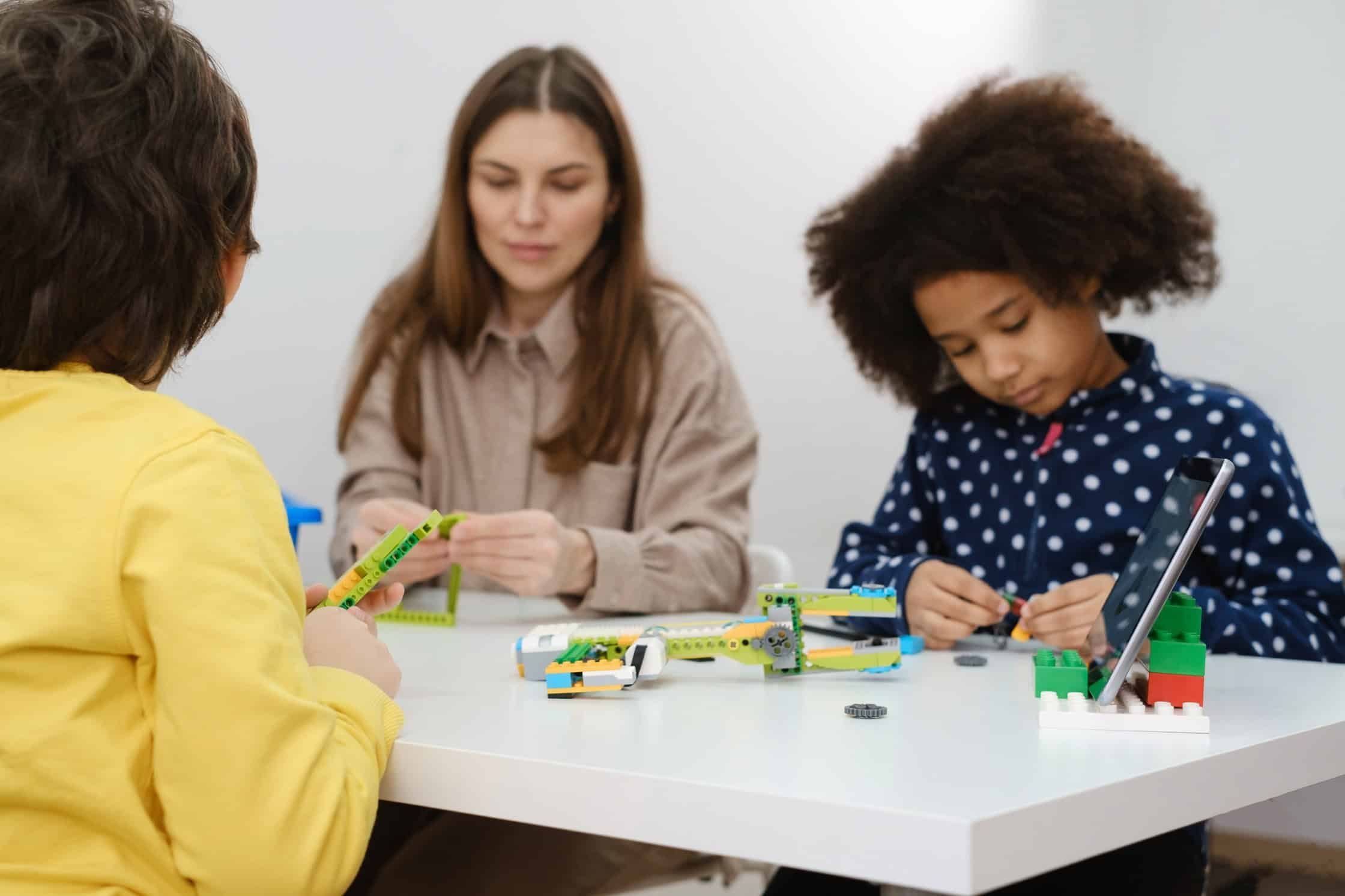
The structured format of LEGO® Therapy involves specific roles — typically a supplier, who finds the pieces; an engineer, who reads the instructions; and a builder, who constructs. These roles rotate, which means each child gets to practise leading, following, communicating, and waiting. The division of labour creates natural opportunities for interaction that don’t require children to navigate complex social improvisation.
For children who struggle to know where to start in a social situation, or who find the unstructured expectations of peer interaction hard to read, this kind of scaffolding can be genuinely liberating. The build gives everyone something to care about. Mistakes in LEGO® construction are neutral and recoverable — something can be taken apart and reassembled without social consequences. This tends to create conditions in which children can practise frustration tolerance, persistence, and collaborative problem-solving in a context that feels safe enough to try.
There is also something significant in the experience of having made something together. The shared build becomes a shared achievement — something that belonged to all of them, that required all of them. For children who often experience social encounters as exposing or exhausting, the concrete evidence of successful collaboration can carry real emotional weight.
Creative making as common ground — a shared object lowers social demands for children who find direct interaction hard
In many Native American traditions, storytelling through art has long served as a vehicle for both individual expression and communal connection — a way of making and sharing meaning that works across different kinds of minds, different levels of verbal confidence, and different social experiences (1). The creative object becomes the common ground.
LEGO® Therapy operates within a similar logic. The building is the medium through which the social learning happens. For children who may find language-heavy interaction demanding, the shared focus on a physical object provides a different kind of meeting place: one that communicates through doing rather than saying.
This insight — that structured creative activity can create social entry points that conventional interaction does not — has implications well beyond LEGO®. Schools and families that have found ways to embed collaborative, structured making into their contexts tend to find that it supports social engagement for a wider range of children than less structured social opportunities do. The creative context lowers the barriers to connection.
Access and the limits of the formal approachof theLEGO® Therapy
LEGO® Therapy, as a formalised clinical approach, is typically delivered by trained therapists in structured group settings. This presents an access question. The evidence base for the approach has been built on work with clinical populations in supervised contexts; the extent to which the benefits transfer to more informal, home-based, or educator-led settings is not fully established.
There is also a tension worth naming around the medicalisation of play. LEGO® building is already something many children do spontaneously and joyfully, without therapeutic framing. Recasting it as an intervention changes the relationship a child has with the activity — and not necessarily for the better. For some children, knowing they are ‘doing therapy’ through their LEGO® may reduce rather than increase the experience. The principles of structured, role-based, collaborative building do not require clinical labelling to be effective
It’s good to remember that LEGO® Therapy was developed primarily for autistic children, and its benefits appear most consistently in that population. Generalising its recommendations to all neurodivergent children — or to neurotypical children as a developmental tool — requires care. What the research supports is more specific than what the enthusiastic language around LEGO® as a universal developmental enhancer sometimes implies.
What families and educators can draw from the approach — five patterns that work without a clinical setting
The core insight of LEGO® Therapy — that structured, role-based, collaborative building creates conditions for social engagement that are more accessible for many neurodivergent children — is available in informal, everyday contexts as well as formal therapeutic ones. Families and educators who understand the principles can apply them with whatever building materials are to hand.
Some patterns drawn from the LEGO® Therapy approach that many families and educators have found useful to support social development:
Assign clear, rotating roles. The division of labour in LEGO® Therapy — supplier, engineer, builder — works because it gives each participant a defined contribution and reduces the social ambiguity of open-ended collaboration. Many families find that any structured building activity can carry this benefit when roles are made explicit and rotated. The child who leads this time gets to follow next time — and both experiences build something different (3, 7).
Let the build be the focus. One of the reasons LEGO® Therapy is effective is that the social interaction is mediated through the shared object. When attention is on the build rather than on each other, the social pressure is reduced. For neurodivergent children who find eye-to-eye, face-to-face interaction demanding, building alongside someone — with attention directed at a shared task — can provide genuine social contact that is less exposing than direct interaction (4, 5).
Frame mistakes as part of the process. A key element of LEGO® Therapy’s therapeutic value is the recoverable nature of building mistakes — something can always be taken apart and reassembled. Adults who reinforce this framing — treating errors as information rather than failures, and modelling calm reconstruction after something goes wrong — help children practise the frustration tolerance and persistence that carry into broader life (6).
Create real shared achievements. The evidence that collaborative building produces positive outcomes rests partly on the experience of shared success — something that was made together, that required everyone’s contribution, and that can be pointed to as jointly created. Families and educators who find ways to ensure all participants feel genuine ownership of the finished build tend to find that this shared pride becomes a foundation for the relationship.
Use building topractisereal-life scenarios. Role-playing through LEGO® scenes — a bus stop, a home, a school — provides a structured, low-stakes space to rehearse social situations that may feel unpredictable in real life. Many families of autistic children find that this kind of narrative building supports their child’s preparation for transitions and new contexts more effectively than verbal discussion alone (2, 5).
What the bricksactually build— the conditions for belonging, competence, and working toward something together
The bricks on the living room floor are, in some sense, beside the point. What LEGO® Therapy has helped us understand is that the conditions under which social learning happens matter as much as the content. For many children — and not only those who are neurodivergent — the most effective social contexts are those that offer structure, shared purpose, and a tangible reason to be in relationship with someone else.
Building together is one of the oldest human activities. The collaborative project, the shared making, the experience of creating something that none of us could have built alone — these create relational conditions that are recognisably good for people, at any age, in any context.
What the research on LEGO® Therapy adds is the observation that these conditions can be deliberately created for children who need them most. And that the evidence of something well-made, built together, tends to stay with those children — as an experience of competence, of belonging, and of what it feels like to work with someone else toward something that mattered.
References:
[1] Hodge FS, Pasqua A, Marquez CA, Geishirt-Cantrell B. Utilizing traditional storytelling to promote wellness in American Indian communities. J Transcult Nurs. 2002;13(1):6–11. https://doi.org/10.1177/104365960201300102
[2] Huskens B, Palmen A, Van der Werff M, et al. Improving collaborative play between children with autism spectrum disorders and their siblings: the effectiveness of a robot-mediated intervention based on LEGO® therapy. J Autism Dev Disord. 2015;45:3746–3755. https://doi.org/10.1007/s10803-014-2326-0
[3] Levy J, Dunsmuir S. Lego therapy: building social skills for adolescents with an autism spectrum disorder. Educ Child Psychol. 2020;37(1):58–83. https://doi.org/10.53841/bpsecp.2020.37.1.58
[4] Lindsay S, Hounsell KG, Cassiani C. A scoping review of the role of LEGO® therapy for improving inclusion and social skills among children and youth with autism. Disabil Health J. 2017;10(2):173–182. https://doi.org/10.1016/j.dhjo.2016.10.010
[5] Narzisi A, Sesso G, Berloffa S, Fantozzi P, Muccio R, Valente E, et al. Could you give me the blue brick? LEGO®-based therapy as a social development program for children with autism spectrum disorder: a systematic review. Brain Sci. 2021;11(6):702. https://doi.org/10.3390/brainsci11060702
[6] Vegni N, D’Ardia C, Di Filippo G, Melchiori FM. The impact of LEGO® therapy on cognitive skills in autism spectrum disorders: a brief discussion. AIMS Neurosci. 2023;10(2):190–199. https://doi.org/10.3934/Neuroscience.2023016
[7] LeGoff DB, Gomez de la Cuesta G, Krauss GW, Baron-Cohen S. LEGO®-based therapy. London: Jessica Kingsley Publishers; 2014.