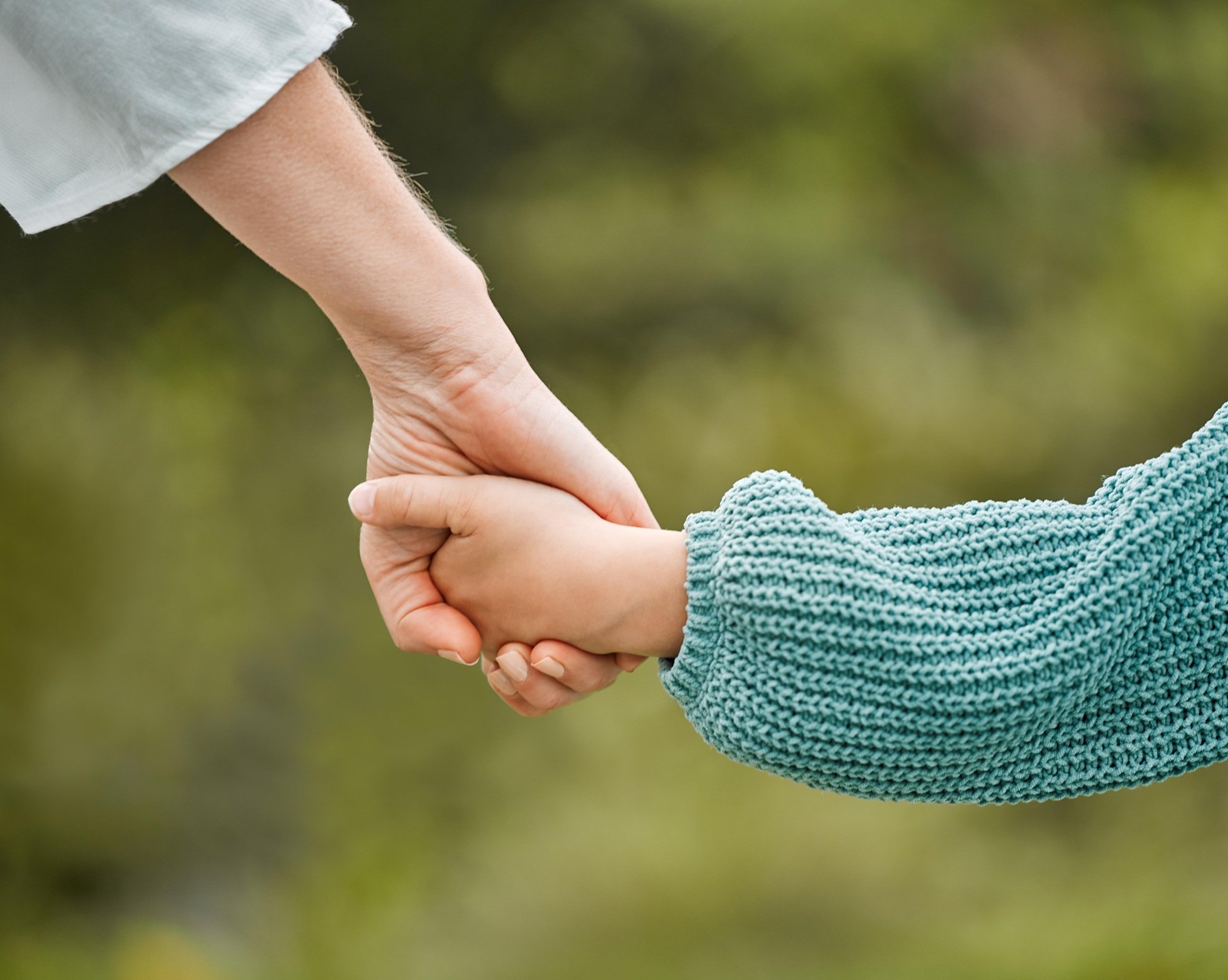
A toddler who offers their favourite toy to a crying friend is doing something genuinely empathic. So is the teenager who feels moved by injustice in a country they've never visited. These are not the same thing — but they're connected. Empathy has a developmental arc, and understanding it can help adults make more sense of what they're seeing in children at different stages.
A growing body of work suggests that the capacity for empathy begins to form in the first months of life, shaped significantly by early relationships and the emotional environments children grow up within (2, 6). It then develops gradually — becoming more cognitively complex, more socially extended, and more emotionally regulated — through childhood and into adolescence.
This article traces that arc, explores what research suggests about the brain systems involved, and offers some patterns that many families and educators have found useful at different stages.
Empathy in a one-year-old looks completely different from empathy in a teenager — butit'sthe same impulse
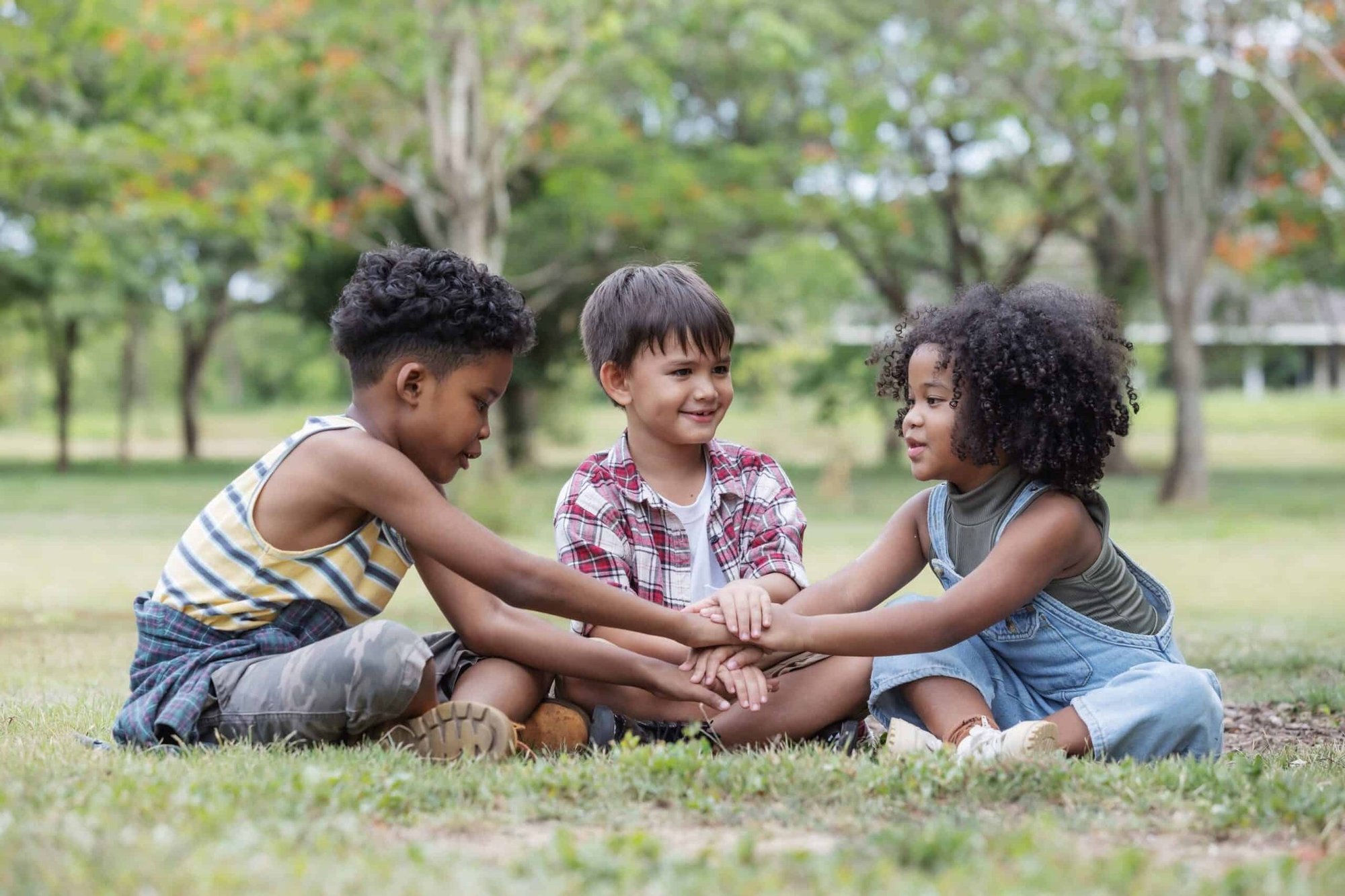
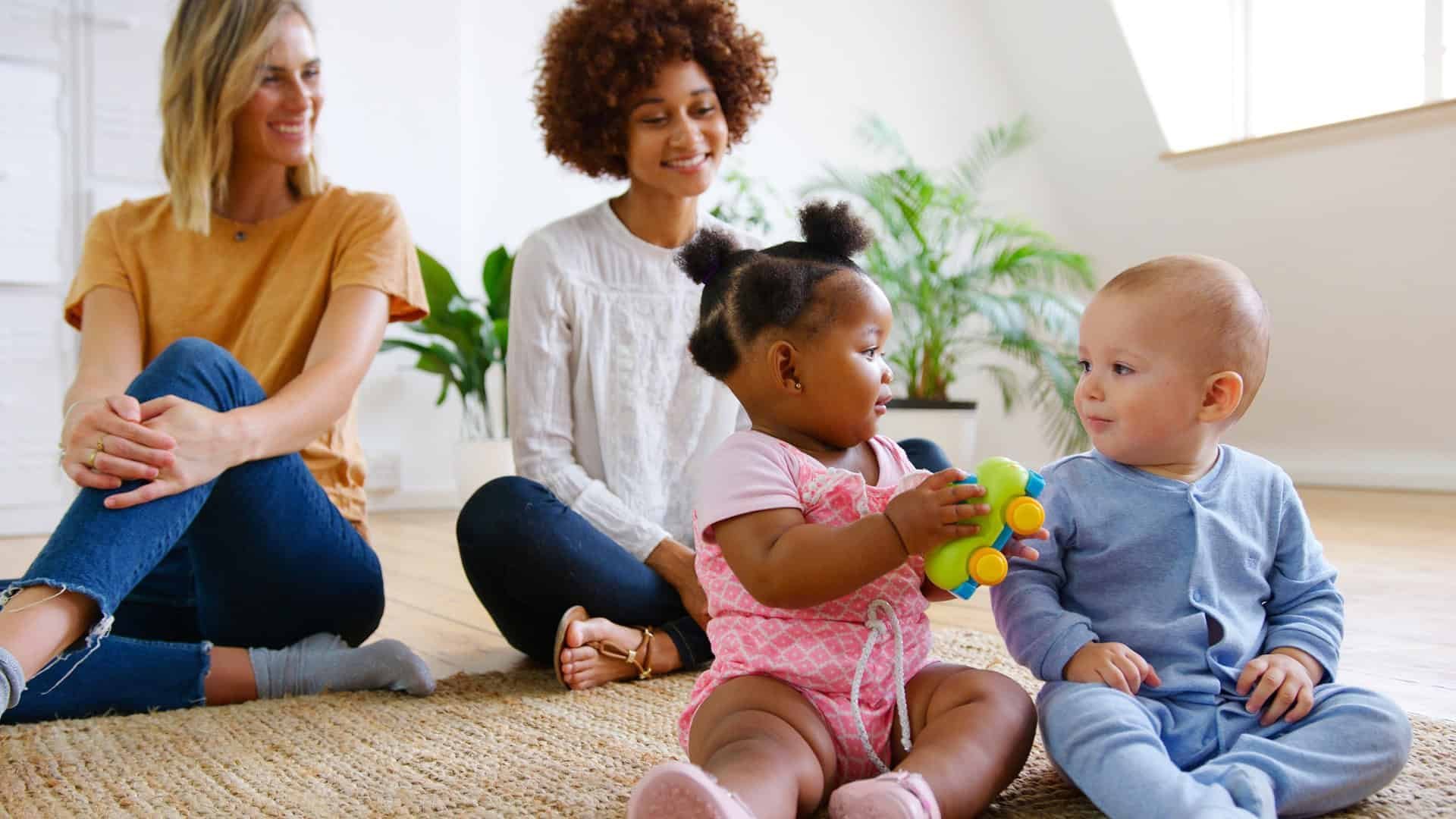
A one-year-old reaches into their own toy basket and hands something to a child who is upset. It's one of the earliest and most touching examples of empathy in action — and it reveals something important: the impulse to comfort comes before the understanding of what will actually help. The toddler offers their own favourite toy because that's the comfort they know. They feel the other child's distress, and they want to respond.
That same basic impulse — sensing another's pain and wanting to ease it — will look completely different in the same child at age twelve, and different again at seventeen. The capacity is continuous, but what it can do, how it works, and how far it reaches changes enormously across childhood.
Understanding the arc of that development helps make sense of things that can otherwise be confusing — why young children are egocentric in their empathic responses even when they mean well, why adolescents can seem simultaneously deeply principled and surprisingly blind to the people directly in front of them.
The brain systems underlying empathy develop gradually — which is why it becomes more sophisticated across childhood
Empathy appears to involve several overlapping brain systems. Researchers point particularly to regions involved in perspective-taking, self-regulation, and the processing of emotional signals (1). These regions develop and integrate gradually across childhood, which is one reason empathy becomes more sophisticated over time rather than arriving fully formed.
There's also a growing understanding of neural circuitry that appears to support a kind of resonance between one person's emotional state and another's — a mechanism sometimes described in terms of shared representations or neural attunement (3). The basic claim — that humans are wired, to some degree, to register what others are feeling — is fairly well-supported, though the precise mechanisms continue to be debated.
Empathy has at least two distinguishable components: the emotional — feeling something of what another person feels — and the cognitive — understanding their perspective, intentions, and inner state. These develop at different rates and draw on different systems.
Individual differences in empathy are shaped not just by brain development but also by early relational experience. Children who experience consistent, responsive caregiving appear to develop more robust empathic capacity over time — though as with much of this research, the direction of causality is complex (6).
What the developmental arcactually lookslike — from emotional contagion to abstract moral reasoning
In the earliest months, what infants show is sometimes called emotional contagion — a direct, almost automatic resonance with the distress or joy of those around them. Babies cry when they hear other babies cry. They settle when caregivers are calm. Their emotional state is still largely continuous with the emotional state of the people they depend on (2).
Through toddlerhood and into early childhood, something new begins to emerge: the understanding that other people have a separate inner life. A two-year-old who offers their toy to a sad friend is responding to the feeling — but still assuming the other child shares their own preferences. By four or five, children are beginning to grasp that another person might feel differently about the same situation. This is the emergence of what developmental psychologists call theory of mind — the capacity to model another person's mental state.
A small sign of this development that tends to amuse parents: around this age, children often make their first attempts to deceive. To successfully deceive someone, you have to model how they think and what they believe — which requires holding another person's mental state in mind. It's an early, somewhat inadvertent sign of perspective-taking emerging (3).
Through middle childhood, empathy extends outward. Children move from caring about the people they know to caring about the people they can imagine — those in different circumstances, facing difficulties the child hasn't experienced. And in adolescence, a new dimension arrives: the capacity for abstract moral reasoning, for empathy with people across time and distance, for being genuinely moved by injustice even in unfamiliar contexts (1, 5). Alongside this comes something less often acknowledged: the intensity of adolescent empathy can be overwhelming. Teenagers tend to feel things very fully, and without the emotional regulation that comes with greater maturity, empathic engagement can tip into empathic distress — feeling too much, too intensely, with too little ability to act.
How context shapes what empathy becomes — culture, relationships, and the diversity a childencounters
The environments children grow up within — the quality of early relationships, the cultural expectations around emotional expression, the diversity of perspectives they encounter — all shape what their empathic capacity develops into.
In many Indigenous cultures, for example, storytelling serves as a primary vehicle for empathy development — children encounter a wide range of human experiences, moral dilemmas, and emotional situations through narrative, guided by adults who model how to respond to them. The learning is embedded in relationship and communal practice rather than in instruction (4).
Exposure to social diversity also tends to support broader empathic development. Children who have sustained contact with peers from different backgrounds, or who encounter a wide range of life experiences through literature and story, tend to develop more flexible perspective-taking over time (1). Empathy, in this sense, is partly a matter of imagination — and imagination expands with exposure.
Teenagers' capacity for abstract empathy — for caring about injustice they haven't personally witnessed — tends to outpace their institutional contexts, which rarely offer meaningful channels for that concern. The passionate moral idealism that can look like rebellion or difficulty is often, at its heart, an empathic response looking for somewhere to go.
When feeling too much becomes part of the problem — empathy without regulation can overwhelm
One of the less discussed tensions in the development of empathy is its relationship with emotional regulation. The capacity to empathise — to genuinely register and respond to another's distress — is not automatically accompanied by the capacity to manage what that registers as in the self.
Young children can be overwhelmed by others' distress precisely because their empathic responsiveness is not yet balanced by regulatory capacity. They feel the other child's pain and are undone by it rather than moved to help. This is one reason why supporting children's emotional regulation is not separate from supporting their empathy development — the two are closely interconnected.
In adolescence, the same dynamic plays out on a larger scale. The extension of empathy to abstract and global concerns — to people who are suffering in distant contexts — can generate distress, helplessness, or what some researchers call moral injury: the pain of knowing about suffering without having the power to address it. Environments that give adolescents meaningful opportunities to act on their empathic impulses, rather than simply exposing them to more suffering, tend to support healthier development (5).
What tends to support empathy atdifferent stages— orientations for parents and educators
The conditions that support empathy development tend to be less about specific activities and more about the quality of the relational and emotional environment children inhabit.
Some patterns that many families and educators have found useful to support empathy across the developmental arc:
In infancy and toddlerhood: respond and name. Young children absorb empathy primarily through the relational environment around them. Adults who respond warmly to distress — their own child's and others' — and who name what they're observing ('they seem sad, let's see if they're okay') offer children a template for empathic response before they can produce it independently. The modelling is the teaching.
In early childhood: stories and pretend play. Books with emotional content, and play that involves taking on different characters' feelings and perspectives, tend to give children low-stakes practice in understanding how other minds work. Conversations after a story — 'what do you think that character was feeling?' — appear to support the development of theory of mind more actively than reading alone (3).
In middle childhood: broaden the circle of concern. As children's capacity for perspective-taking extends beyond their immediate relationships, they tend to be ready to engage with the reality of people in different circumstances. Conversations about fairness, exposure to diverse stories and people, and genuine opportunities for contribution — rather than charity — tend to develop a richer and more grounded sense of empathic concern (1).
In adolescence: offer channels for action. Teenagers whose empathic concern is met with meaningful opportunities to act — through mentorship, community involvement, advocacy, or simply being genuinely consulted — tend to develop more integrated and sustainable empathy than those who are given more to feel but no way to respond. The intensity of adolescent empathy is an asset; what it needs is somewhere useful to go (5).
Across all stages: model regulation alongside empathy. Adults who demonstrate how to feel something fully and then find a way to act, rather than being overwhelmed, give children a working model of what mature empathy looks like. This is about showing that feeling and functioning can coexist. That tends to be among the most useful things an adult can model.
Empathy is acapacity that grows through experience, relationships, and time
Empathy is sometimes described as a trait — something a person either has or doesn't, in more or less measure. The developmental picture suggests something more interesting: it's a growing capacity, shaped by experience, relationships, and context, that expands across a lifetime in unpredictable ways.
The toddler who offers their toy, the eight-year-old who worries about children in situations unlike their own, the teenager who feels the weight of injustice they've never personally encountered — these are all the same human empathic impulse, at different moments of its unfolding.
What tends to shape whether it grows more or less robustly is the quality of the emotional environment a child inhabits — the adults who model noticing and responding, the relationships that make it safe to feel, and the spaces that offer somewhere for that feeling to go.
References:
[1] Gaspar A, Esteves F. Empathy development from adolescence to adulthood and its consistency across targets. Front Psychol. 2022;13:936053. https://doi.org/10.3389/fpsyg.2022.936053
[5] Tsou Y, Li B, Wiefferink CH, Frijns JHM, Rieffe C. The developmental trajectory of empathy and its association with early symptoms of psychopathology in children with and without hearing loss. Res Child Adolesc Psychopathol. 2021;49(9):1151–1164. https://doi.org/10.1007/s10802-021-00816-x