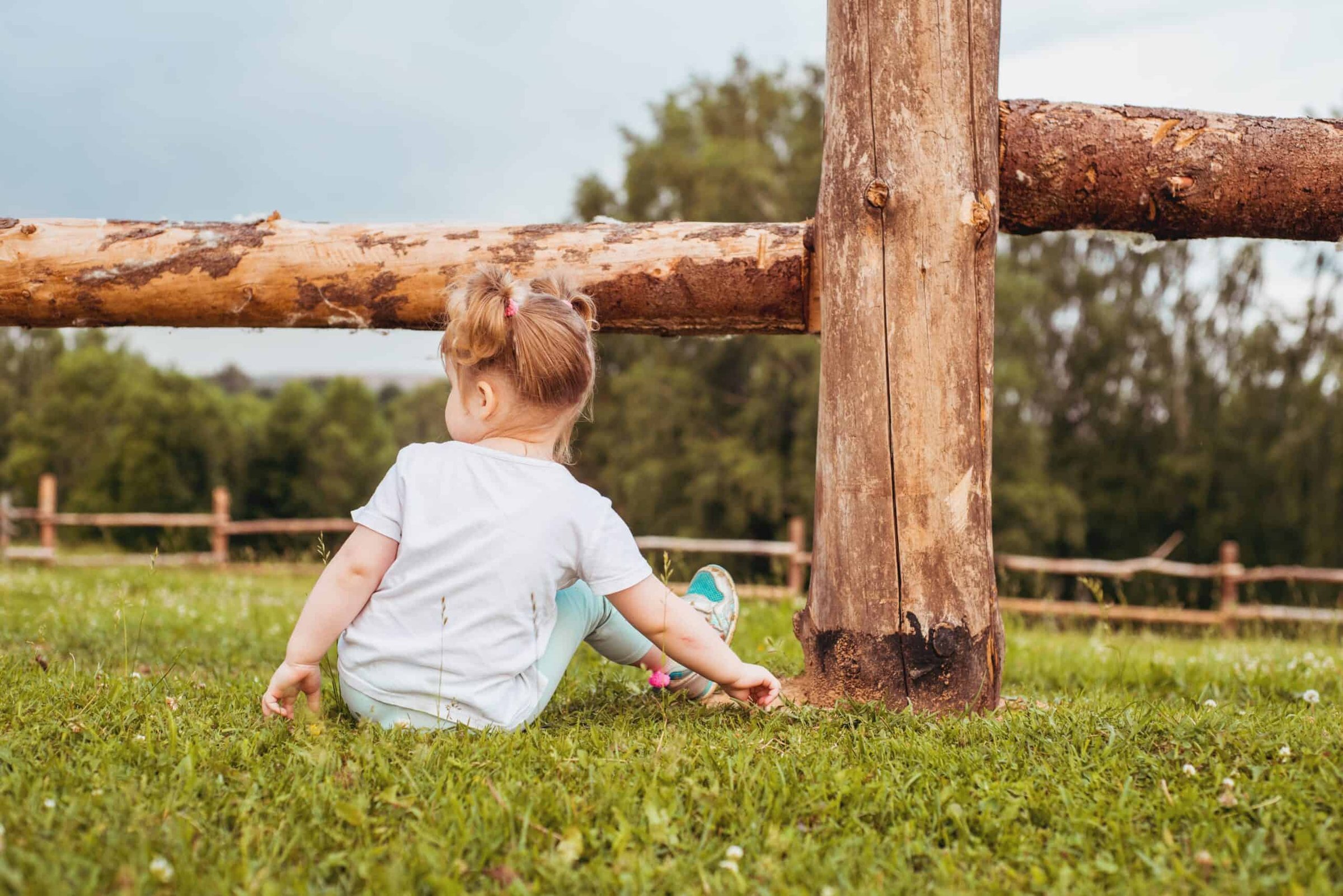
It can look, from the outside, as though a child playing alone isn't really doing much. They're not talking. They're not negotiating. They're not part of a group. Yet according to developmental research going back nearly a century, that child is doing something genuinely important — laying groundwork that more complex social play will later build on.
Mildred Parten, a researcher working in the 1930s, mapped out a sequence of six stages through which children move as they develop social skills through play (4). Her framework remains one of the most widely cited models in developmental psychology. Understanding it helps adults make sense of what children are doing at different ages — and resist the instinct to rush them toward stages they aren't yet ready for.
The child playing alone in the corner is at the beginning of a long developmental journey
There's a child in the corner of the room, absorbed in stacking and restacking the same blocks. Other children are nearby, playing noisily together. A parent or teacher watching might feel a gentle nudge of concern: should they be encouraging this child to join in? Is something being missed?
The answer, developmental research suggests, is probably not. That child stacking blocks alone is doing something meaningful — something that cooperative play with the group, had it been pushed, might actually have interrupted. Understanding why requires understanding something that Mildred Parten's research first made visible: that social play has a developmental sequence, and every stage in that sequence is doing real work.
What research tells us about how play develops — and why the brain is doing serious work at every stage
In the early 1930s, Mildred Parten spent time systematically observing how young children played — more specifically how they related to others while playing. From this she identified six stages that children move through as their social capacity develops, from the earliest random exploration of infants to the coordinated, rule-governed group play of older children (4).
A growing body of work suggests that social play engages the brain in ways that are particularly important for development. Researchers point to the role of neurochemicals associated with pleasure, motivation, and bonding — activated through play — in supporting the formation of social connection and emotional memory (2). The brain's frontal regions, involved in planning, self-regulation, and perspective-taking, appear to be exercised extensively through the negotiation and rule-following that social play involves (1).
What Parten's research showed — and what remains consistent with more recent developmental work — is that social complexity in play builds, stage by stage, each layer of social understanding resting on what came before.
The arc from watching to working together — six stages, each doing something the next one depends on
The earliest stage Parten described is what she called unoccupied play — the seemingly random movements of very young infants as they explore their own bodies and the immediate world around them. There is no social interaction, no clear goal. There is something, though: the beginning of the child's capacity to orient to and engage with the world at all. It is the ground from which everything else grows.
Solitary play follows — the child absorbed in their own activity, not noticing or particularly caring about others nearby. This stage is often misread as a social deficit, but it is something else: a space in which children practise skills, consolidate new learning, and develop concentration in a way that uninterrupted, ungrouped time makes possible. The child stacking blocks alone is building the cognitive and motor foundations that social play will eventually draw on.
In onlooker play, something important shifts: the child begins to watch others. They are not yet ready to join, but they are learning — absorbing the rules, the conventions, the social choreography of how other children interact. Parten observed that two-year-olds are particularly drawn to this stage: standing at the edge of a group, commenting occasionally but not stepping in. It is the first social stage because it involves genuine attention to other people, even without participation (4).
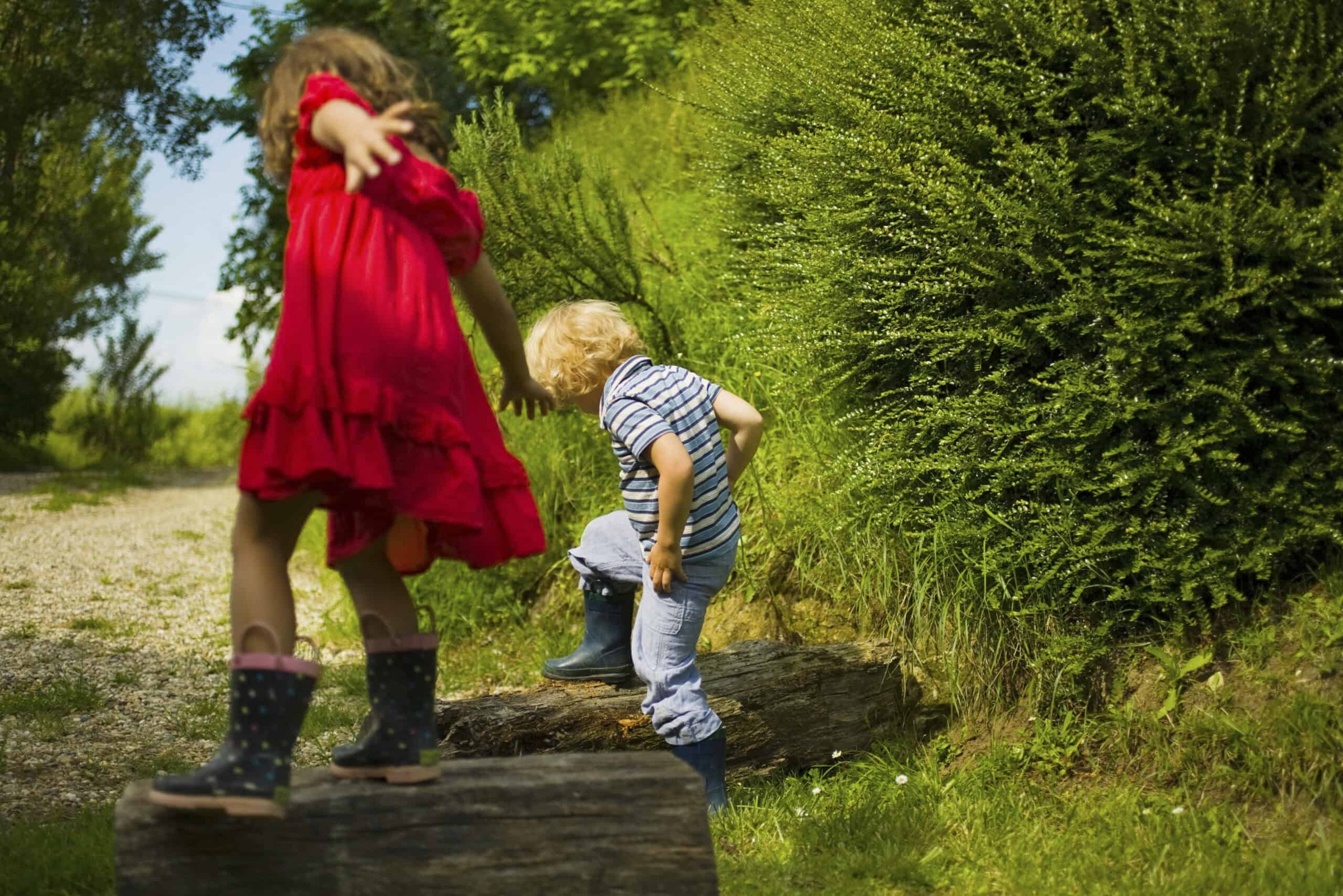
Parallel play brings children physically alongside each other, doing the same or similar things but still in parallel rather than together — two children building with blocks at the same table, each in their own world. They observe each other, occasionally mimic each other's approaches, and begin to practise what it feels like to share space. The connection is implicit and indirect, but it is real (3).
In associative play, children begin to interact — asking questions, responding, sharing materials — still without a common goal. They are interested in each other now. The social relationship is starting to matter in itself. And in cooperative play, Parten's final and most complex stage, children are working together toward a shared outcome: negotiating roles, following and creating rules, coordinating effort toward something none of them could achieve alone. This is the form of play most adults recognise as 'properly social' — but it is the destination of a long developmental journey, rather than a starting point (4).
How context shapes the journey — from Kenyan kinship play toNordic forestkindergartens, the environmentdetermineswhat'spossible
While Parten's stages appear to be broadly universal — children across cultures move through something like this developmental sequence — how the stages unfold, and what they look like, varies considerably depending on the environment a child grows up within.
In the Kisii community in Kenya, young children are not typically encouraged to play in the way Western developmental traditions prescribe. Instead, they learn primarily by observing and gradually integrating into the activities of older siblings and adults — a form of onlooker and parallel engagement that is deeply embedded in community life rather than structured as 'play time.' In Italy's Reggio Emilia approach, play is understood as children's most serious intellectual work, and the environment is deliberately designed to provoke inquiry, communication, and collaborative discovery. In Nordic countries, forest kindergartens remove children from structured indoor environments entirely for large portions of the day — allowing them to move through all stages of play in a rich, unpredictable natural setting (1, 3).
These different approaches suggest something important: the environment actively shapes what play is possible, what stages children can access, and how rich each stage can be. Natural environments, in particular, appear to support play across all stages — offering the sensory richness for early solitary exploration, the spatial complexity for parallel and associative play, and the open-ended collaborative challenges that cooperative play needs (1).
The pressure to progress — and why the adult instinct to accelerate children through play stages can work against them
One of the difficulties that Parten's framework quietly names is the adult instinct to accelerate children through the stages — to worry when a child lingers in solitary play, to push onlooker children into groups, to redirect parallel players toward more obviously cooperative activity. This instinct comes from a good place: adults want children to connect, to belong, to thrive socially. It can work against the developmental process it's trying to support.
Children move through Parten's stages at their own pace, and researchers have found that individual variation is substantial — influenced by temperament, neurotype, the specific environment, and the child's current emotional state. A child who is introverted, highly sensitive, or neurodivergent may spend longer in earlier stages, or may return to solitary play as a form of restoration even while also being capable of more complex social engagement (2). The stage a child is playing in on any given day is information, rather than a diagnosis.
There is also a cultural dimension here: the tendency to rank cooperative play above solitary or parallel play reflects a particular set of values — ones that prioritise social integration and group cohesion — that are not universal. Many children thrive in play modes that do not fit the cooperative ideal, and the pressure to conform to it can add unnecessary anxiety to what should be a space of freedom.
What tends to help — somedirectionsworth considering, starting with observation before intervention
Understanding the stages of play tends to shift the relationship adults have with children's play — from managing or orchestrating it toward observing and supporting it. That shift itself could produce better outcomes than any specific strategy.
Some attitudes that many parents and educators have found useful to support children through the play stages:
Observe before intervening. Many parents and educators find that watching a child play without immediately acting on what they see reveals much more than they expected. Which stage is this child in today? What seems to be engaging them? Are they ready to move toward more social interaction, or do they seem to need more time in their current stage? Observation tends to produce more useful responses than assumption (3).
Resistthe instinct to push toward cooperative play. Every stage in Parten's sequence is doing real developmental work. A child in onlooker play is not behind a child in associative play — they are at a different point in a continuous journey. Adults who communicate that all play has value, without ranking the stages, tend to create environments in which children feel secure to move at their own pace rather than anxious about where they should be.
Make space for both solitary and socialplay. Children who are given uninterrupted time for solitary exploration tend to arrive at social play with more capacity — more developed motor and cognitive skills, more concentration, more to bring to the interaction. Environments that only provide group play tend to deprive children of an important developmental resource. Both kinds of time matter (4).
Let the environment do some of the work. Rich play environments — particularly natural outdoor settings — tend to invite children into more complex play naturally. Loose parts, uneven ground, varied materials, and open-ended spaces create opportunities across all stages of play without adult direction. The environment, as the Reggio Emilia tradition puts it, is a third teacher.
Support gently when scaffolding is needed. In cooperative play particularly, children often need adult support: help with turn-taking, assistance with negotiation, a calm presence when sharing becomes difficult. This scaffolding is most effective when it's offered lightly — helping children find their own way through rather than resolving things on their behalf. The practice of navigating difficulty together is much of the developmental value (2).
Every stage counts and understanding thatcouldchange what solitary play looks like from the outside
The child playing alone in the corner is inside play itself — at the earliest edge of a journey that ends, years later, in the ability to collaborate, negotiate, empathise, and create with others. Understanding that tends to change how the child's solitary absorption looks: less like a problem to be solved and more like a beginning to be respected.
Parten's insight, after nearly a century, remains quietly radical: social development is something they move through, in their own time, when the conditions around them allow it. Our job is to understand it — and to make sure the environment offers what each stage actually needs.
References:
[1] Stanton-Chapman T, Schmidt E. How do the children play? The influence of playground type on children's play styles. Front Psychol. 2021;12:703940. https://doi.org/10.3389/fpsyg.2021.703940