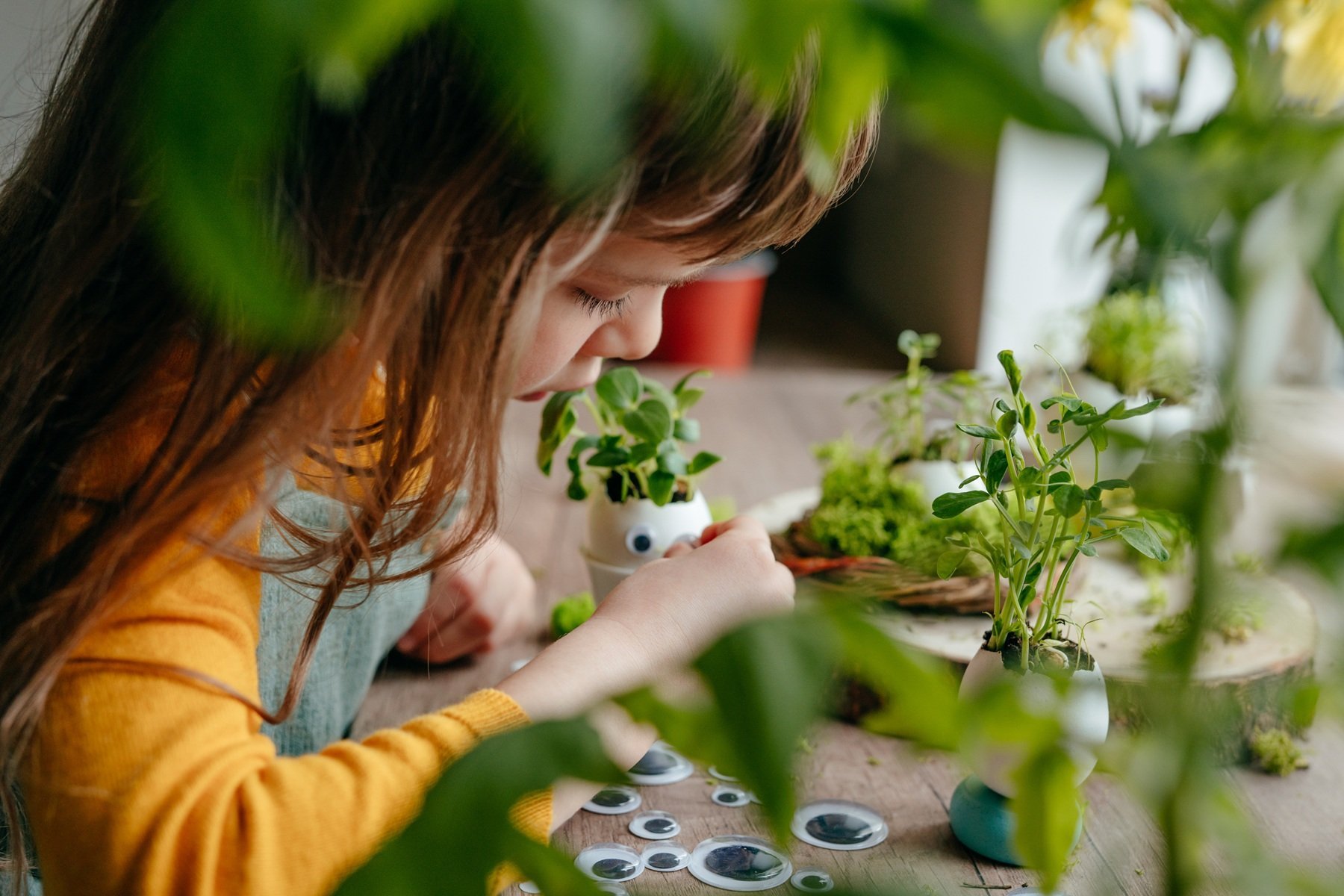
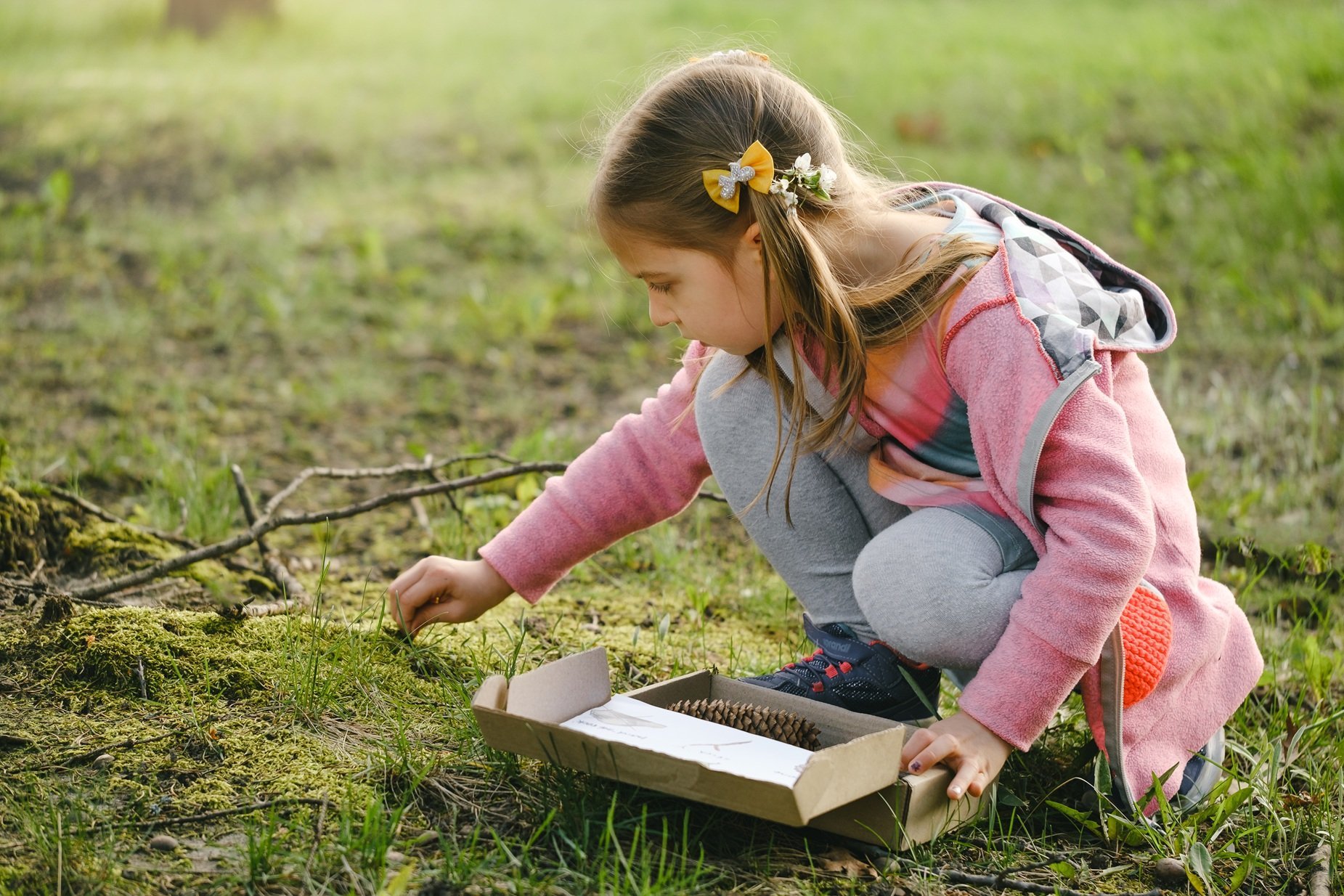
Most people carry at least one belief about creativity that research has consistently challenged: that it belongs to artists, that some people are born with it and others aren't, that it lives in the 'right brain', that it arrives as sudden inspiration. These myths are common — and researchers studying them have found that their prevalence bears little relationship to whether people have actually engaged with what the science says (1).
What the research does say, across multiple decades of study, is that creativity is not a fixed trait, not limited to any domain, and not reserved for a particular kind of person. It is a capacity that develops through practice, knowledge, and the right conditions (2, 3). Understanding this matters considerably for how adults support creative development in children.
This article explores seven of the most common creativity myths and what the research offers instead.
Myths about creativity arevery common— and they matter more than they might appear to
Ask most adults whether they are creative and something interesting tends to happen. Many will pause, qualify, or decline: 'I'm not really a creative person', 'I'm more of an analytical thinker', 'I can't draw to save my life.' The assumption built into these responses — that creativity is a trait some people have and others don't, that it belongs primarily to art, that it arrives from somewhere rather than being built — is so pervasive that it has started to look like common sense.
Many of the most widely held beliefs about creativity are contradicted by the available research — and these beliefs are held across age groups, educational backgrounds, and professional contexts (1). The gap between what people believe and what the evidence suggests has real consequences for how children are taught, how creative confidence develops, and who ends up feeling entitled to call themselves creative.
Research consistently finds that creativity is a learnable skill involving multiple brain systems
One of the most durable myths about creativity is that it belongs to the right brain — that creative people are 'right-brained' while analytical thinkers are 'left-brained.' High-quality brain imaging research has found no evidence that people are globally right- or left-brain dominant in the way this idea suggests (6). What itactually shows is that creative thinking recruits multiple brain systems working together — particularly the networks involved in idea generation, goal-directed attention, and switching between them. In highly creative people, these systems coordinate more effectively rather than one side dominating.
A second foundational finding from decades of creativity research is that creativity can be taught and developed. When people are given deliberate practice, feedback, and structured exposure to creative processes, we would see consistent improvements in creative output (3). This applies across age groups. Creativity is compounds with practice, knowledge, and reflection — more like a developing skill than a fixed endowment (2, 5).
Creative thinking is not located in one side of the brain, not confined to art, and not the exclusive property of a particular kind of person. What the research describes instead is a capacity that develops — unevenly, sometimes slowly, but reliably — given the right conditions.
A related finding concerns the role of knowledge. Creative ideas emerge from a foundation of existing understanding — which is why expertise in a domain would support rather than constrain creativity within it (4). The mathematician, the engineer, and the dancer are each being creative in domain-specific ways that depend on what they already know.
What the seven most common creativity mythsactually cost— and what the evidence offers instead
The myth that creativity is limited to art disciplines could narrow children's sense of where creative thinking is available to them. In reality, creativity involves making new connections between ideas in any domain — in mathematics, science, engineering, cooking, conversation, or problem-solving. Every discipline expresses creativity differently. The child who finds an unexpected route through a logic problem is being creative. So is the child who invents a new rule for a playground game.
The myth that creativity is a rare gift reserved for a talented few probably produce the most damage to creative identity. Research is clear that while individuals differ in how readily and fluently they generate creative ideas, consistent practice in any area increases creative output (2, 3). The child who believes they are 'not creative' may stop engaging with creative challenges before they have had the practice necessary to develop the confidence that comes from making things.
The myth that the creative process is simply fun could prepare children poorly for its actual texture — which includes uncertainty, dead ends, revision, and the frustration of ideas that don't work before finding ones that do. Holding both truths — that creative work is often genuinely challenging and that it can be deeply satisfying — usually produce more persistent creative engagement than either version alone (4).
The myths that creative ideas arrive as sudden inspiration, and that creativity cannot be taught, share a common error: they treat the visible 'Eureka' moment as the whole of the creative process, rather than as a surface phenomenon resting on preparation, exploration, and accumulated knowledge. Insight and inspiration are preceded by active engagement — by living with a problem, gathering material, and allowing the mind to work on it (1, 4).
Creativity is a cultural and social practice — different communities cultivate it differently, and what counts as creative depends on context
One of the less-examined dimensions of creativity myths is how culturally specific they tend to be. The image of the lone creative genius — producing work in isolation through individual inspiration — reflects a particular cultural narrative, one that is less recognisable in traditions where creativity is understood as communal, situated, and context-dependent.
People often show the most creative fluency in areas where they have both cultural knowledge and social support (1). Craft traditions, ceremonial design, engineering innovation, communal storytelling, and scientific inquiry are each forms of creativity that have been cultivated by different communities in different ways. Creativity lives between people, practices, and the tools and traditions they share.
This has practical implications for how creativity is supported in schools and homes. Exposure to diverse cultural traditions — different materials, storytelling forms, musical structures, craft conventions — expand the range of connections children can make and the range of problems they can approach creatively. A child who only encounters one cultural tradition's version of 'what creativity looks like' has a narrower creative vocabulary than one who has encountered many.
Educational systems that prioritise assessment over exploration produce exactly the conditions in which creativity myths flourish
The persistence of creativity myths is not accidental. They thrive in environments where creative output is assessed early, where divergent or unexpected thinking is corrected rather than explored, and where children receive the message — often unspoken — that some people are good at this and others aren't. These environments usually narrow the range of children who feel entitled to call themselves creative and to reinforce the idea that creativity is rare.
Free, unstructured play is very valuable — it supports spontaneous exploration, imagination, and the uninhibited generation of ideas. Structured guidance is also very valuable — it provides the scaffolding, feedback, and domain knowledge that allow raw creative impulse to develop into skill. Neither alone is sufficient (2). The child who only plays without guidance may lack the knowledge and feedback to develop creative capacity further; the child who only receives instruction without play may lose access to the spontaneity that creative work depends on.
Adults who understand this tension make more nuanced decisions about when to offer structure and when to protect open exploration.
Whatsupport creative development in children — and what helps adults get out of the way at the right moment
The conditions that support children's creative development share a set of qualities: they offer genuine challenges alongside genuine freedom, they provide feedback without foreclosing exploration, and they communicate through the texture of the environment that creative thinking is valued across the full range of what children do.
Some patterns that many families and educators have found useful to support creative development in children:
Widen where creativity is noticed and named. Children who hear adults notice and name creativity in everyday problem-solving — a new route to school, an unexpected approach to a puzzle, an improvised solution in play — usually develop a broader sense of where their own creativity is available. Creative identity forms partly through what gets reflected back (1).
Protect time that is genuinely open — without an immediate product required. The brain systems involved in idea generation work most freely when not under immediate evaluative pressure (6). Environments that offer periods of genuinely unstructured time — without an expected output — produce more novel thinking than those that fill every available minute with structured activity.
Offer feedback that engages with the process. Children who receive feedback on how they approached a problem — what connections they made, what they tried and revised — usually develop more resilient creative engagement than those who receive feedback only on whether the outcome was successful. Engaging with the process communicates that the process is what matters (3).
Introduce diverse cultural creative traditions. Exposing children to creative traditions from multiple cultures — different musical structures, craft forms, narrative conventions, design approaches — expands the vocabulary of connections they can make. Creative fluency grows with exposure to varied creative forms (1).
Allow creative work to be difficult without rescue. The tolerance for uncertainty, revision, and the experience of ideas not working is itself a creative skill. Adults who remain present and curious while a child navigates creative frustration — rather than immediately suggesting solutions or simplified alternatives — support the development of persistence in creative work (4).
When the myths fall away, creativity becomes accessible toconsiderably morechildren than they ever suggested
Creativity is not located in one hemisphere of the brain, not confined to artists, not delivered by inspiration alone, and not the exclusive property of people who were born with a particular gift. What the research describes across decades of study is a capacity that grows — through practice, through knowledge, through the experience of making things and revising them, and through environments that treat creative thinking as ordinary rather than exceptional.
The myths persist partly because they are convenient — they explain why some children flourish creatively while others do not in a way that locates the explanation in the child rather than in the conditions. Replacing them with a more accurate account shifts the question from 'is this child creative?' toward 'what conditions does this child need to develop creatively?' That is a considerably more useful question, and one that tends to produce considerably more useful answers.
Every child is making connections between ideas, solving problems, and generating novelty in the ordinary moments of their day. Whether those moments get recognised as creativity — and whether that recognition accumulates into a creative identity — depends significantly on what the adults around them choose to notice and to name.
References:
[1] Benedek M, et al. Creativity myths: prevalence and correlates of misconceptions on creativity. Personality and Individual Differences. 2021 Nov;182:111068. https://doi.org/10.1016/j.paid.2021.111068
[3] Scott G, Leritz LE, Mumford MD. The effectiveness of creativity training: a quantitative review. Creativity Research Journal. 2009 Nov 02;16(4):361–388. https://doi.org/10.1080/10400410409534549
[4] Burkus D. The myths of creativity: the truth about how innovative companies and people generate great ideas. San Francisco: Jossey-Bass; 2013.
[5] Clabough E. Second nature: how parents can use neuroscience to help kids develop empathy, creativity, and self-control. Louisville (CO): Sounds True; 2018.
[6] Nielsen JA, Zielinski BA, Ferguson MA, Lainhart JE, Anderson JS. An evaluation of the left-brain vs. right-brain hypothesis with resting state functional connectivity MRI. PLoS One. 2013;8(8):e71275. https://doi.org/10.1371/journal.pone.0071275