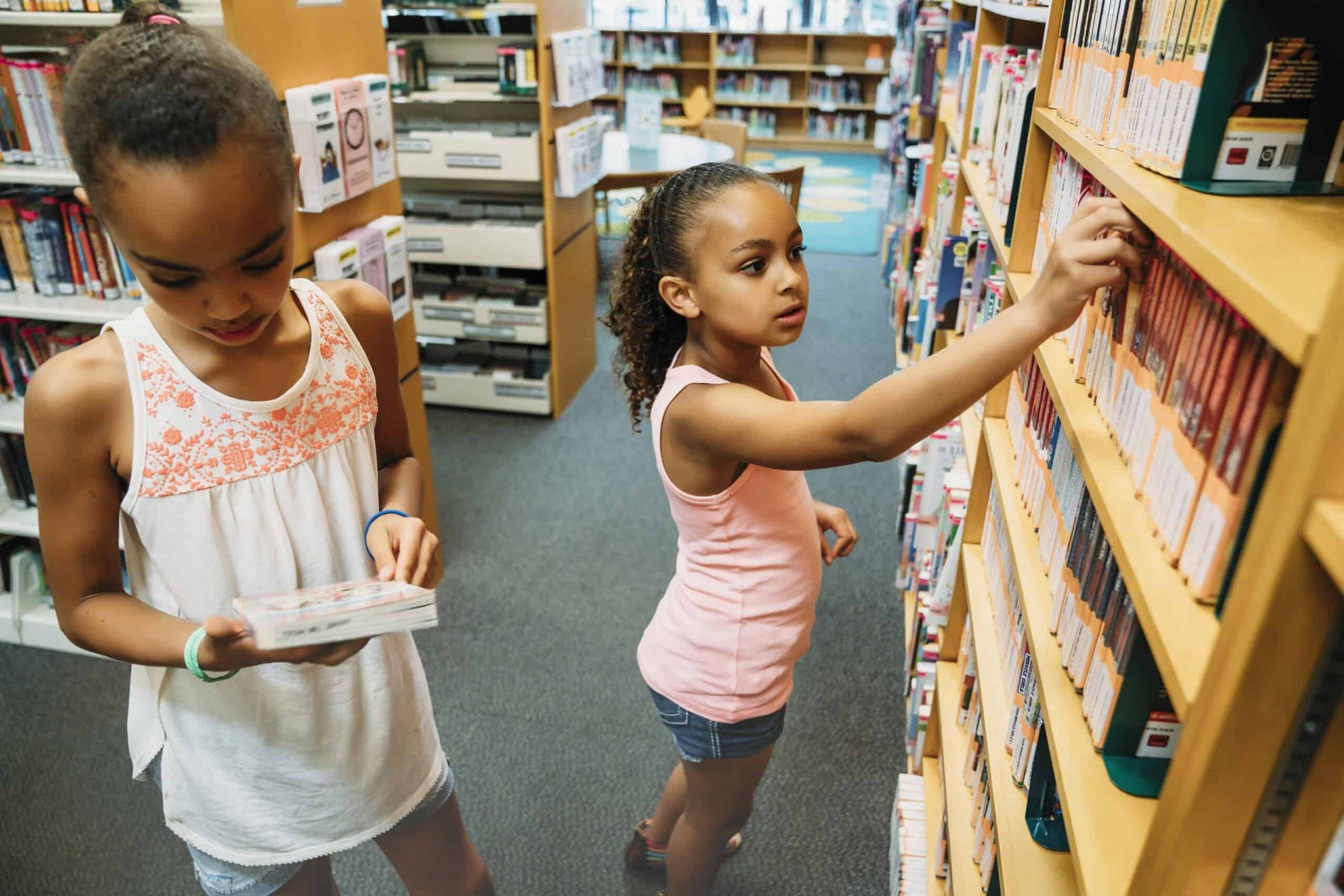
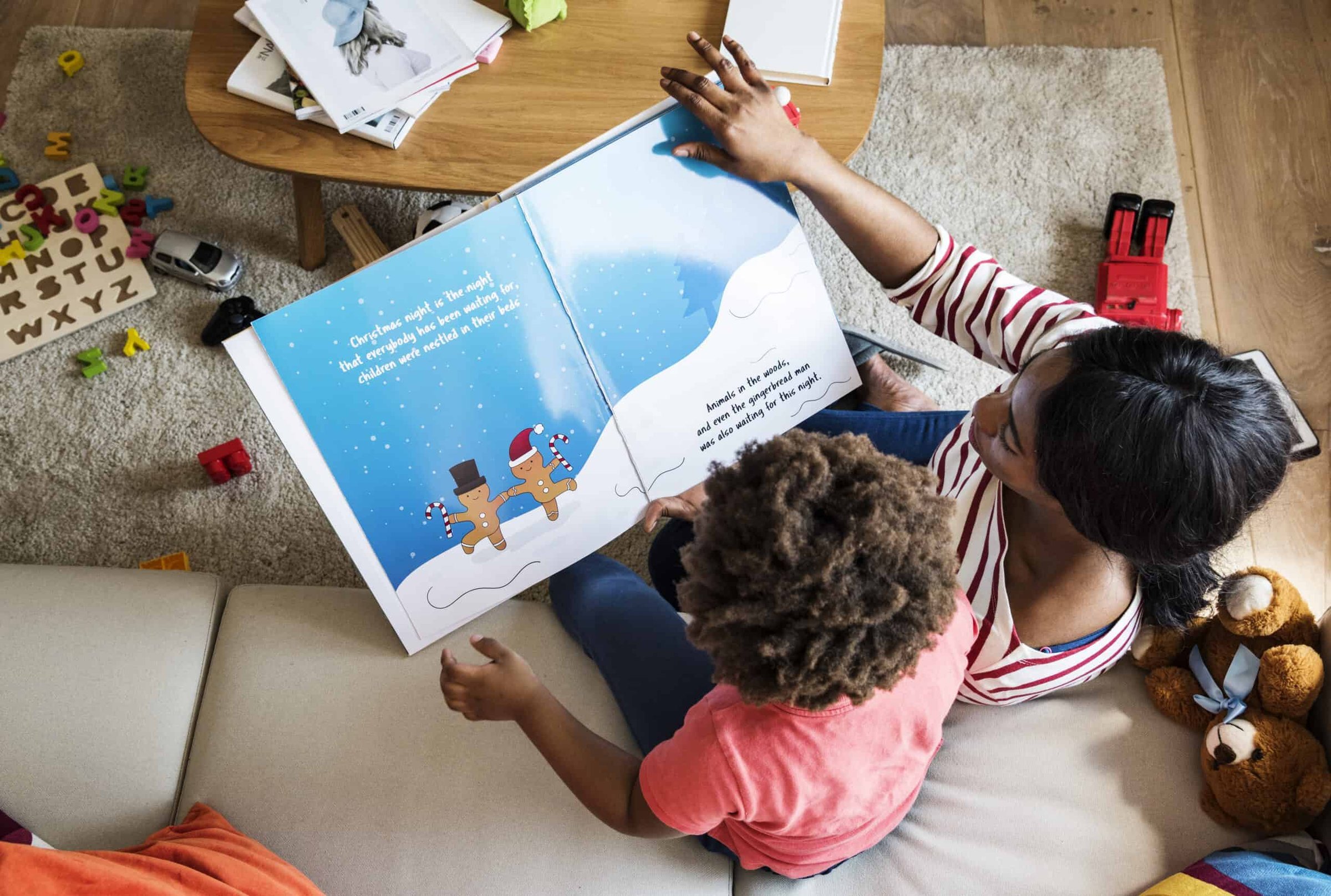
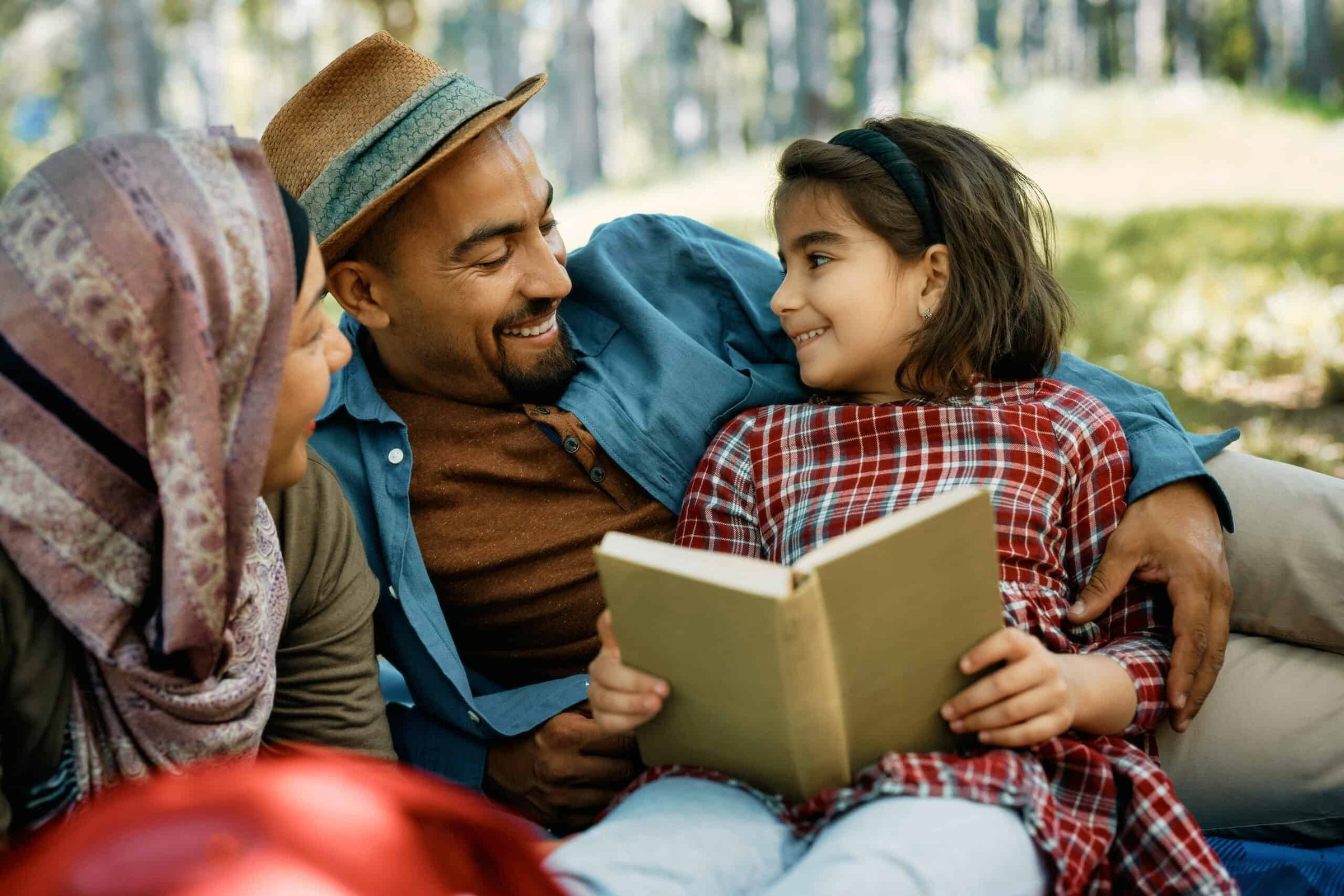
Most parents have stood in a bookshop or library wondering which book will actually speak to their child. With thousands of titles available and children who are refreshingly particular about what engages them, the choice can feel harder than it looks.
A growing body of work suggests that the books children connect with — ones that match where they are developmentally, reflect something of their world, or open a window into someone else's — do more than occupy them for twenty minutes [1, 3]. Reading appears to support language development, emotional processing, and a growing sense of identity.
This article explores what some research tells us about how stories reach children, why the fit between a child and a book matters, and some practical orientations that many families and educators have found useful when navigating the choice.
Most parents can name a book that genuinely spoke to their child — and one thatdidn't
Think of a book that genuinely landed for a child you know — the one they asked to hear again before the last page was finished, the one they carried around for weeks, the one that gave them a character or a phrase that became part of how they talked about the world.
Most parents can name one. And most can also name the ones that didn't land — the carefully chosen, well-reviewed titles that sat politely on the shelf, opened once and quietly forgotten.
The difference between those two experiences is worth understanding. It's not random, and it's not simply about a child's mood on a given evening. Something about the fit between a particular child and a particular book at a particular moment tends to determine whether a story takes root — and some of that can be shaped.
Shared reading activates language,emotionand memory all at once — and the effects reach well beyond the story
Reading — particularly shared reading between a child and a caregiver — activates brain regions associated with language processing, emotional regulation, and imaginative engagement (1). When a story connects with a child, it appears to involve multiple systems at once: the language systems processing what's being said, the emotional systems responding to characters and tension, and the memory systems encoding what's been experienced.
An early, regular exposure to books supports the development of vocabulary, narrative understanding, and the capacity to take another person's perspective — all of which have implications well beyond reading itself (1).
A 2026 study examined this more directly, following children aged six to eight through two weeks of nightly bedtime reading (5). Both the children who were simply read to and those whose parents paused to ask reflective questions showed significant improvements in cognitive empathy and in creative thinking — regardless of which approach was used. The study's finding suggests that the story itself, offered regularly and warmly, carries much of the developmental value. Parents who pause to ask what a character might be feeling may see some additional benefit in creative fluency — but the foundation appears to be the reading itself.
A story that reaches a child tends to give them new language for feelings they already have, new frameworks for experiences they haven't yet encountered, and a quiet sense that their inner life is something worth paying attention to.
It's worth holding this evidence with some care. Children who are regularly read to tend to come from environments with other developmental advantages too. Reading appears to be part of a wider picture of engaged, language-rich caregiving rather than a standalone intervention.
Books work best as mirrors and windows — reflecting a child's world back to them, and opening onto others'
One of the things a well-chosen book can do for a child is offer a moment of recognition: a character who shares their particular kind of shyness, or their love of a specific thing, or their complicated feelings about a new sibling. That moment of recognition — 'that's me' — is not a small thing as it supports the development of identity and self-understanding in ways that broader developmental experiences don't always provide (3).
The same principle applies in reverse. Books that offer children a window into lives quite different from their own — different cultures, family structures, abilities, experiences — tend to build a more flexible and generous understanding of the world. Not through being told about difference, but through inhabiting a character's perspective long enough for something to shift.
This dual function — mirror and window — is one of the most useful framings for thinking about book selection. A good reading diet over time tends to offer both: books that reflect a child's world back to them, and books that expand what they understand the world to contain (3).
Cultures around the world understand storytelling as a communal act — and that shapes what it does for children
In Kenya, storytelling has long been a community practice — grandparents and elders gathering children to share narratives rich in moral reasoning, cultural memory, and imaginative possibility. The transmission of story happens in relationship, across generations, as an act of belonging as much as education.
In Japan, Kamishibai — a form of paper theatre in which illustrated boards are displayed while a story is narrated — combines visual art and oral telling in a way that invites communal attention and discussion. Story becomes a shared experience.
In parts of Scandinavia, curated book collections are distributed to families at key developmental stages — a structural recognition that access to appropriate books shouldn't depend on the resources or knowledge individual families happen to have (3).
Across these traditions, a common thread comes out: storytelling is understood as a relational act. It connects children to each other, to adults, and to the broader human project of making sense of experience. Choosing books well is, in this light, a form of cultural stewardship.
Having thousands of books availabledoesn'tmean the right one is easy to find — or equally accessible to all families
The sheer number of children's books available today might suggest that finding the right one is simply a matter of looking. In practice, quantity has not always meant quality. Research examining widely available preschool titles has found issues with developmental appropriateness, literary quality, and the accuracy of image-text alignment (2). The bestseller list titles don't accurately surface the most developmentally or culturally appropriate options for any given child.
There's also a representation gap. For many children — particularly those from minority cultural backgrounds, non-traditional family structures, or with disabilities — finding books that genuinely reflect their lives can require considerably more effort than it does for children whose experiences are well-represented in mainstream publishing. The 'right book' is not equally available to all families.
The 2026 bedtime reading study noted this same access dimension directly: the families who participated were predominantly higher-income households, which raises the question of what consistent, quality reading time looks like for families navigating longer working hours, fewer resources, or less stable home environments (5).
This shifts the question from 'how do I find the right book?' to 'what conditions make the right books accessible?' — a question with implications for libraries, schools, and publishing, as well as individual households.
What tends to help — some orientations worth considering
Choosing books that genuinely connect with children is less about following a formula and more about paying close attention to the particular child in front of you. Most parents who describe finding books that really work tend to describe the same process: noticing what a child is currently absorbed by, and following that.
Some orientations that many families and educators have found useful for finding books that tend to land:
Match developmental stage, not just age. A book's recommended age range is a starting point, not a verdict. Research points to mismatches between a book's complexity and a child's current cognitive and emotional stage as tending to lead to disengagement — while a well-matched book sustains attention and comprehension significantly longer (1, 3). What a child is ready for emotionally and conceptually often tells you more than their birthday.
Follow whatthey'realready absorbed by. Children who are given books connected to their current obsessions — whether that's dinosaurs, space, particular characters, or how things work — tend to engage more deeply and for longer (4). Interest-based reading builds reading motivation over time in ways that assigned or obligatory reading rarely does. The obsession itself is the guide.
Give them some agency in the choosing. Researchers have found that children who have a degree of ownership over their book selections — browsing covers, flipping pages, choosing between two options — tend to show more enthusiasm and re-engagement with those books (4). The act of choosing appears to increase investment. Letting a child lead, even partially, tends to be worth the extra time in the bookshop or library.
Look for mirrors and windows. A good reading diet over time tends to offer both books that reflect a child's own experience and books that open onto lives quite different from theirs. When children consistently see only characters whose worlds look nothing like their own, something important is missing. When they only ever encounter their own reflection, something is also lost. Both matter (3).
Attend to quality as well as content. Strong illustrations that genuinely serve the story, language with rhythm and precision, and themes that are honest without being overwhelming tend to characterise books that children return to. These qualities are worth looking for independently of subject matter or perceived educational value — a book that is beautifully made tends to communicate that quality to a child, even if they couldn't articulate what they're responding to (2).
Trust the re-read. When a child asks for the same book again and again, that's information. Repeated reading of a well-matched book tends to deepen comprehension, build vocabulary, and consolidate the emotional processing the story initiated. A 2026 study found that children who were simply read to nightly — without any added reflection prompts — still showed meaningful gains in empathy and creativity (5). Pausing to ask questions may add something, but the consistent, warm reading itself appears to be the essential ingredient. Many families can let go of the worry that they need to be doing more.
Choosing the right book is a quiet act of paying attention to who a childactually is
Choosing books well is, at its heart, an act of attention. It asks us to look carefully at a child — at what they're grappling with, what they're drawn toward, what they seem to need more language for — and to find stories that meet them there.
The payoff isn't only a child who reads more fluently, though that may follow. It's a child who has accumulated, story by story, a broader sense of what human experience contains — including their own. Who has practised, in the safe space of fiction, the emotional and moral reasoning that daily life will keep asking of them.
There's a quiet kind of gift in that. And recent research suggests it may be more accessible than many families assume — that the bedtime story, offered warmly and consistently, is already doing something important (5). It tends to begin with someone paying close enough attention to find the right book at the right moment.
References:
[1] Dwyer J, Neuman SB. Selecting books for children birth through four: a developmental approach. Early Child Educ J. 2008;35(6):489–494. https://doi.org/10.1007/s10643-008-0236-5
[2] Ates NT. An evaluation of preschool children's books with respect to the principle of appropriateness for children. Res Educ Psychol. 2023;7(2):242–269. Available from: http://dergipark.org.tr/rep