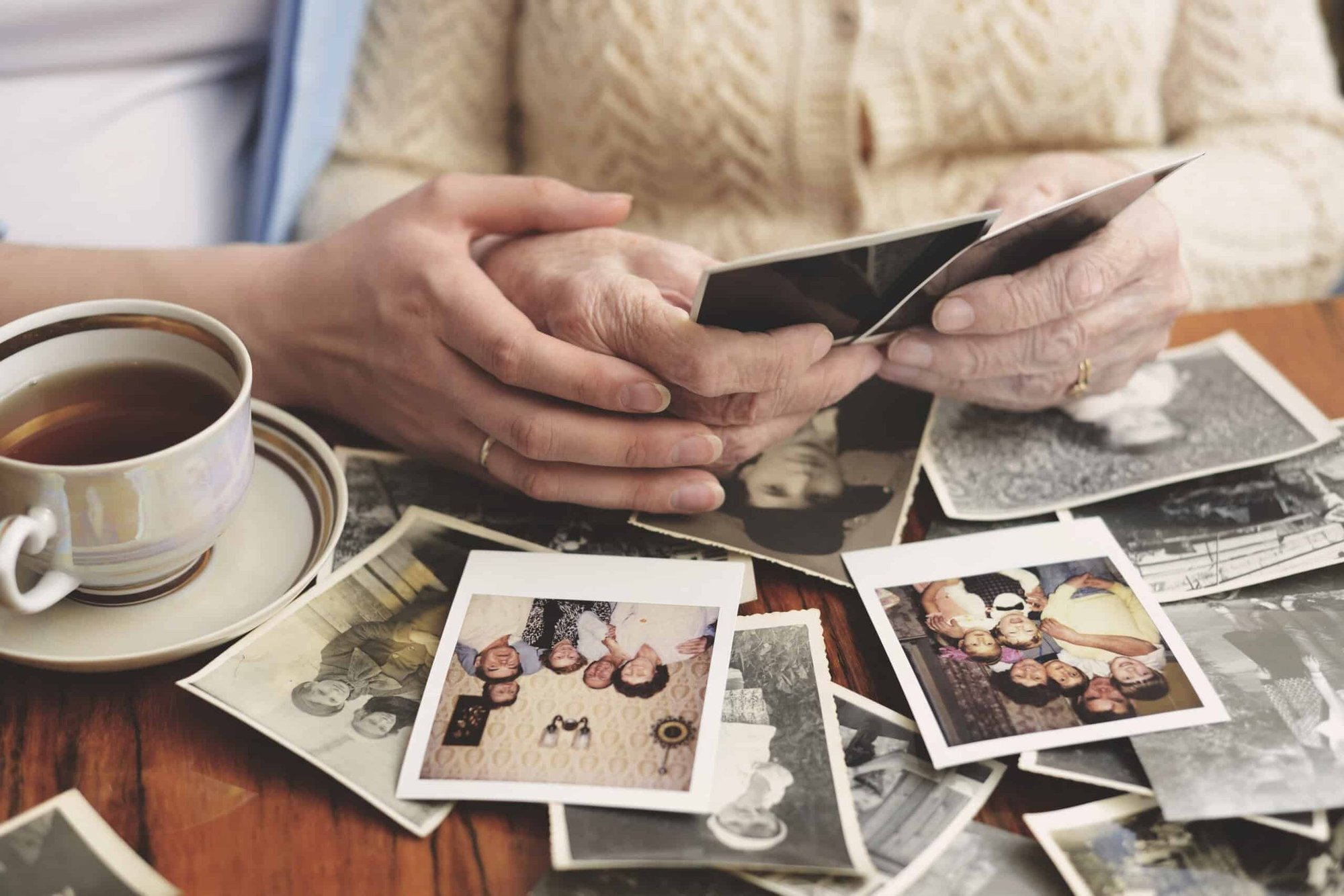
There’s a particular experience that most adults recognise: stumbling across an old photo, a drawing, a letter from childhood — and feeling, briefly, the texture of who they were then. These fragments do something. They anchor us in our own story.
Children are still in the process of building that story. The moments they’re living through now will become, in time, the material of their self-understanding — but only if something preserves them. Without that, memory is fragile, especially in early childhood when the capacity for autobiographical recall is still developing.
This article explores why preserving memories for children matters, what research suggests about the role of shared reminiscing in development (1, 3), and some simple, accessible patterns many families have found useful.
Stumbling across something from your own childhood does something specific — it anchors you in your own story
Think about the last time you came across something from your own childhood — a photo, a drawing, a piece of writing you’d forgotten you’d made. Something small, perhaps slightly crumpled. The moment you looked at it, something shifted. You were briefly returned to a self you’d half forgotten, to a world that had its own particular texture and feel.
These fragments — the ones we stumble across rather than seek out — tend to carry more than the image or the words on the page. They carry a sense of continuity. They confirm that the person looking at them now is in some meaningful way the same person who was there then.
Children are still building that continuity. The experiences they’re having now will become the raw material of their self-understanding — but only if they’re preserved, or shared, or talked about. Much of what happens in early childhood fades without a trace simply because memory doesn’t yet have the structures to hold it.
Autobiographical memory develops throughrelationshipandit is built by childrenandthe adults around them
Autobiographical memory — the capacity to recall personal experiences and weave them into a coherent sense of self — develops gradually through early and middle childhood. It doesn’t simply emerge on its own: some evidence suggests it is shaped significantly by the quality of the relational environment around a child (1, 2).
In particular, a growing body of work points to what is called elaborative reminiscing — the way adults help children revisit past events by asking questions, adding detail, expressing emotional responses, and building a shared narrative. Children whose caregivers engage in this kind of conversational memory-making appear to develop more robust autobiographical memory and a stronger sense of their own identity over time (1, 3).
Memory, in early childhood, is a relational process — built between a child and the adults who help them make sense of what they’ve experienced. When a parent says ‘do you remember when…’, they’re helping construct a self.
Researchers have also found that tools like memory collections, photo albums, and personal keepsakes serve a particular function for children navigating change or difficulty — providing what some researchers have called emotional anchoring, a thread of continuity during times when the present feels uncertain (4). For children who have experienced separation, loss, or significant transitions, these collections can carry particular weight.
What it means to have a story about yourself — and why that story is a foundation of identity
There’s a particular kind of security that comes from being able to locate yourself in a narrative — to know where you came from, what you were like when you were small, what mattered to you, what you found difficult. This is the foundation of identity.
Lots of researchers have found that children who have access to a coherent personal narrative — supported by family storytelling, shared memories, and preserved mementos — tend to develop a stronger sense of belonging and greater resilience when faced with change or adversity (2, 3). The story doesn’t need to be perfectly curated or comprehensively documented. It just needs to exist in sufficient form that the child can find themselves in it.
For neurodiverse children — including those on the autism spectrum — elaborative reminiscing has been explored as a specific intervention approach, with a growing body of evidence suggesting it can support both episodic memory development and social understanding (5). The relational quality of memory-building may be especially meaningful for children who find the implicit social dimensions of experience more difficult to navigate naturally.
Howdifferent cultureshold memory — and why they all understand it as communal,rather thanindividual
Memory preservation is not a new idea dressed up in psychology. Cultures across the world have developed rich traditions for exactly this purpose — and many of them centre on communal transmission.
In many Indigenous Australian traditions, storytelling is the means by which geographical knowledge, ancestral identity, seasonal wisdom, and spiritual belonging are passed between generations. The story belongs to the community and moves through time carried by human voices and relationship.
In Mexican culture, Día de los Muertos places the memory of ancestors at the centre of family life — through photographs, food, altars, and shared presence. The dead are held in memory as part of the living family. Children who grow up within this tradition receive a particular kind of message: that the people who came before them are still in some sense present, and that they themselves will one day be remembered in the same way.
In Japanese culture, seasonal rituals like Hina Matsuri involve the passing of symbolic objects — often across generations — that carry personal and family history in physical form. The object becomes a vessel for the story.
What these traditions share is an understanding that memory is a social and cultural practice — one that connects the individual to something larger than themselves and gives them a sense of being held across time.
The gap between intending to preserve memories andactually doingit — and whyit'sabout conditions
Most parents intend, at some level, to preserve their children’s memories. The intention is there in the photo taken but never organised, the drawing kept in a bag but never labelled, the funny phrase overheard and briefly noted but not written down before the day moved on.
The gap between intention and practice tends not to be a failure of care but a failure of conditions. The pace of family life, the accumulation of undone things, the sheer cognitive load of parenting — these make unhurried, deliberate memory-keeping genuinely difficult. And digital life has added its own particular complication: we have more photographs than ever, but many of them are unorganised, unlabelled, and sitting on devices that are several phones ago.
It is also worth to remember that the framing of memory preservation as a parenting practice tends to obscure as not all families have equal access to stability and continuity. Children who have experienced separation from caregivers, migration, loss, or significant family disruption face a different relationship with memory than those whose early years were stable and well-documented. For these children, the absence of a preserved record is a gap in a sense of self. This deserves more structural attention than it typically receives.
Some approaches worth considering — small habits that accumulate rather than projects that overwhelm
Memory preservation doesn’t require a system or a project. It tends to work best when it’s woven into the ordinary rhythm of family life — small, regular habits that accumulate over time rather than large, organised efforts that feel overwhelming and therefore don’t happen.
Some patterns that many families have found useful to support memory preservation:
Keep a dedicated physical collection. Many families find that a simple dedicated space — a box, a drawer, a folder — for each child’s keepsakes makes it much easier to preserve things in the moment. The act of dropping something in as it happens is much lower-effort than organising later. Even brief context notes (a date, a sentence about what was happening) make a significant difference to how meaningful these collections become over time.
Make talkingabout the pasta habit. Elaborative reminiscing — revisiting shared experiences in conversation, asking children what they remember, adding emotional colour and detail — appears to be one of the most meaningful things adults can do to support memory development in children (1, 3). It doesn’t need to be formal. Car journeys, bath times, bedtime: the small repetitive contexts of family life tend to be where this kind of conversation naturally opens.
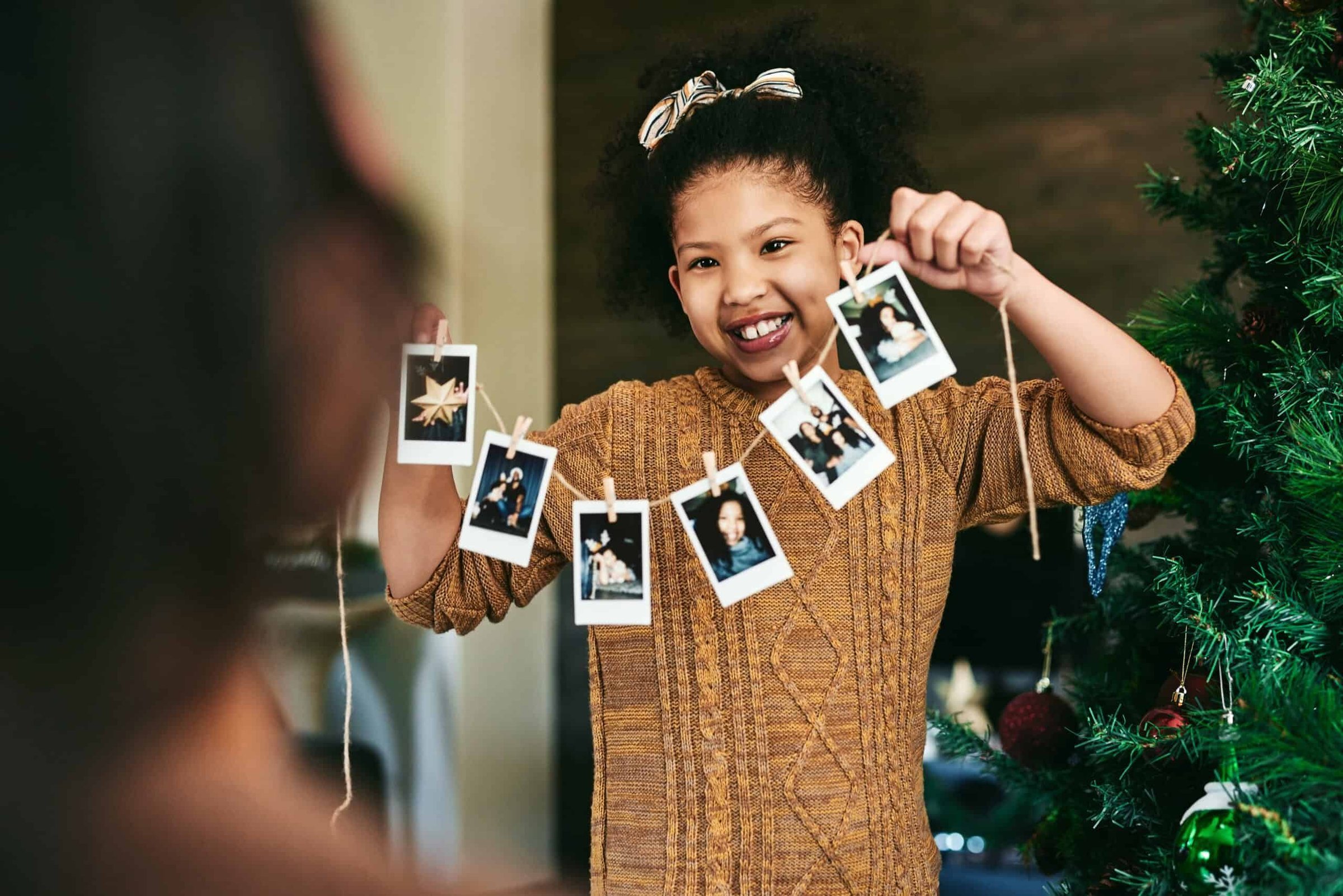
Add context to photos. A photograph without context tends to lose meaning faster than expected. Many families find that adding a brief caption — where, when, who, what was happening — transforms a digital folder into something genuinely navigable. Even occasional annotations make the collection more useful.
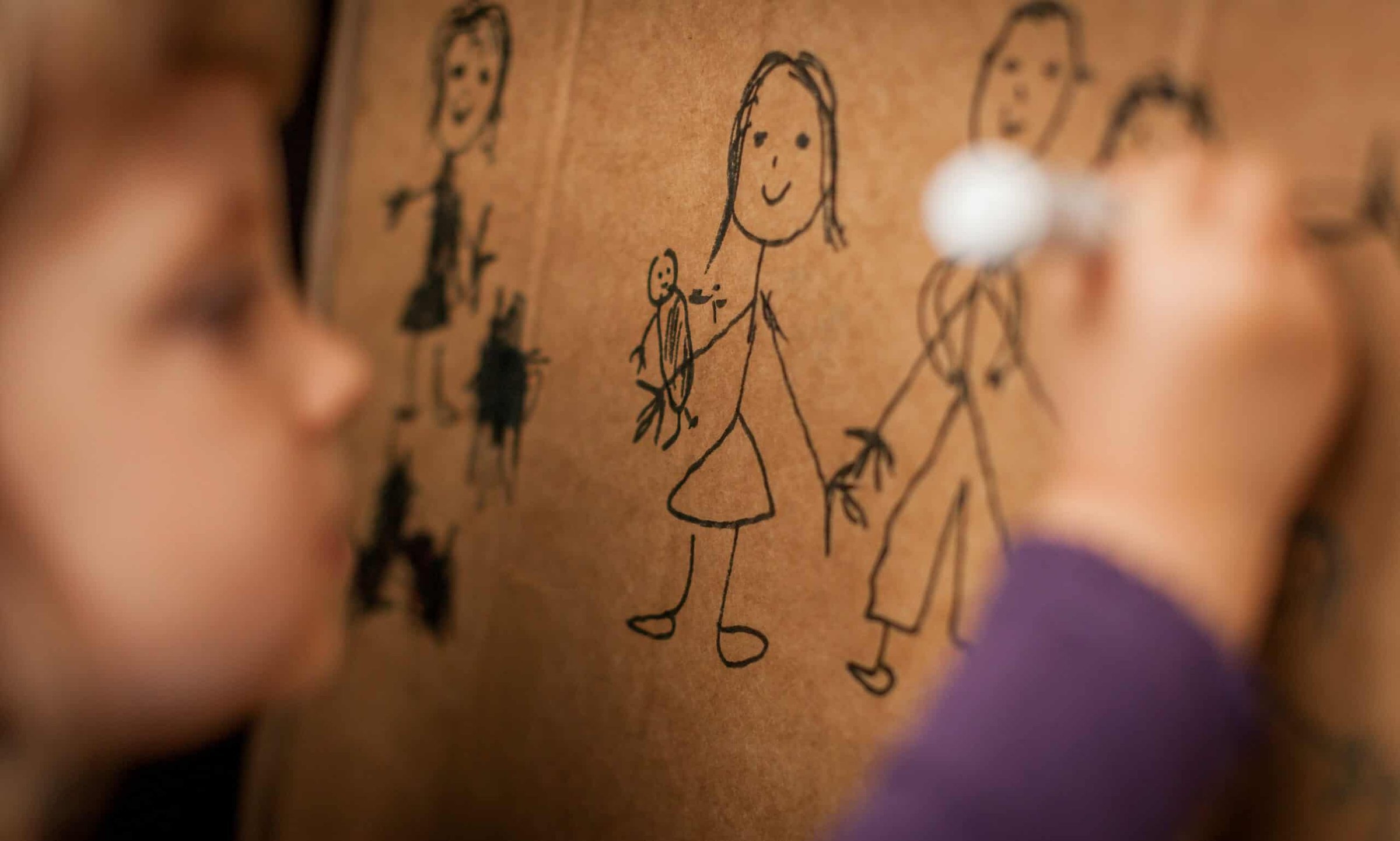
Preserve the ordinary alongside the milestone. School projects, drawings, early writing, funny questions — these often tell more about who a child was at a given age than formal milestone records do. Many parents find they most treasure the things that captured personality or quirk rather than achievement. A mispronounced word noted on paper, or a drawing of the family that gets proportions dramatically wrong, carries something irreplaceable.
Record voices and presence. Short voice or video recordings of children describing something, telling a joke, or answering simple questions about their world tend to become extraordinarily valued over time. The quality of a child’s voice and the particular way they express themselves at a given age is one of the things that passes most completely — and which photographs alone can’t capture.
Preserving memories for a child is a way of saying: someone noticed, it mattered, and you were worth holding onto
Memory is about what we carry forward — the understanding of who we are, where we came from, what shaped us. When adults preserve memories for children, they are giving a child a way to be known — to themselves, and to the people who love them.
That knowledge — that someone noticed, that it mattered, that the everyday moments of a childhood were worth holding onto — tends to accompany people long after the specific contents of the memory box have been half-forgotten.
Perhaps the most important thing is simply the act itself: that someone paid enough attention to catch something before it disappeared. Children tend to feel that, even when they can’t quite name it.
References:
[1] Russo K, et al. Sharing memories in children: the importance of close and significant relationships. J Psychosoc Syst. 2017;1(2):11–18. https://doi.org/10.23823/jps.v1i2.21
[2] Brown DA, Lamb ME. A contextually and developmentally sensitive view of children’s memory development. In: Advancing Developmental Science. New York: Routledge; 2017. p. 119–132. https://doi.org/10.4324/8791315174686-10
[3] Schneider W, Ornstein PA. The development of children’s memory. Child Dev Perspect. 2015;9(3):190–195. https://doi.org/10.1111/cdep.12129
[5] Brien A, Hutchins T. Development of a manualised intervention to support episodic memory in autistic children: elaborative reminiscing is key. Semin Speech Lang. 2022;43(4):299–315. https://doi.org/10.1055/s-0042-1750349