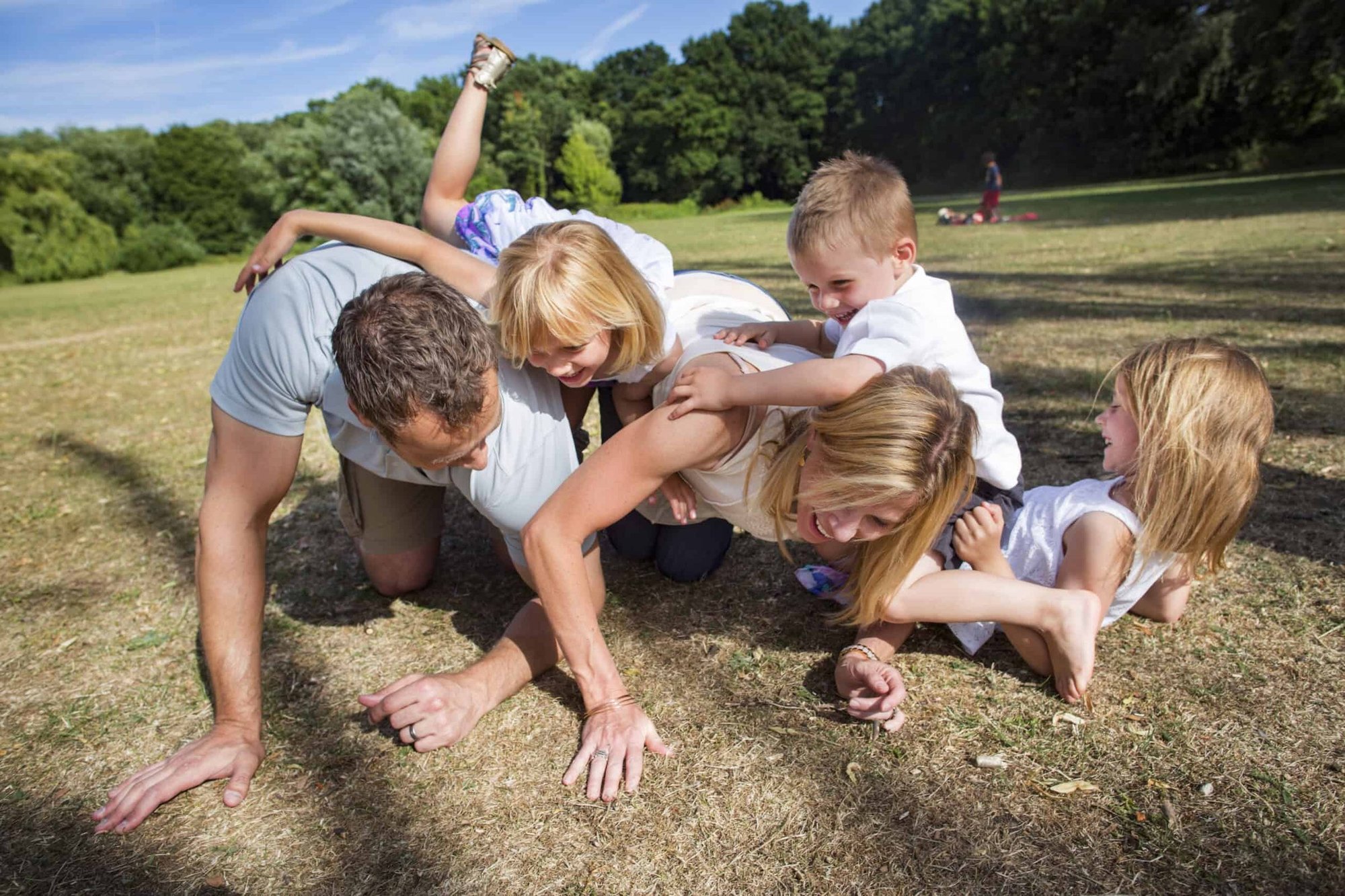
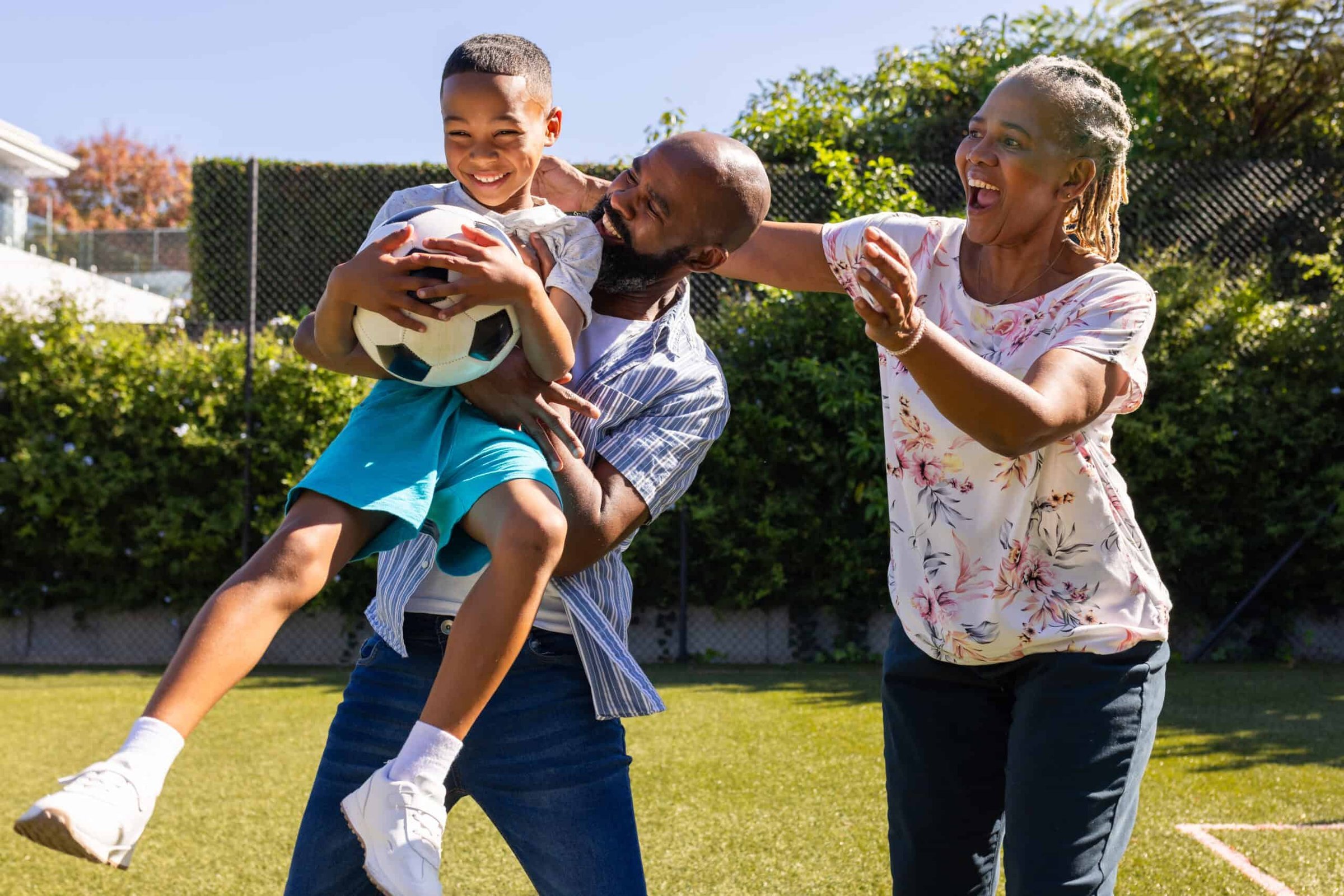
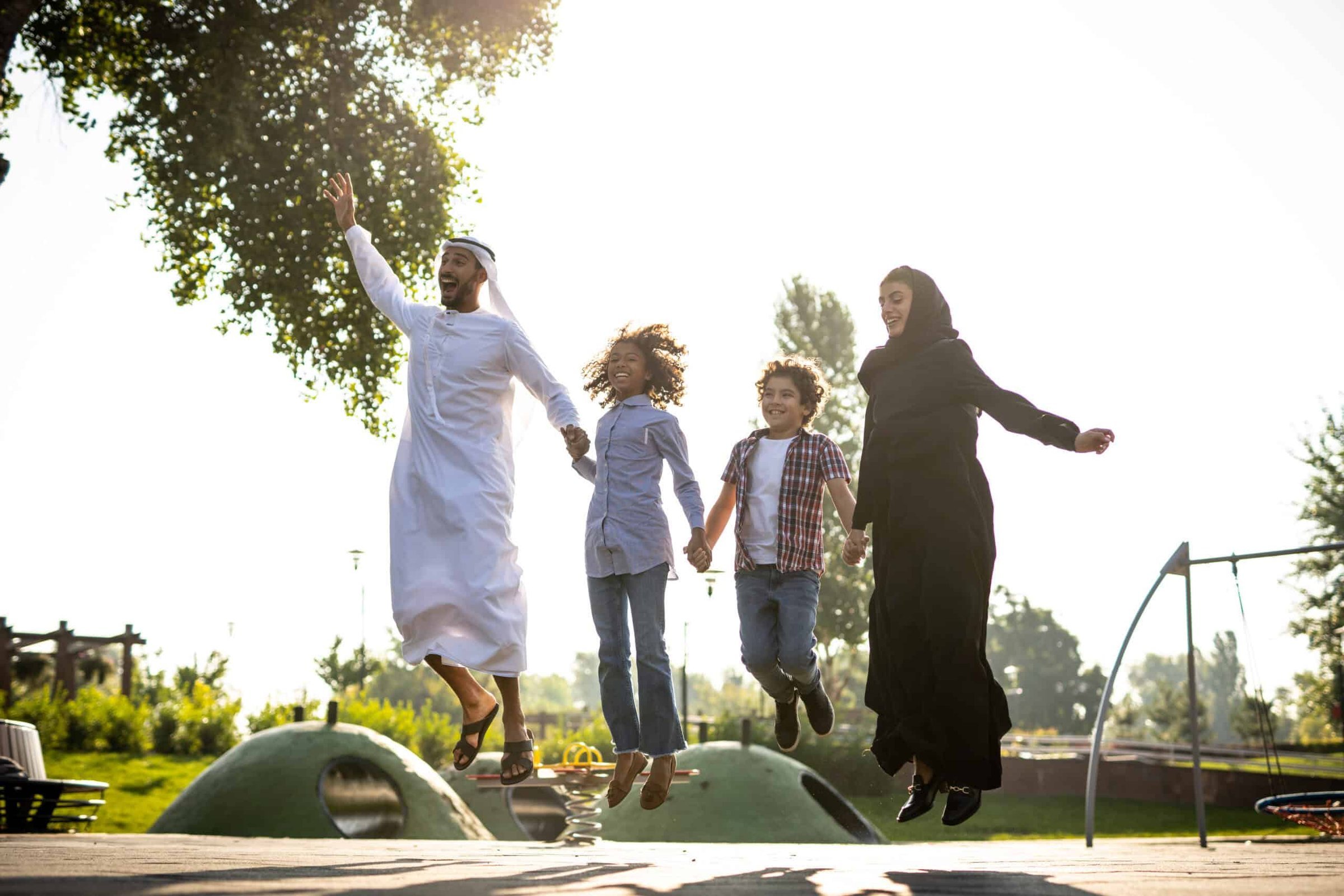
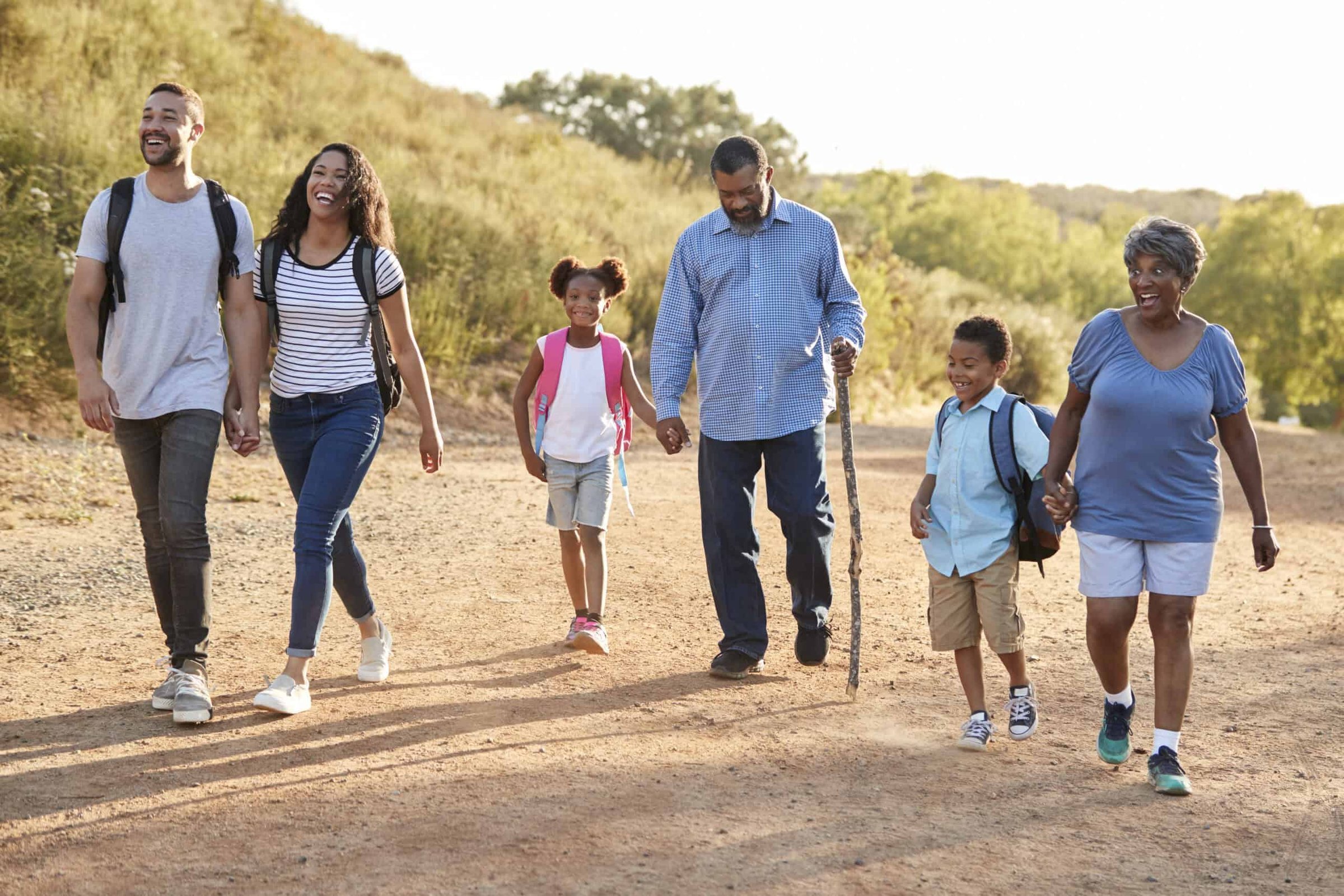
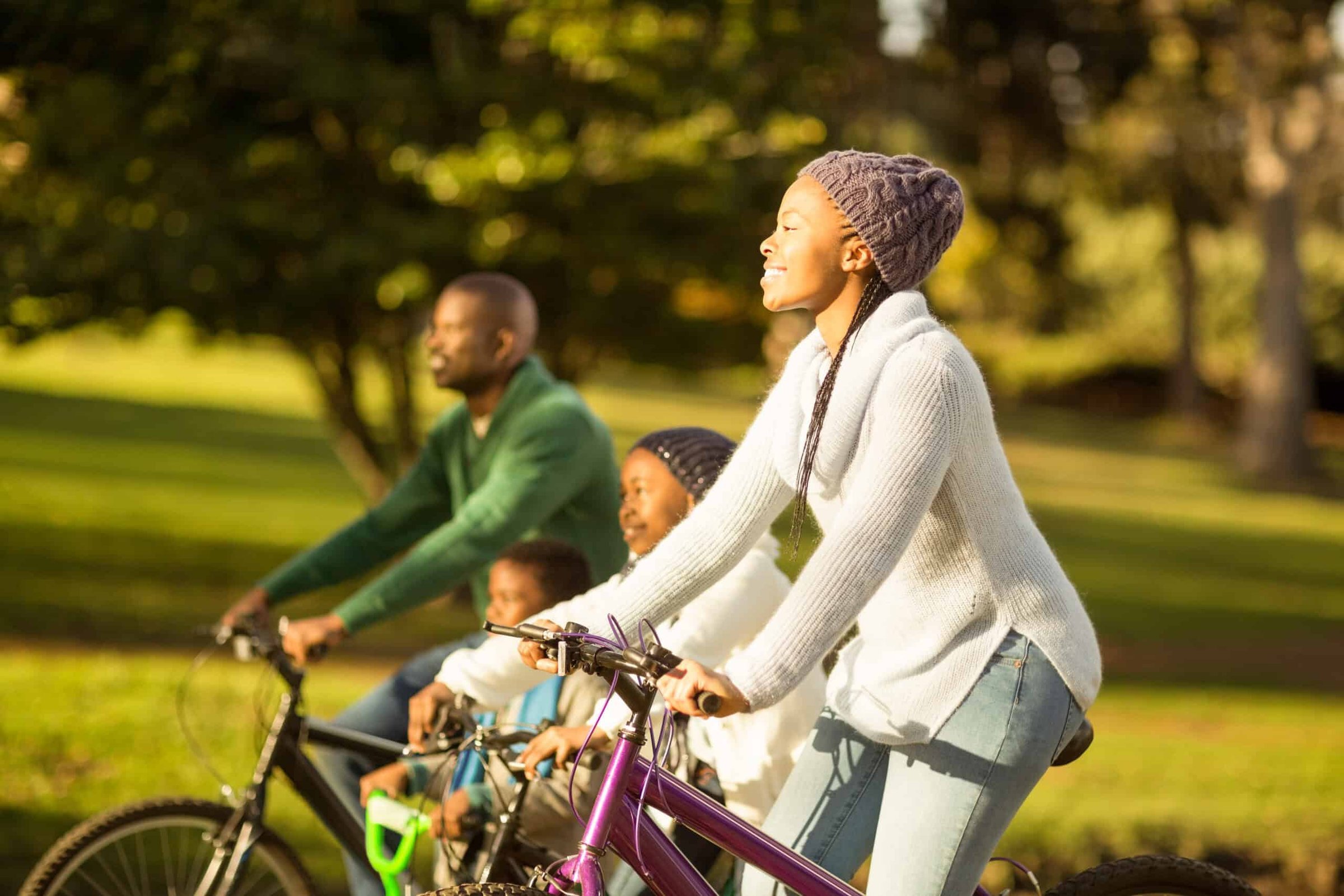
There's a kind of movement that happens in families almost without thinking — a race down the hallway, a spontaneous dance in the kitchen, a game invented with nothing but imagination and a few cushions. For many families today, those moments have become rarer.
Busier schedules, longer screen time, and the quiet pressure to be productive have pushed play to the edges of family life. This isn't a failure of parenting but it reflects the conditions many families are living in.
Some evidence suggests that when children move — especially in free, playful, and connected ways — it supports how they think, feel, and relate to others (6). The good news is that reclaiming a culture of movement doesn't require a plan or a restructured diary. It often begins somewhere much simpler: remembering what play used to feel like, and wondering if there might be a little more room for it.
Families have quietly drifted away from movement — and most can feel it
Think back to a moment when movement was simply what you did. A hallway became a racetrack. A patch of grass turned into a football pitch. A kitchen, briefly, became a dance floor. There wasn't a goal or a timetable or a scheduled slot — it was just play, and it felt like the most natural thing in the world.
Many families today find themselves further from those moments than they'd like. Not because they don't value play, but because the shape of daily life has quietly made stillness the default. Children sit for school, for commutes, for meals, for homework. Adults sit for work, for planning, for screens. By the time the evening opens up, the energy, and sometimes the permission, for movement has often gone.
It's worth pausing to ask: when did we stop playing?
Physical play appears to support how children think,feeland connect
Some evidence suggests that playful movement does more than burn energy. When children engage in physical activity — especially free, imaginative, and social play — it appears to support how the brain develops and how children learn to manage their thoughts and feelings [6].
One area that seems particularly responsive is the prefrontal cortex — the part of the brain involved in managing impulse control, flexible thinking, and decision-making. There's also a growing understanding of movement's role in the stress response system, with researchers suggesting that regular physical play may help children build a kind of emotional resilience over time [6].
The relationship between the body and the mind runs deep. Movement shapes mood. Mood shapes movement. When children are given space to run, tumble, invent, and engage physically with the world around them, something important tends to follow.
It's worth being honest about what this evidence does and doesn't say. Many of these findings are correlational. Families where movement is part of daily life often share other characteristics - lower stress, more flexible schedules, supportive relationships - that also contribute to child development. Play appears to be part of a larger picture, not a standalone solution [1].
Play is how children experience belonging, confidence and the world
Play carries meaning beyond the developmental. It's how children experience belonging. How they test their bodies and build confidence. How they come to understand that the world is a place they can affect, shape, and enjoy.
And when parents play alongside their children — imperfectly, unhurriedly, without a lesson plan — something shifts in the relationship. Some experts point to movement-based interactions between parents and children, from rough-and-tumble play to shared walks, as supporting the kind of connection that underlies emotional security [7].
For already stretched families, this feels less like a demand and more like an invitation. The activities that tend to support children most don't usually require equipment, expertise, or a perfectly cleared schedule. They tend to require presence. And often, they require giving ourselves permission to simply play too.
How families move is shaped by culture and design, not just personal choice
Families across different cultures have always found their own languages of movement. In many West African communities, movement is woven into daily life through dance and shared rhythm — not as fitness, but as connection and expression [3]. In Japan, some preschool environments are intentionally designed to encourage physical risk-taking and autonomy, trusting children to navigate challenging play on their own terms [4]. In many Latin American communities, play unfolds in shared spaces across generations - patios, sidewalks, parks - understood as something fundamentally social [3].
These examples remind us that the conditions around families deeply shape what movement looks and feels like. Accessible outdoor spaces, safe routes to school, schedules that leave breathing room, workplaces that don't consume every hour of a parent's day — these all affect what a family can realistically offer at the end of it.
Movement isn't only a lifestyle choice. It's also shaped by design.
Children's bodies are built for movement — but modern life tends to work against it
There is a real mismatch running through many families' daily lives. Children's brains and bodies are built for varied, spontaneous, physically rich experience. Yet many of the environments families navigate — packed schedules, extended screen time, reduced access to outdoor space — tend to work against this [5].
This isn't a failure of individual families. It reflects how much of modern life has been designed: around productivity, convenience, and efficiency rather than around the developmental rhythms of children. Many parents already sense this tension without quite having words for it. They know something is missing. The difficulty isn't always knowing what to do - it's finding the conditions to do it within.
What tends to help — and how families are finding their way back to movement
Families who find their way back to movement often describe it less as a programme and more as a permission. Permission to let the kitchen get noisy. To let a walk take longer than planned. To follow a child's lead into a game that makes no obvious sense.
Environments that tend to support more movement aren't necessarily bigger or better equipped — they're often simply more open to it. Some families find that removing a single barrier opens up space where play naturally re-emerges: a corner of a room cleared, a rigid part of the evening routine loosened, a habit of reaching for a screen paused long enough to notice what fills the gap.
Some patterns that many families and educators have found useful — not as a prescriptive plan, but as starting points worth considering:
Weave movement intowhat'salready happening. Many families find that movement flows most naturally when it's folded into routines that already exist — a walk instead of a drive, music on while clearing up, a stretch before a story. It tends to feel less like effort when it doesn't require a separate slot in the day.
Follow the child's lead. Play that children initiate themselves — however silly or purposeless it looks - tends to be the most developmentally rich. Classrooms and homes where children are given unstructured time and space to invent their own movement often find that engagement, and mood, tends to shift.
Let age shape the invitation. Younger children often thrive with imaginative, parent-joined play — building dens, pretend chases, dancing together. Older children and teenagers often do better with movement that offers autonomy and peer connection: co-created games, outdoor adventure, activities with flexible rules.
Lower the bar for what counts. Some families find it helpful to widen their definition of movement. A spontaneous dance in the kitchen counts. So does playing tag on the way to the car. Movement doesn't need to look like exercise to be valuable — and letting go of that expectation can make it feel much more accessible.
Presence often matters more than performance. For educators, this might mean making space in the school day, even briefly, for unstructured outdoor time, knowing that children often return to learning more settled. For parents, some evidence suggests that simply being alongside a child during physical play, without directing it, tends to be more supportive than structured coaching [7].
The same principle applies in the spaces beyond the home. Streets, parks, and community spaces designed with movement in mind tend to be used more — and used differently [2]. Even small shifts in how shared spaces are designed can quietly change what families do together within them.
The permission to play is often allthat'smissing
Most families already sense that movement matters. The real question is whether we've given ourselves room to remember what it feels like, and whether the conditions around us make it possible.
The living room has always had the potential to become a dance floor. The hallway was always a racetrack in waiting. What often stands between a family and a little more play isn't resources or knowledge.
[3] Roopnarine JL. Cultural variations in beliefs about play, parent–child play, and children's play. In: Pellegrini AD, editor. The Oxford Handbook of the Development of Play. Oxford: Oxford University Press; 2010. https://doi.org/10.1093/oxfordhb/9780195393002.013.0003
[4] Riazi NA, Brussoni M, Vertinsky P, Faulkner G. "Well, you feel more responsible when you're unsupervised": exploring family perspectives on children's independent mobility. Children. 2021;8(3):225. https://doi.org/10.3390/children8030225
[6] Vigil-Dopico R, Delgado-Lobete L, Montes-Montes R, Prieto-Saborit JA. A comprehensive analysis of the relationship between play performance and psychosocial problems in school-aged children. Children. 2022;9(8):1110. https://doi.org/10.3390/children9081110
[7] Flaherty SC, Sadler LS. A review of attachment theory in the context of adolescent parenting. J Pediatr Health Care. 2011;25(2):114–121. https://doi.org/10.1016/j.pedhc.2010.02.005